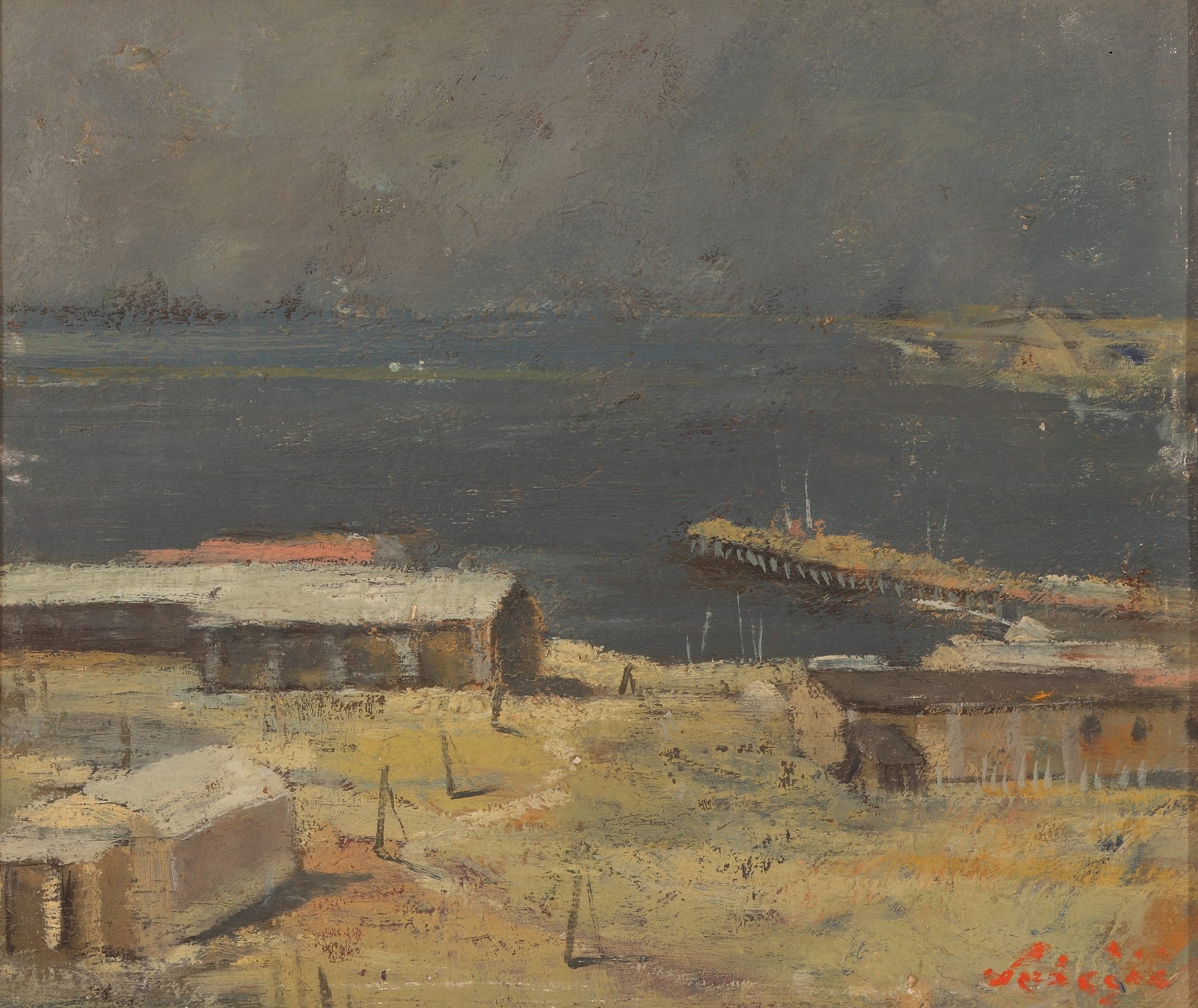
Aurelije Lukežić, At the Shore, 1946

Aurelije Lukežić
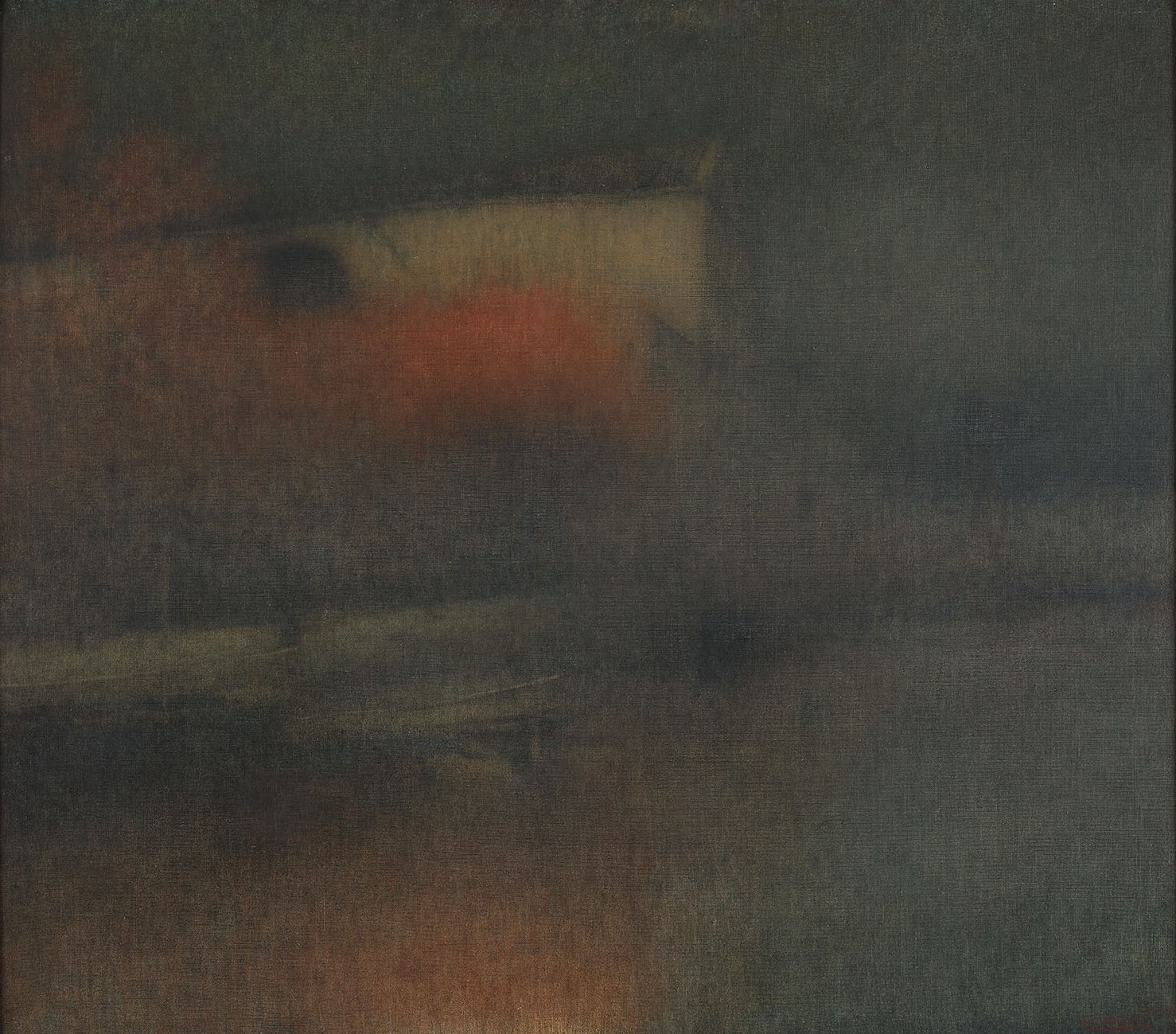
At the Shore, 1946
oil on canvas
36.5 × 42 cm
MG-1626

Aurelije Lukežić (?) remains an almost entirely unknown artist. Beyond the painting held in the NMMU collection, scant information survives regarding his life and work, other than his documented participation in several mid-century group exhibitions.
On the Shore was painted during the harsh post-war years. While the coastal motif has long occupied a prominent place in Croatian painting, celebrated for the exceptional beauty of the Adriatic landscape, Lukežić departs from this tradition. Rather than depicting an idyllic seascape, he presents a stark, deserted, and seemingly improvised harbour, evoking associations with military encampment or even a gulag embarkation point – a motif highly unusual for its time. For contemporary viewers, the work may be read as a sober visual reflection of the oppressive early period in which the Communist Party consolidated its authority over the state.

Text: Marta Radman, curator at the National Museum of Modern Art, Zagreb
Translated by: Marta Radman
Photo: Goran Vranić © National Museum of Modern Art, Zagreb
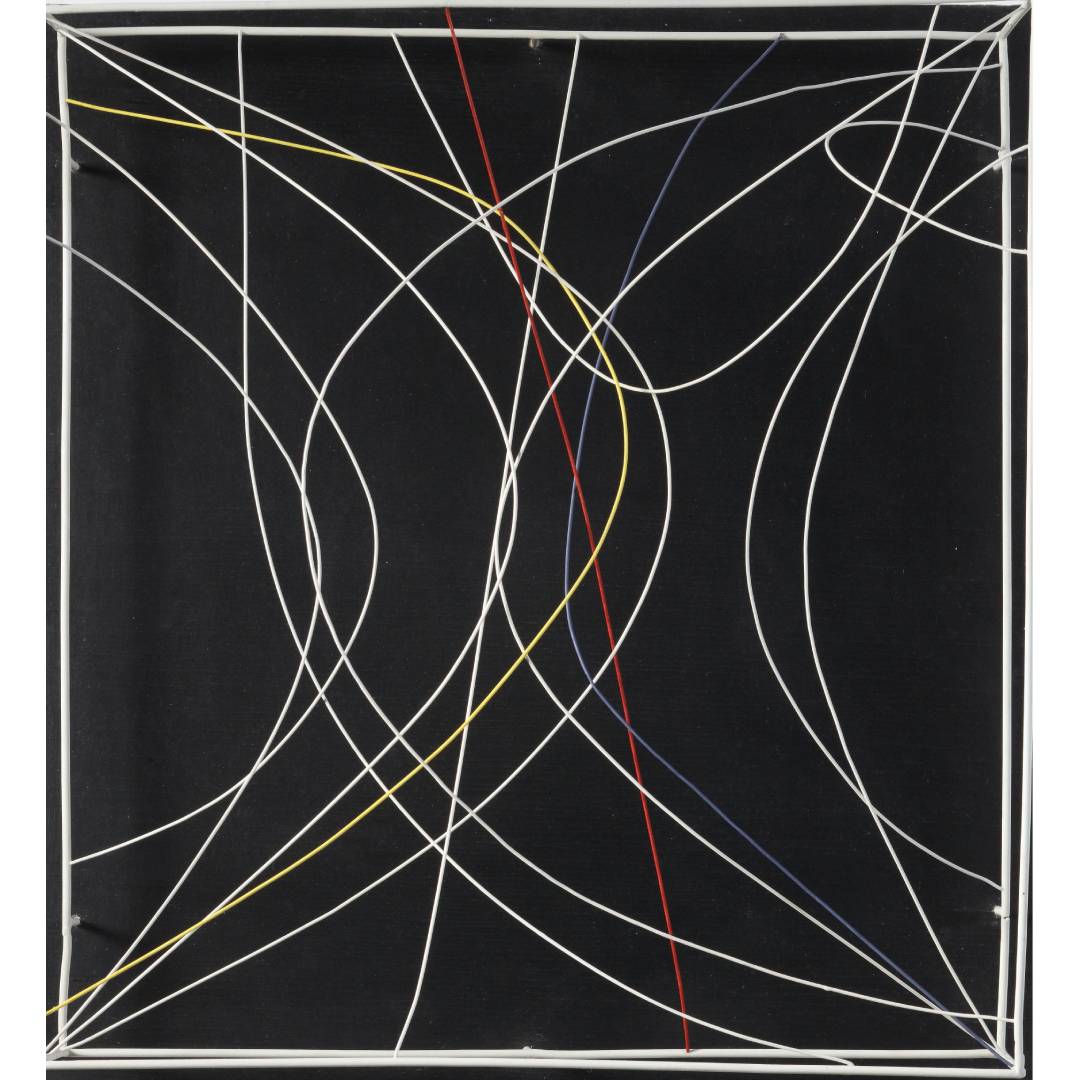
Aleksandar Srnec, Space Modulator, 1953

Aleksandar Srnec
Space Modulator, 1953
painted wood
49.5 × 53.6 × 18 cm
MG-4092
Aleksandar Srnec (1924–2010) was a painter, sculptor, graphic artist, and designer. He studied at the Academy of Fine Arts in Zagreb between 1943 and 1949. As a founding member of EXAT 51, Srnec was among the key figures advocating geometric abstraction and the synthesis of art and architecture in Yugoslavia in the early 1950s. After an initial commitment to radical constructivist painting, he soon expanded his practice to encompass spatial experimentation. As early as 1953, he constructed his first mobile and spatial objects. By the mid-1950s, he began exploring kinetic reliefs and sculptural movement, and from 1962 onward he devoted himself to lumino-kinetic research, investigating light as an autonomous artistic medium. Srnec’s trajectory charts a progression from geometric abstraction toward kinetic and light art, placing him among the pioneers of perceptual and programmed art in post-war Central Europe.
Among Srnec’s earliest spatial constructions, Space Modulator marks a definitive departure from the flat picture plane. Housed within a wooden framework, coloured linear elements project outward into actual space, activating the volume rather than enclosing it.
Rather than representing space, the work actively constructs it. Line, colour and void function as equal structural components. In the context of early 1950s Yugoslavia, this work signalled a clear break from figural tradition and aligned Zagreb with contemporary international constructive experimentation.

Text: Marta Radman, curator at the National Museum of Modern Art, Zagreb
Photo: Goran Vranić © National Museum of Modern Art, Zagreb

Šime Perić, Novella, 1958

Šime Perić
Novella, 1958
oil on canvas
130 × 162 cm
MG-4794

Šime Perić (1926–1990) studied mural painting at the École des Beaux-Arts in Paris and graduated from the Academy of Applied Arts in Belgrade in 1952. He emerged in the post-war period with works rooted in intimist figuration and dense chromatic structuring. Initially associated with socially engaged painting through Krsto Hegedušić’s circle, Perić rapidly shifted toward an autonomous exploration of colour, surface, and rhythm. By the late 1950s, his painting began to loosen figural definition in favour of expressive chromatic fields and symbolic reduction.
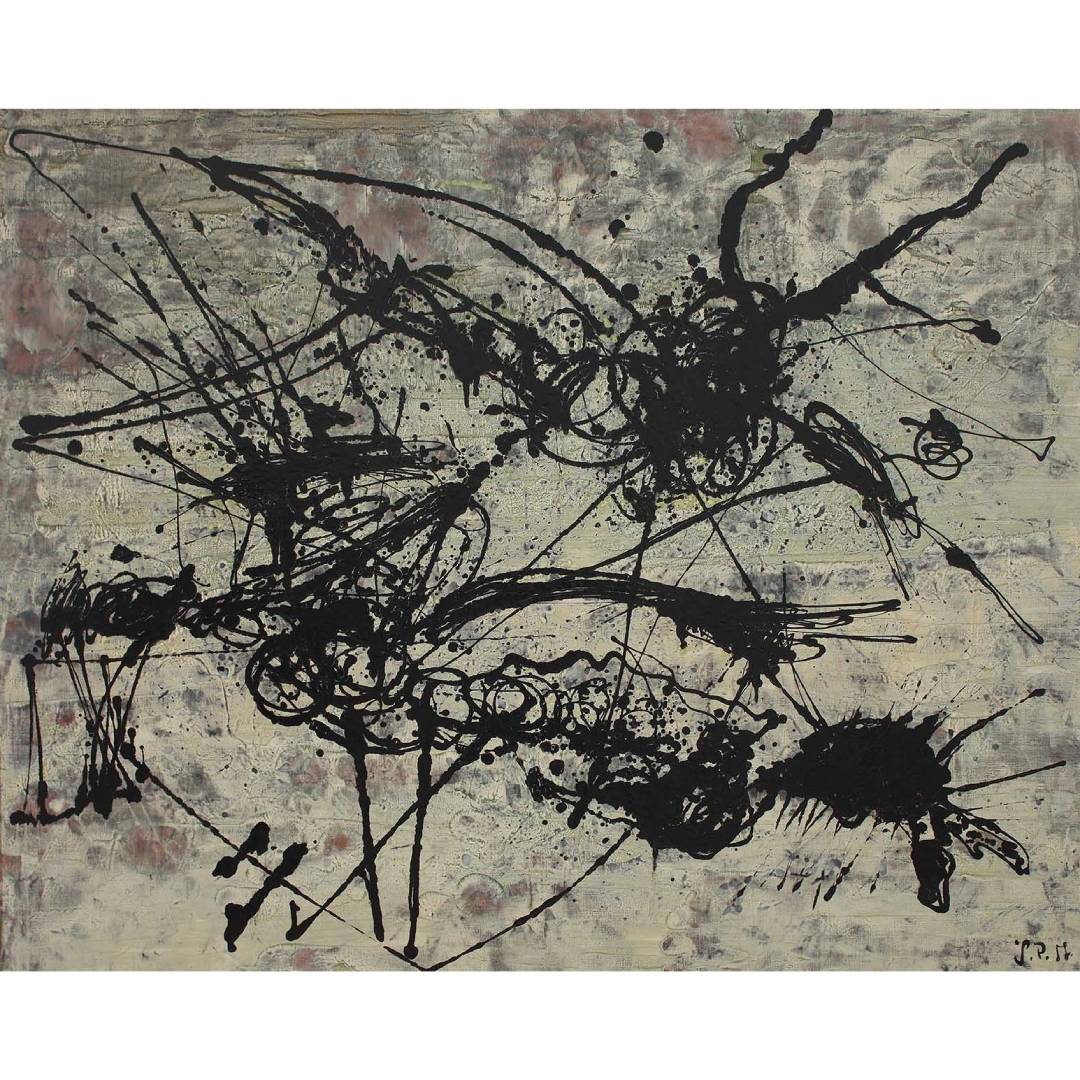
In Novella, Perić abandons intimist figuration and constructs a painting dominated by gestural eruption and material density. The surface is structured through vigorous black linear networks that traverse the canvas in sweeping arcs, splatters and concentrated knots of pigment. Rather than defining stable forms, the lines accumulate into agitated clusters that suggest movement, collision and compression. The pale, textured ground remains visible beneath the dark calligraphic layers, creating a tension between depth and surface. Spatial illusion is rejected; the painting asserts itself as a field of action in which gesture, gravity and material interaction determine the composition. Within the broader exhibition narrative, Novella reflects the emergence of material and gestural experimentation in post-war Croatian painting.
Text: Marta Radman, curator at the National Museum of Modern Art, Zagreb

Translated by: Marta Radman © National Museum of Modern Art, Zagreb
Photo: Goran Vranić © National Museum of Modern Art, Zagreb

Oton Gliha, Gromače 7, 1966

Oton Gliha
Gromače 7, 1966
oil on canvas
138 × 138 cm
MG-2547

The hard, muted stone of Oton Gliha (1914–1999), along with its dynamic precursor—a turbulent painterly lava of linear fissures, freely realized linear elevations, depressions, and chromatic incandescences—transforms, through variations of color, theme, and form, an autochthonous local site—originally marked as the dry-stone walls of Omišalj, Vrbnik, Krk, and Bakar—into a universal, cosmically suggested landscape viewed from an elevated perspective. It is a painting seemingly devoid of gravity; above and below are relativized, while syncopated rhythmic outpourings burst from the surface.
In its most distilled examples (as here, Gromače 7, 1966), the descriptive impulse is sublimated into an entirely new pictorial structure. The factuality of reality becomes the truth of the image. We encounter a new materiality: an unbounded combinatory composition that expands intangibly beyond the given format, as well as a morphology akin to the painter’s own words, sentences, and chapters. Optical forces emerge; we yield to the laws of the pictorial plane and perceive rhythms, directions and counter-directions, growths, parallels, and contractions within a constantly dynamic visual system. The motif is always filtered through the visual and material sieve of representation.

Text: Željko Marciuš, Museum Advisor at the National Museum of Modern Art © National Museum of Modern Art, Zagreb
Photo: Goran Vranić © National Museum of Modern Art, Zagreb

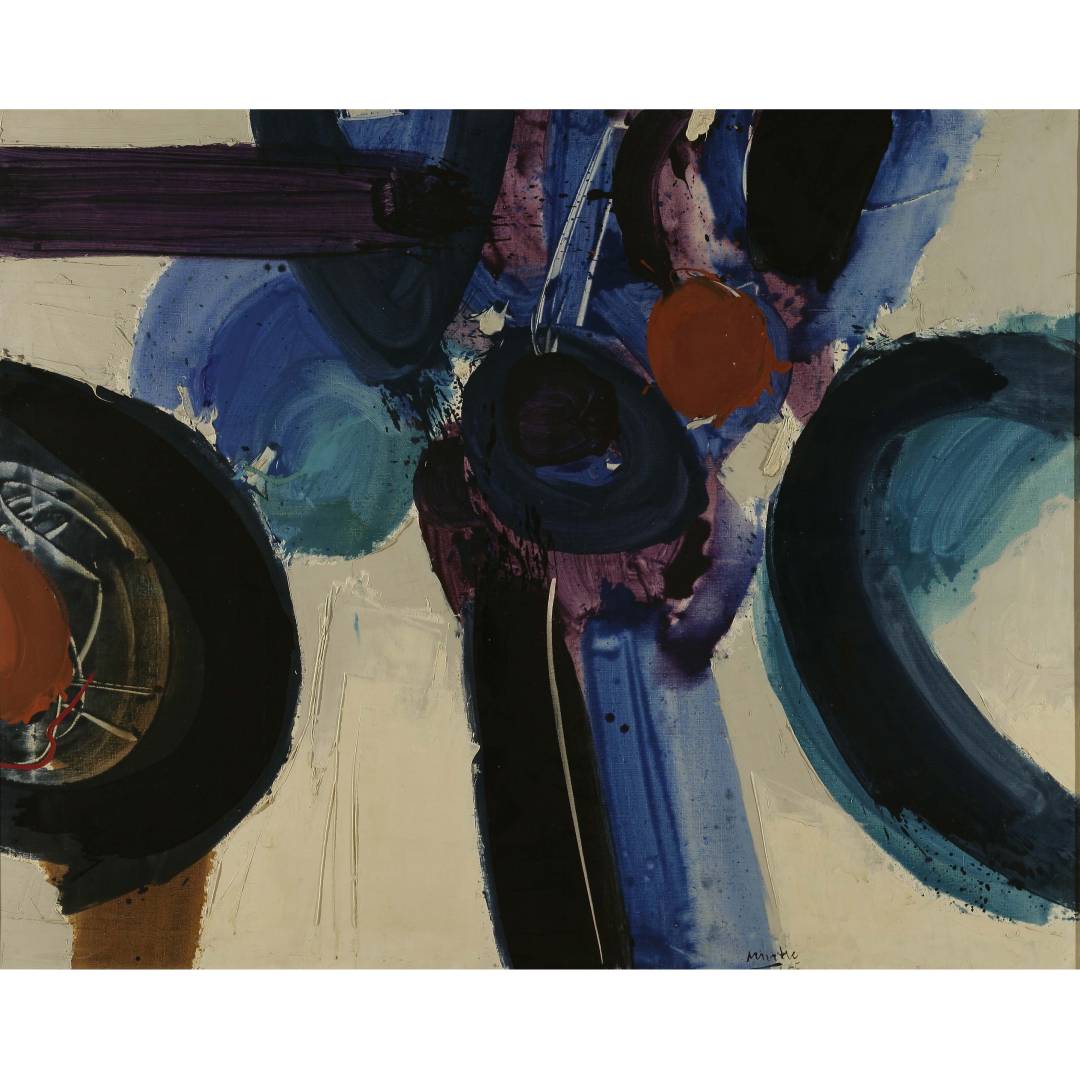
Edo Murtić, Encounter of Purple, 1965

Edo Murtić
Encounter of Purple, 1965
oil on canvas
130 × 162 cm
MG-2451

Edo Murtić trained with some of the leading artists of his time at academies in Zagreb and Belgrade. Beginning in the 1950s with a reduction of reality through landscapes influenced by lyrical abstraction and Tachism, Murtić developed, in the early 1960s, a distinctive abstract painterly style marked by dynamic gesture and intense color. Through this approach, he became the most influential and widely recognized artist of High Modernism in socialist Yugoslavia, achieving a notable international career.
In the painting Encounter of Purple (1965), Murtić employs broad, graphic strokes to present a vivid example of a coloristically rich confrontation between several fundamental elements of visual order: line and color. The entire visual structure is accelerated through graphic movement. Everything is in tension—stroke, chromatic and achromatic values, the act of painting itself, the ground, and the gesture upon it. Edges and core seem to dance through pronounced chromatic action and diagonal calligraphy, resulting in an expressive symphony. The composition’s strong dramatic quality is emphasized by the counterpoint between bold black strokes and dynamically modulated, condensed blue formations, accompanied by glimmers of reddish tonal accents that spread across the painting’s overall action-driven structure.

Text: Željko Marciuš, Museum Advisor at the National Museum of Modern Art © National Museum of Modern Art, Zagreb
Photo: Goran Vranić © National Museum of Modern Art, Zagreb

Emanuel Vidović, Old Church in Chioggia, 1907–1908

Emanuel Vidović
Old Church in Chioggia, 1907–1908
oil on canvas
86.5 × 97.5 cm
MG-6734

Within the Venice–Milan–Chioggia triangle that marked the formative years of Emanuel Vidović (1870–1953), all scholars emphasize the decisive role of Chioggia. This picturesque fishing town near Venice served as the place where Vidović’s artistic vision matured. It also left a lasting mark on his private life, as it was there that he met his future wife, with whom he would live in Split from the autumn of 1895 onward. Vidović would return to Chioggia and the Venetian Biennales throughout his life.
The abstracted landscape as an image of a “state of mind” can also be recognized in the painting Old Church in Chioggia (1907–1908). In the context of Vidović’s painterly expression, one can readily speak of the influence of Venice and its atmosphere, with its many, often-cited associations with music, literature, and James Abbott McNeill Whistler (1834–1903), within which his metaphorical understanding of landscape is rooted. A general feature of the Venetian painting tradition is a “tendency toward the elegance of the fantastic,” where, as described by Guido Perocco in his 1967 writings on nineteenth-century Venetian painting, already in the late Venetian landscapes of Francesco Guardi (1712–1793) one senses an “immersion in an enchanted atmosphere, enveloped in the emerald greens of water, vast expanses of sky streaked with red and azure tones.” Even its characteristically specific perspective—“in an unreal proportion of human figures to oversized architecture and space”—follows more the course of imagination than reality: everything is fluid and dreamlike in tone […].

Text: Ivana Rončević Elezović, PhD, Museum Advisor at the National Museum of Modern Art © National Museum of Modern Art, Zagreb
Photo: Goran Vranić © National Museum of Modern Art, Zagreb

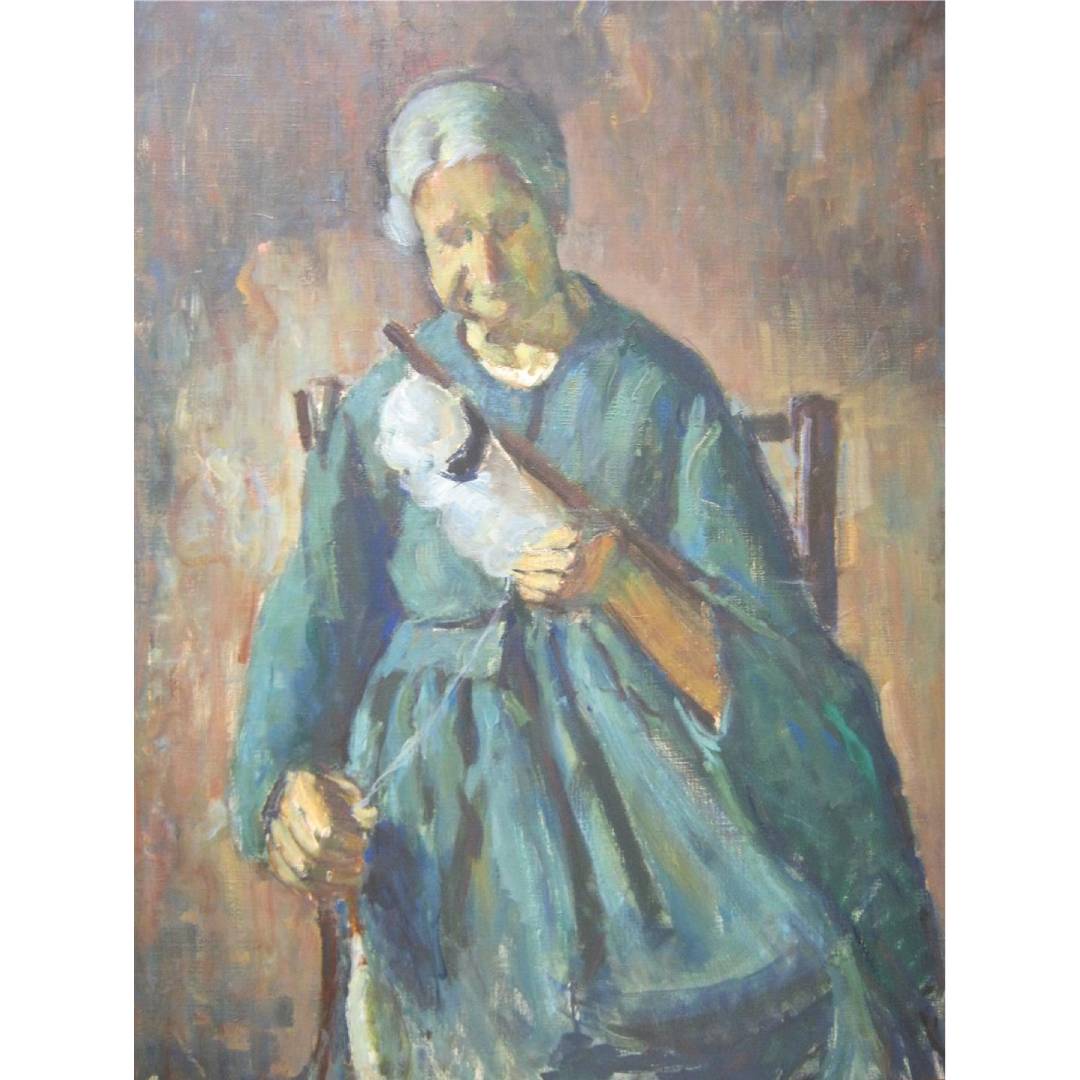
Jerolim Miše, An Old Woman, 1955

Jerolim Miše
An Old Woman, 1955
oil on canvas
87.5 x 67 cm
MG-2243

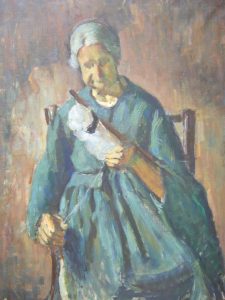
Jerolim Miše (Split, 1890 – 1970) was expelled from the Advanced School of Arts and Crafts in Zagreb in 1911 after openly criticising his teacher, Menci Clement Crnčić, and subsequently pursued further studies in Rome and Florence. Early in his career, his painting, influenced by Ivan Meštrović, was closely aligned with the linear style of the Secession. By the late 1920s, under the influence of French painting and contemporary German Expressionism, he developed a style of strongly geometrised forms, embodying both modernity and a sense of magical expressionism. As a member of the Group of Three, he played a role in shaping “our expression”. After the bold colourism and liberated gestures of the 1930s, he turned largely to intimate still lifes and landscapes in subdued tones, adopting a more realistic approach in the later decades of his life. Miše taught at the Academies of Fine Arts in Belgrade and Zagreb, wrote art criticism and theoretical essays, as well as poetry and short stories, and also worked in graphic design. He was a member of the Yugoslav Academy of Sciences and Arts.
Jerolim Miše’s portraiture of the 1930s resonated with contemporary bourgeois audiences and critics. While engaging with socially and politically relevant themes, he selected figures from the lower strata of society, yet presented them largely as clichés of hardship and poverty. In his works, poor children, women and the elderly, with their downcast, shadowed eyes, lose their individuality and serve primarily as symbols of the ‘other’ – the destitute, powerless and uneducated.
The socio-political undertone evident in many of Miše’s portraits continued into the 1950s. The hunched figure and downcast gaze of An Old Woman (1955) convey a profound sense of melancholy and the despair of the lower social classes.

Text: Lovre Mrduljaš © National Museum of Modern Art, Zagreb
Photo: Goran Vranić © National Museum of Modern Art, Zagreb

Ivan Picelj, Composition “Tyma 3”, 1951

Ivan Picelj
Composition "Tyma 3", 1951
oil on canvas
81 × 65 cm
MG-4081

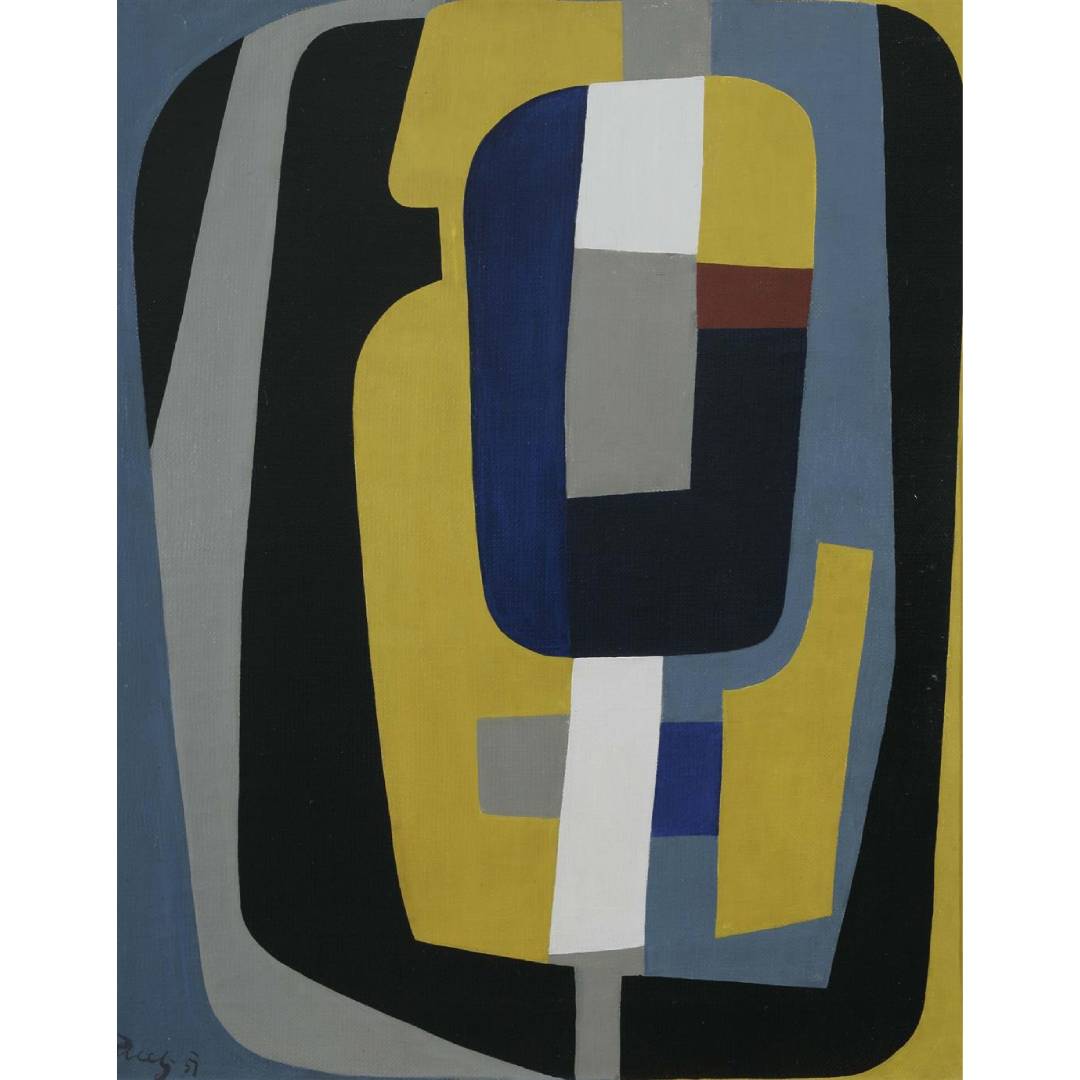
Ivan Picelj (1924–2011) was a painter, graphic artist and designer, and a leading figure in geometric abstraction in post-war Europe. He studied at the Academy of Fine Arts in Zagreb (1943–1946) but left before graduating, prioritising artistic independence over academic completion. As a founding member of EXAT 51 (1951–1956), Picelj played a central role in promoting abstract art and the synthesis of fine and applied arts in Yugoslavia. In the early 1960s, he became one of the initiators and key organisers of the international New Tendencies movement (1961–1973) in Zagreb, producing programmed and optical works that investigated visual perception, serial structures and systematic variation. His practice extended beyond painting to include graphic design, silkscreen prints, reliefs and objects, challenging traditional hierarchies between art and design.
In Tyma 3, Picelj maintains the constructivist framework but introduces curved elements that soften the strictly orthogonal order. The interaction of straight and rounded forms produces dynamic tension, while contrasting colours activate the surface. The painting demonstrates that early EXAT 51 abstraction was not rigidly purist, but rather receptive to experimentation within the boundaries of geometric order.

Text: Marta Radman, curator at the National Museum of Modern Art, Zagreb
Translated by: Marta Radman
Photo: Goran Vranić © National Museum of Modern Art, Zagreb
Ferdinand Kulmer, Light Painting II, 1960

Ferdinand Kulmer
Light Painting II, 1960
oil on canvas
65 × 82 cm
MG-2387

Ferdinand Kulmer (1925–1998) was a modernist and postmodernist painter who transformed from one style to another with a Mercurial ease. He descended from the noble Kulmer family—Styrian barons who arrived in Croatia in the 18th century. The most influential among them was the 19th-century lawyer and politician Franjo Kulmer.
A comparison by Tonko Maroević aptly captures the essence of the artist’s existence: while Picasso first painted and then bought castles, for Ferdinand Kulmer it was the other way around. During and after World War II, he studied painting—beginning in Budapest in 1942, and continuing in Zagreb until 1948 (under Ljubo Babić and Omer Mujadžić). He was also associated with the Master Workshop of Krsto Hegedušić until 1957.
The range of stylistic variations across three decades of his work is impressive, dynamic, and flows into a kind of hybrid form: from (post-)Fauvist figuration and the influence of Picasso, through an abstract phase (from 1957) marked by Art Informel, Tachisme, and monochromy with elements of action painting and calligraphy, to a postmodern new figuration in the 1980s. In the 1960s, his work was close to gestural Informel in the manner of Hans Hartung and Pierre Soulages, while in the 1970s it approached Japanese calligraphy.
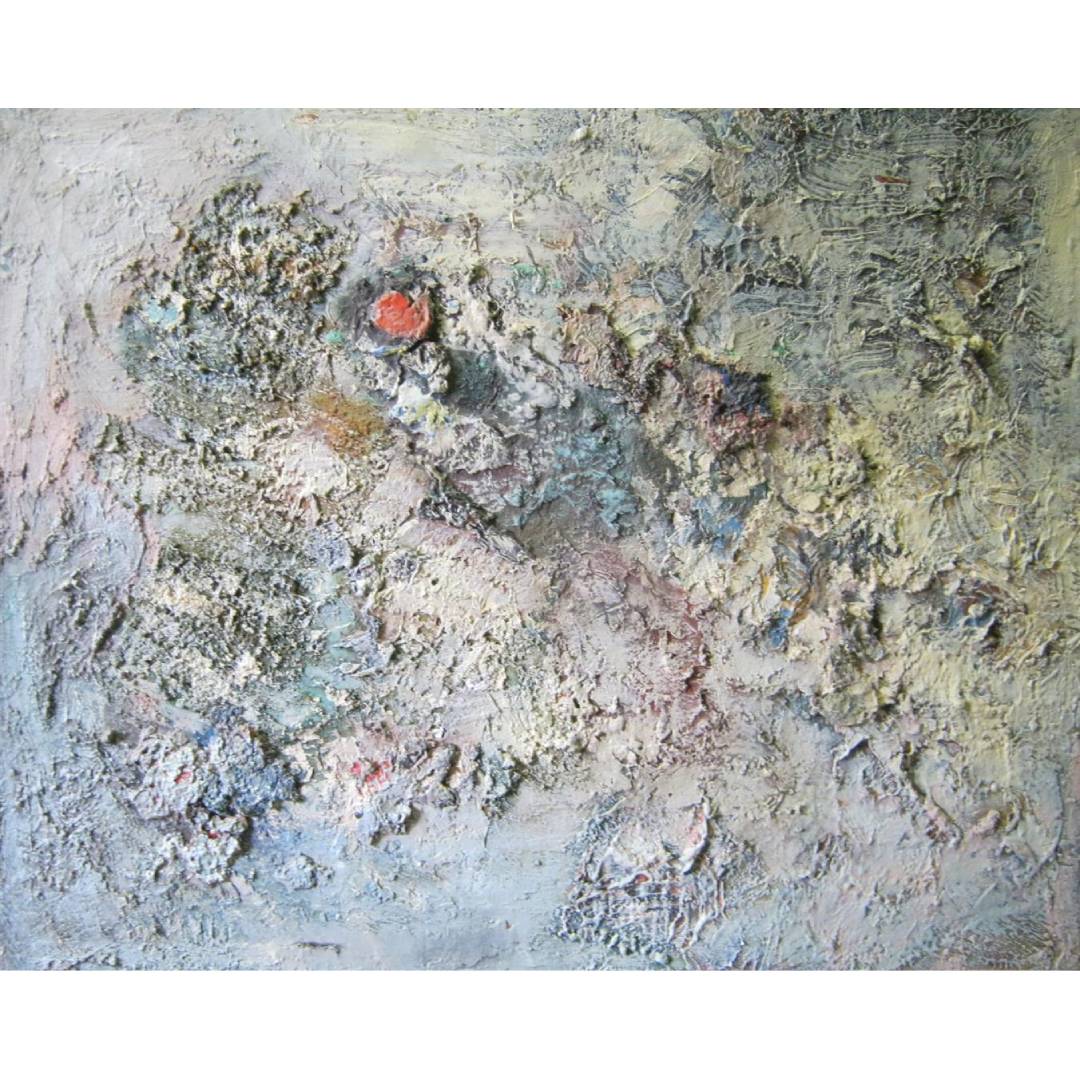
Kulmer’s Light Painting II (1960) reveals an artist who, as Igor Zidić writes, “rose above earthly space with wings on his shoes, disregarding reality and causality.” By combining Informel with abstract gradation, Kulmer creates an image of successive illuminated qualities. The painting exists as a material fact—a purposeful entity that contains nothing but itself—yet the gradation of light blue tones, accented by a glowing red detail, generates an atmosphere of refined aesthetics composed of numerous visual variables.

Text: Željko Marciuš, Museum Advisor at the National Museum of Modern Art © National Museum of Modern Art, Zagreb
Photo: Goran Vranić © National Museum of Modern Art, Zagreb
Henrika (Henrietta) Šantel, Laundress, 1907

Henrika (Henrietta) Šantel
Laundress, 1907
oil on canvas
89 x 66 cm
MG-574

The Slovenian painter Henrika (Henrietta) Šantel (Gorizia, 1874 – Ljubljana, 1940) began her artistic education in 1891 at the Women’s Academy of Art (Damenacademie) in Munich, where she studied under Friedrich Fehr and Ludwig Schmid-Reutte. She continued her training in Vienna with Anna Hillermann and Josef Michalek. Between 1904 and 1907, she frequently spent time in both Vienna and Munich, before returning to Gorizia, where she taught art. Following the annexation of Gorizia by Italy during World War I, Šantel moved to Maribor, and from 1929 onwards she lived in Ljubljana.
Šantel’s body of work largely focuses on representations of women in “traditional”, segregated roles. Yet, despite this framework, pieces such as The Laundress (1907) depart from conventional depictions and the accepted socio-cultural status of women. The figures in her paintings are imbued with a distinct individuality and a realist sensibility, setting themselves apart from prevailing social expectations and established artistic conventions.
The Laundress portrays an anonymous washerwoman caught in a moment of repose. In a composition that balances spontaneity and intention, the artist conveys not only the subject’s weariness from physical labour but also a sense of intimacy. The convention is further disrupted by the informal pose, with legs apart – a gesture wholly contrary to the canon of femininity, yet one that reveals authentic humanity and the beauty of the corporeal, the exhausted, and the real.

Text: Lovre Mrduljaš © National Museum of Modern Art, Zagreb
Photo: Goran Vranić © National Museum of Modern Art, Zagreb