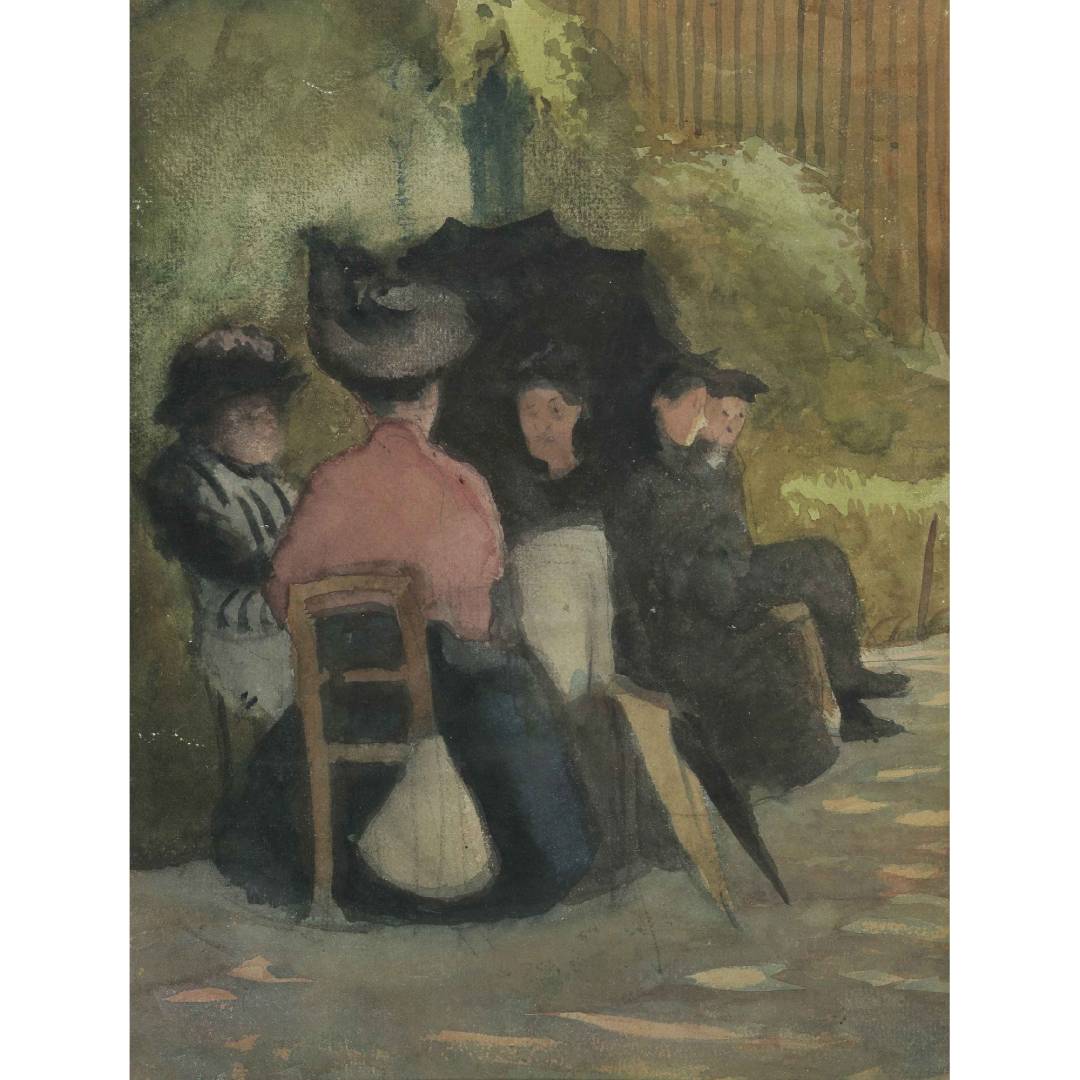
Josip Račić, In the Park (In Conversation II), 1908

Josip Račić
In the Park (In Conversation II), 1908
Watercolour on paper
28 × 22 cm
MG-764

In a letter to his father dated February 1, 1908, Račić expressed his decision to travel to Paris in order to further develop and advance as a painter. He arrived in Paris on February 10, 1908, where, within just four months, he created some of his most important works.
During his first weeks in Paris, the winter led him to spend much of his time in museums and galleries, studying the works of the great masters. With the arrival of spring, however, the mild climate and the vibrant atmosphere of the city drew him outdoors. Račić increasingly frequented the parks, observing everyday life that became the source of many of his motifs.
It was in the Parisian parks that Račić produced a series of watercolours depicting social scenes, rendered through his distinct artistic lens, such as In the Park (In Conversation II), painted in 1908.
These leisurely urban scenes identify Račić as a Baudelairean “painter of modern life,” a flâneur – a stroller through the streets of the modern metropolis. He bore witness to its dynamism, constant change, and the multitude of sensations offered by modern society, interwoven with diverse social relations and conventions shaped by modernity. The backdrops of this life were cafés, theatres, parks, and streets. Račić captured them all in watercolour, with swift and assured brushstrokes that echoed the excitement of urban flux itself.
Paris appears here as a living mega-organism, and Račić’s watercolours – including his Pont des Arts – are not contemplative city views but vivid testaments of enthusiasm: for movement, light, monumental architecture, and the very moment of creation.

Text: Tihana Galić, Curator at the National Museum of Modern Art © National Museum of Modern Art, Zagreb
Photo: Goran Vranić © National Museum of Modern Art, Zagreb
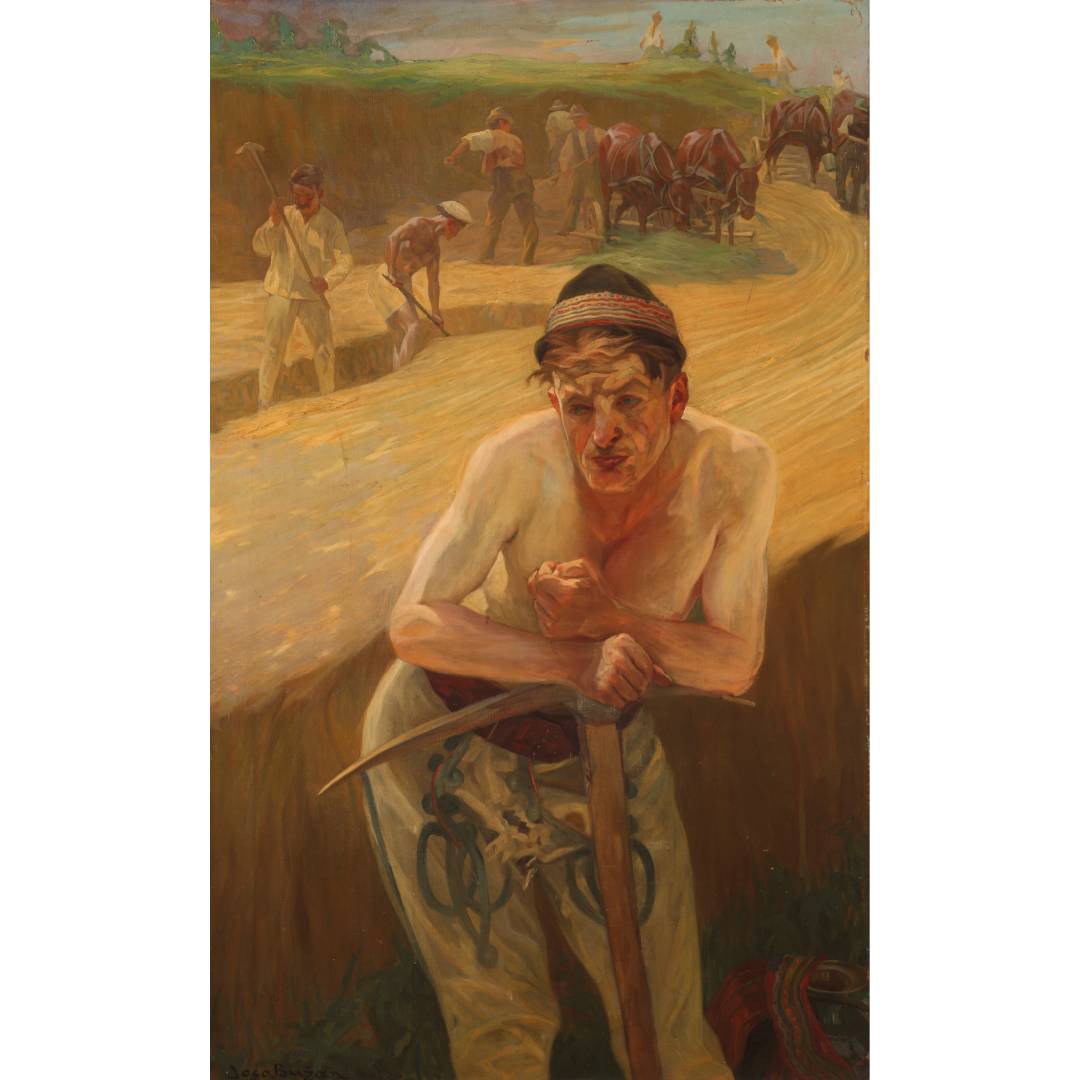
Joso Bužan, Fate, 1934

Joso Bužan
Fate, 1934
oil on canvas
124 x 89 cm
MG-7418

Joso Bužan (1873–1936) received his art training in Zagreb, Vienna, Germany, and Italy. He primarily painted rural genre scenes, especially from the Zagreb region, as well as portraits. His work is characterised by plein-air and pseudo-plein-air realism, with a strong emphasis on colour. Despite some variation in quality, Bužan was a significant and active figure in the Croatian art scene at the turn of the 19th to the 20th century.
Bužan’s 1934 painting Fate is a fine example of his oeuvre. In the foreground, a farmer is shown en face, momentarily pausing from his work, while the rest of the group continues labouring in the background. By drawing attention to the worker’s fatigue, the painting underscores the harsh realities faced by a section of society during the interwar period.

Text: Lovre Mrduljaš © National Museum of Modern Art, Zagreb
Photo: Goran Vranić © National Museum of Modern Art, Zagreb
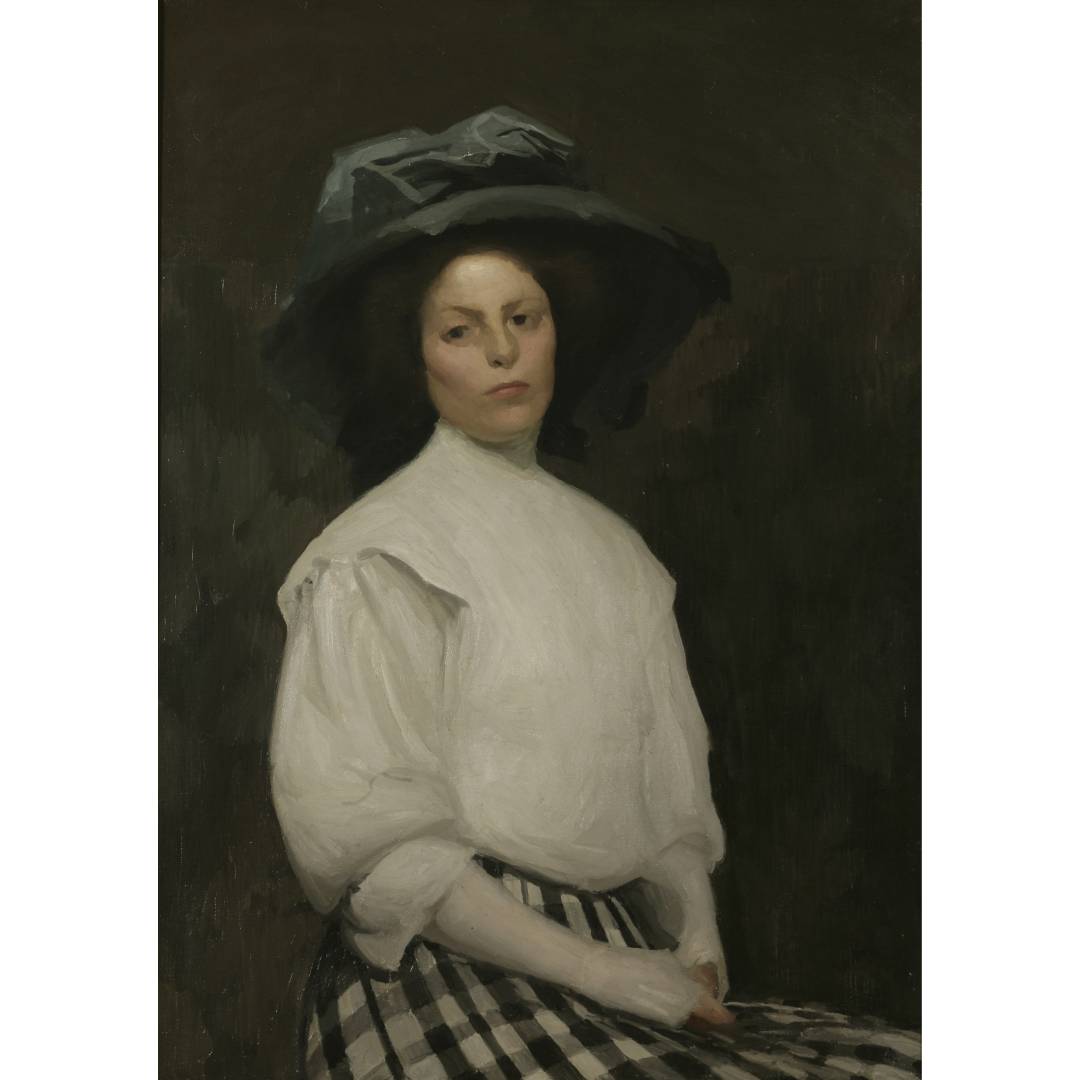
Josip Račić, Lady in White, 1907

Josip Račić
Lady in White, 1907
oil on canvas
100 × 73 cm
MG-744

Josip Račić (1885–1908) was born on March 22, 1885, in the village of Horvati on the southwestern outskirts of Zagreb. He attended elementary school and the Royal Real Gymnasium in Zagreb, and at fifteen began training as a lithographer in the workshop of Vladimir Rožankowski. In 1904 he moved to Munich to study at Anton Ažbe’s private painting school. In 1905 he spent a period in Berlin working as a lithographic draughtsman, and later that year enrolled at the Munich Academy of Fine Arts, studying under Johann and Ludwig Herterich and Hugo von Habermann.
In Munich, Račić shared classes with Vladimir Becić, Miroslav Kraljević, and Oskar Herman, a group later known as Die Kroatische Schule (The Croatian School) or, in Croatian art history, the Munich Circle. His life ended tragically in Paris at the age of twenty-three.
Painted in 1907 during his Munich studies, Lady in White is a portrait executed in the spirit of Old European painting. The model’s pose is simple, the color palette restrained, and subtle tonal gradations convey a strong sense of volume. The sitter, Fanny, was the daughter of the owner of a vegetarian restaurant frequented by the Croatian students in Munich and was reportedly the object of Račić’s affection. This portrait is considered one of the artist’s most significant works.

Text: Tihana Galić, Curator, National Museum of Modern Art © National Museum of Modern Art, Zagreb
Photo: Goran Vranić © National Museum of Modern Art, Zagreb
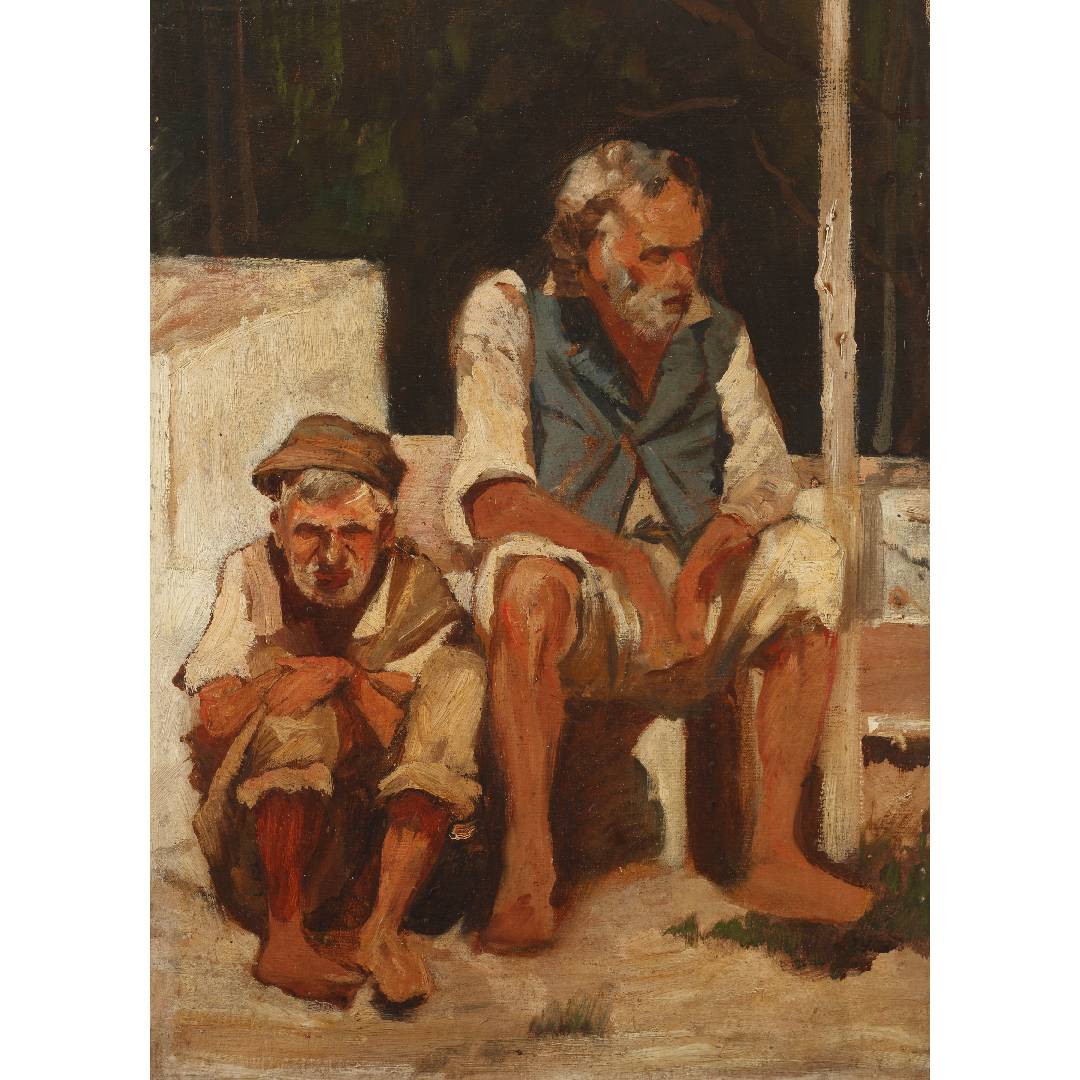
Izidor Kršnjavi Two Beggars, 1874

Izidor Kršnjavi
Two Beggars, 1874
oil on canvas
41.7 × 33.8 cm
MG-116

Izidor Kršnjavi (1845–1927) was a Croatian art historian, painter, and prominent cultural and public figure who, from the 1870s until the Croatian Salon exhibition of 1898, and even up to the eve of World War I, held a dominant—later still significant—role in shaping cultural and artistic life in Croatia. His monumental importance to the history of Croatian art and culture is reflected in numerous cultural and educational initiatives and his pioneering role in founding key Croatian institutions.
He was the first professor of art history at the University of Zagreb (1877–1918), initiated the founding of the Art Society (1878), which in turn led to the establishment of the Modern Gallery (today’s National Museum of Modern Art) in 1905, the Museum of Arts and Crafts (1880), and the School of Applied Arts (1882). Kršnjavi also served as the first director of the Strossmayer Gallery of Old Masters and editor of its first catalogue, and he reorganized the Archaeological Museum. He championed the revival of traditional crafts and folk art.
Kršnjavi’s Italian landscapes and genre scenes—characterized by small formats, a freer painterly technique with visible brushstrokes, clear daylight, and an overall atmosphere of spontaneous, direct observation of reality—embody a more modern understanding of realism in painting. Within this tradition, though less numerous than his landscapes and city views, are his studies of the human figure, especially depictions of Italian peasant women and other common folk, a subject frequently explored by both Croatian and foreign artists working in Italy. To this group belong Kršnjavi’s studies of beggars, beggar women, and street vendors, such as Two Beggars (1874), which, like comparable studies by Guglielmo Ciardi, verge on the genre theme. Similar figure studies were also created by artists such as Corot and other European painters of the period. In the context of the classical tradition, figure studies—like landscape studies—served two primary purposes: as exercises in direct painting from life (i.e., from a model) and as a means of studying costume and pose for later use in studio compositions with pastoral themes.

Text: Ivana Rončević Elezović Phd, Senior Curator, National Museum of Modern Art © National Museum of Modern Art, Zagreb
Photo: Goran Vranić © National Museum of Modern Art, Zagreb
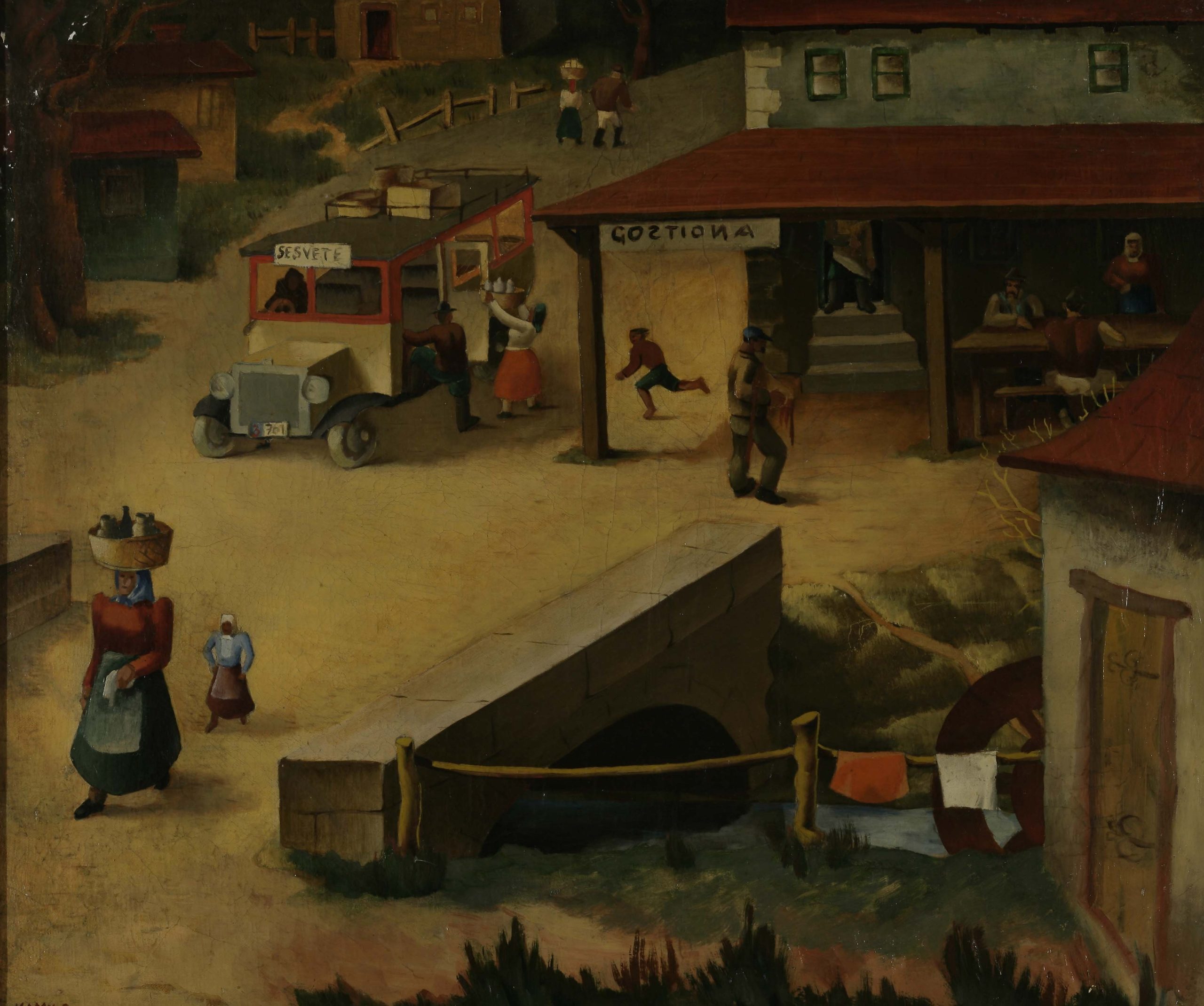
KAMILO RUŽIČKA, Bus, 1930

Kamilo Ružička
Bus, 1930
oil on canvas
63.5 × 74.5 cm
MG-3015

In the painting Bus, Kamilo Ružička captures the vibrant everyday life of a suburban settlement in the 1930s. The composition is dense and rich in detail, centered around a bus labeled “Sesvete” with figures engaged in typical daily activities: arriving, greeting, carrying goods, or entering a tavern. Ružička conveys a strong sense of community and movement, capturing the rhythm of life around this small transport hub. The figures are simply modeled and set against geometrically clear architecture, with flat areas of color and a rhythmically organized space. This work belongs to the period of Ružička’s career under the influence of Association of Artists Zemlja, of which he was a prominent member. At that time, he turned to socially engaged themes, portraying ordinary people in everyday scenes with empathy and directness, using a visual language shaped by post-Cubist and decorative stylization. Bus embodies the key features of his painting: formal clarity, compositional conciseness, and a subtle narrative sensibility.

Kamilo Ružička graduated from the Academy of Fine Arts in Zagreb in 1923 under Ljubo Babić. He continued his studies in Munich, Vienna, and Paris, and worked as an art teacher in Bakar, Varaždin and Zagreb. His work bridges constructive visual clarity and a humanistic perspective, making a significant contribution to interwar Croatian modernism.

Text: Lorena Šimić, Curator / Museum Educator, National Museum of Modern Art, Zagreb
© National Museum of Modern Art, Zagreb


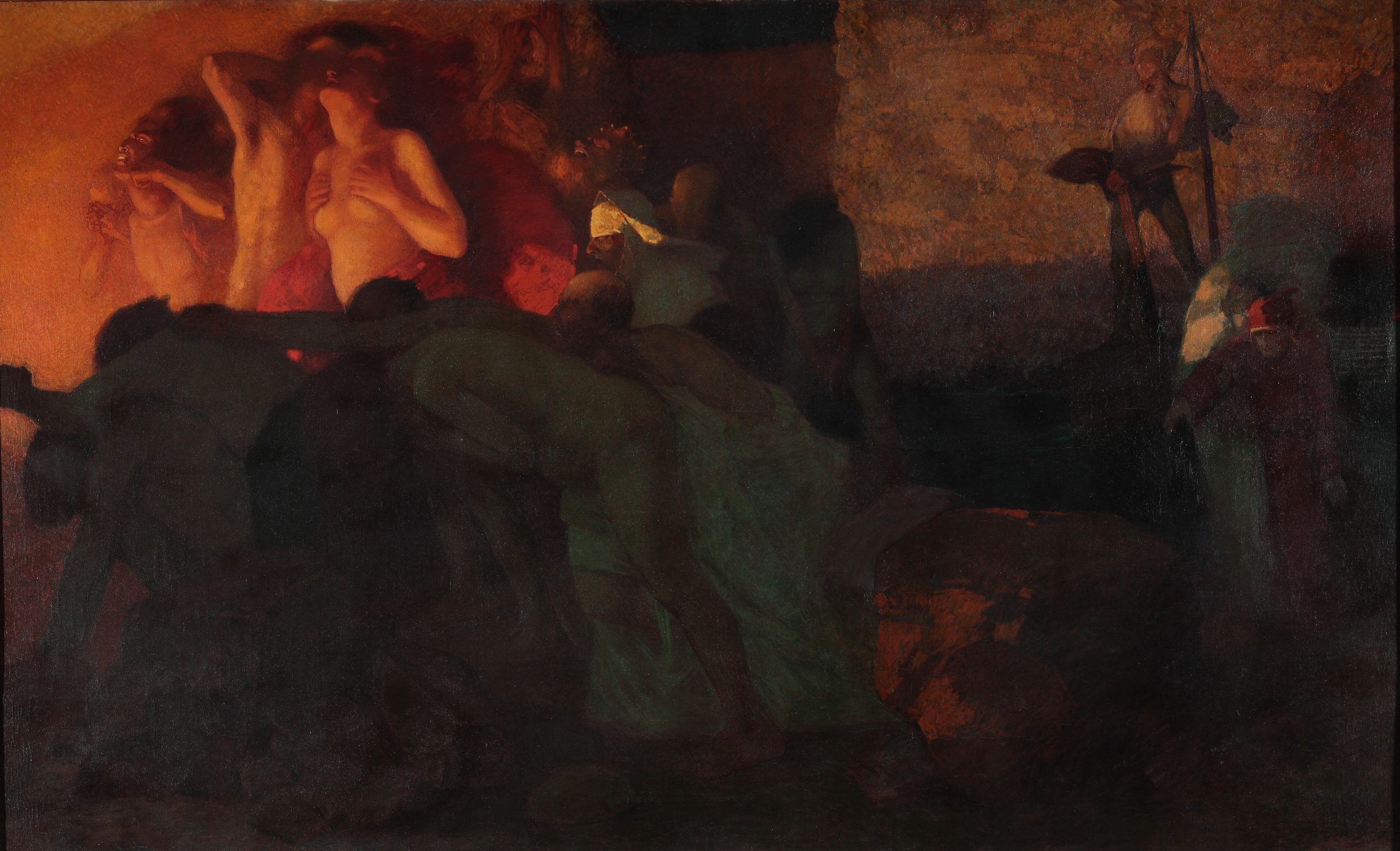
Mirko Rački, Crossing of the Acheron, 1907

Mirko Rački
Crossing of the Acheron, 1907
oil on canvas
141 × 230 cm
MG-843

A favourite theme of Symbolist painting was literature, particularly Dante. Alongside Vlaho Bukovac, who painted scenes from Dante’s cycle, Mirko Rački (1879–1982) stands out as the artist whose oeuvre was most profoundly marked by this subject. He first turned to Dante at the suggestion of Izidor Kršnjavi, who at that time had translated the Divine Comedy into Croatian. Rački produced a series of illustrations for Dante’s work, later published in the Croatian edition, as well as several large-scale painterly adaptations. We know that the sketch for The City of Dis (1906) was created during his stay in Venice. Rački devoted almost his entire career to this Dantean cycle. His drawings, gouaches, and watercolours for Kršnjavi’s translation, produced between 1904 and 1907, were purchased at an exhibition in Italy in 1911 and are today preserved in the Print Room in Florence.

In this large, horizontally oriented composition, rendered in a crepuscular manner with a dark palette heightened by accents of orange-red, Rački depicts a scene from Dante’s Inferno. The lower two-thirds of the canvas are enveloped in a nearly black shadow through which bent and suffering figures can be discerned. In the upper left corner, a group of nude figures, lit with orange-red highlights, are shown from the waist up in contorted poses of agony. At the far right edge stand Dante, dressed in red, and Virgil, in white. In the upper right corner looms a demonic guardian with a sword.

The River Acheron—one of the five rivers of the Underworld in Greek mythology, described as the river “of sorrow and distress” across which the ferryman Charon transports the souls of the dead—is reimagined in Dante’s Inferno as the boundary of Hell, situated in the so-called Ante-Hell. By transposing Dantean motifs into oil painting, as exemplified in Crossing of the Acheron (1907), Rački employed a mediated and modified version of Piedmontese-Lombard Divisionism. Stripped of pronounced chromatic intensity, with blurred transitions of blended tones and linear pennellata, this approach generated the tense, vibrating surfaces characteristic of Symbolist canvases. The European popularisation of this painterly technique owed much to Giovanni Segantini, whose influence was strongly felt in the artistic milieus of Vienna and Munich. Moreover, as with Čikoš, Rački’s engagement with Divisionist methods can also be partly attributed to his contact with Bukovac. Thus, the painting reflects a typical Central European adaptation of mediated Divisionism in the service of Symbolist expression—an approach characteristic of the late 19th and early 20th centuries, and one that particularly shaped the artistic production of the Zagreb circle.

Text: Ivana Rončević Elezović PhD, Senior Curator at the National Museum of Modern Art © National Museum of Modern Art, Zagreb

Photo: Goran Vranić © National Museum of Modern Art, Zagreb
 

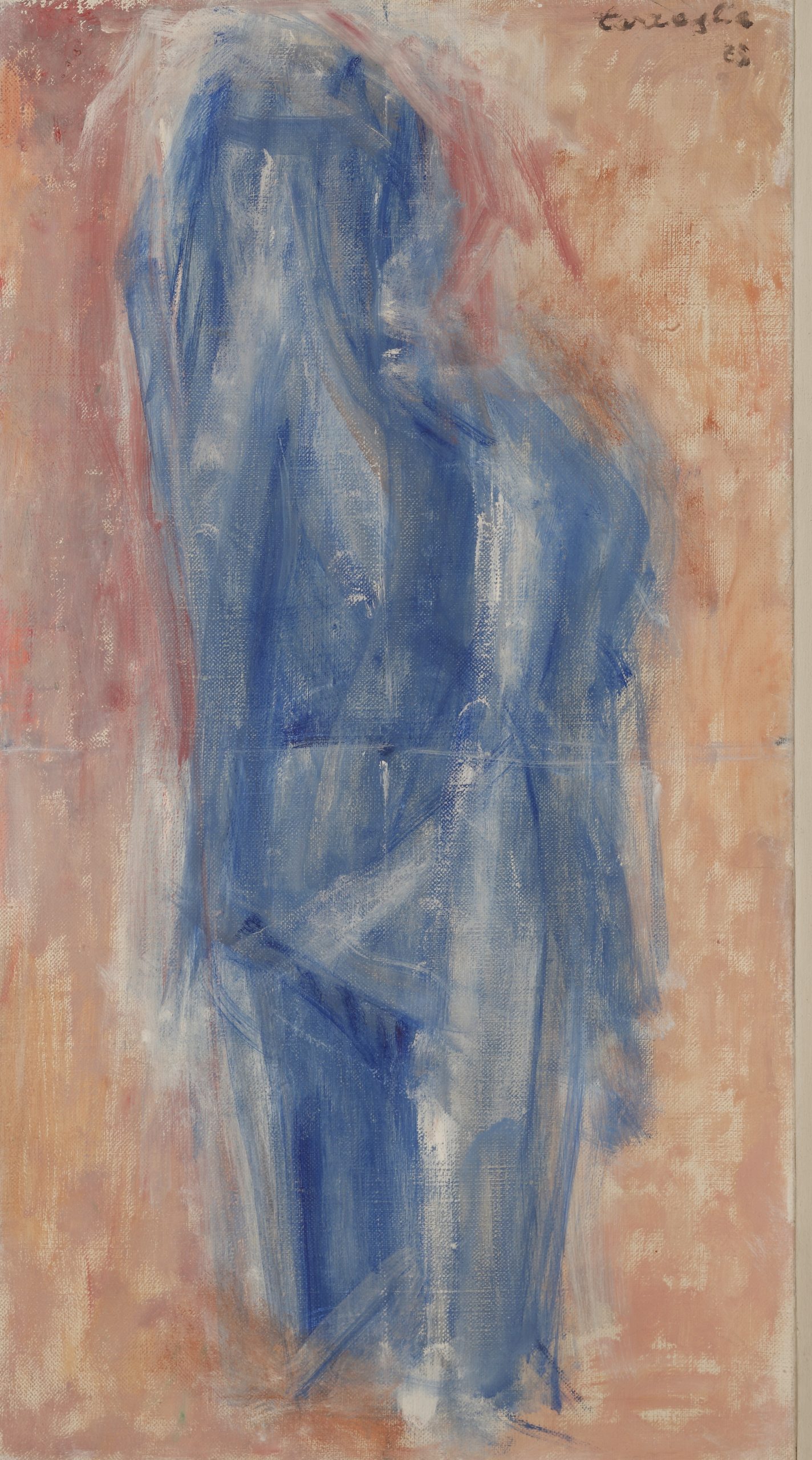
Marino Tartaglia, Figure, 1975

Marino Tartaglia
Figure, 1975
oil on canvas
90 × 52 cm
MG-3468

Marino Tartaglia (1894–1984) was a universal modernist of both the historical and the high modern period. His painting represents a synthesis of influences and styles: El Greco and Tintoretto, primitivism, Cézannism, Cubism, Expressionism, Futurism, Neoclassicism, Colorism, lyrical and reductive abstraction. Not individually, but integrated as a whole. Tartaglia’s references are often elusive, while his art is grounded in the rationalization of painterly procedures. Through them he reconciles the principles of plastic order with an emotional approach to painting (T. Maroević). He reduces the painting to flat volume, eventually arriving at a typified form—the pentagram. Tartaglia’s sfumato is in correlation with E. Vidović. In his Marginalia he resolves contradictions with the postulate: “A painting must reconcile all opposites; it must be, in its own time, an atemporal archaeological find.”

From 1912 he studied in Florence (with Giacometti) and in Rome at the Istituto Superiore di Belle Arti, where he befriended Futurists associated with the journal Lacerba. As the only foreigner, he exhibited in Rome in 1918 at the Exhibition of Independent Artists alongside eminent representatives of the Italian avant-garde (C. Carà, G. De Chirico, E. Prampolini, A. Soffici). After the First World War (1918–1921) he lived in Split, Vienna, Belgrade, and France. From 1947 he was a full professor at the Academy of Fine Arts in Zagreb, and from 1948 a regular member of the Yugoslav Academy of Sciences and Arts.

The painting Figure (1975) distills its subject into two fundamental registers—presenting a reduced and essential depiction of a blue figure, an object in and of itself.

He received the Vladimir Nazor Lifetime Achievement Award in 1964, and retrospectives of his work were held in 1975 at the Art Pavilion in Zagreb and in 2004 at Klovićevi Dvori Gallery.

Text: Željko Marciuš, Senior Curator, National Museum of Modern Art © National Museum of Modern Art, Zagreb

Photo: Goran Vranić © National Museum of Modern Art, Zagreb
 

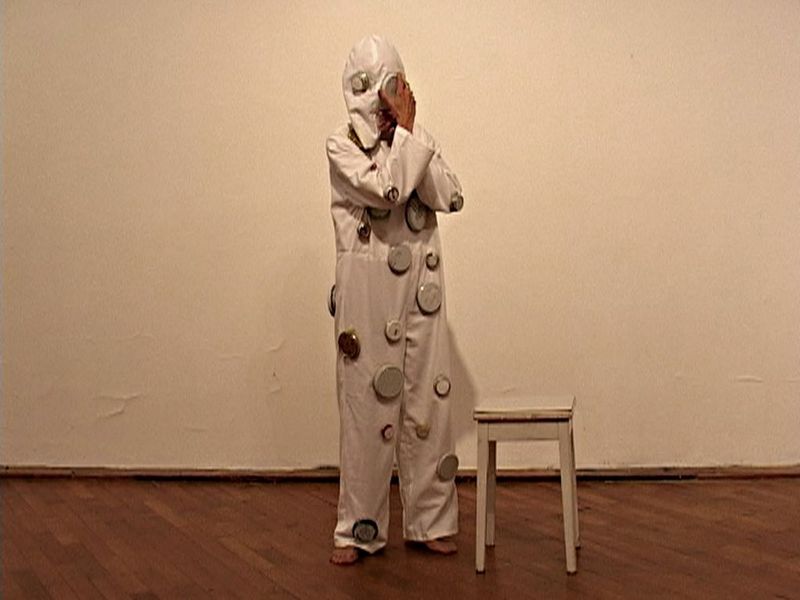
Vlasta Žanić, Zatvaranje (Closure), 2002

Vlasta Žanić

Zatvaranje (Closure), 2002

video

MG-6841a


Vlasta Žanić (b. 1966) is a Croatian visual artist who graduated in Sculpture from the Academy of Fine Arts in Zagreb in 1990. Her practice is marked by a minimalist approach and an exploration of the relationships between form and space, as well as symbolic and psychological dimensions. In her early work, she addressed sculptural problems using movement in kinetic installations to evoke the idea of the permanence of change. These sculptural foundations often serve as a conceptual basis for her work in other media, including performance, video performance, and video works. In these pieces, Žanić addresses socially imposed stereotypes, the fragile boundary between construction and (self)destruction, and the perception of space.

Closure is her first performance, realised in 2002 at the opening of the exhibition Powerlessness in Galerija Karas, Zagreb. In this performance, Žanić appears before the audience wearing a white coverall punctured with holes, each edged with the threaded rims of glass jars. She proceeds to close the holes by screwing on jar lids, symbolically “sealing herself,” thereby interrupting the flow of energy and creating a metaphor for emotional and physical self-erasure. The coverall with holes represents vulnerability and openness to the outside world, while the act of closing them with lids becomes a gesture of defence and withdrawal. The artist explores her own fragility and the instinct for self-protection. Within the context of socially imposed expectations and stereotypes, Žanić confronts her self-perception and her role in society. The performance interrogates the boundaries between public and private, inner and outer, construction and destruction.


Text: Marta Radman, curator of the National Museum of Modern Art © National Museum of Modern Art, Zagreb
Translated by: Marta Radman

Still Image from the Vlasta Žanić's Zatvaranje (Closure) video from 2002 - from the National Museum of Modern Art's Archives

Joso Bužan, Old Peasant Couple, 1910

Joso Bužan
Old Peasant Couple
1910
oil on canvas
MG-407

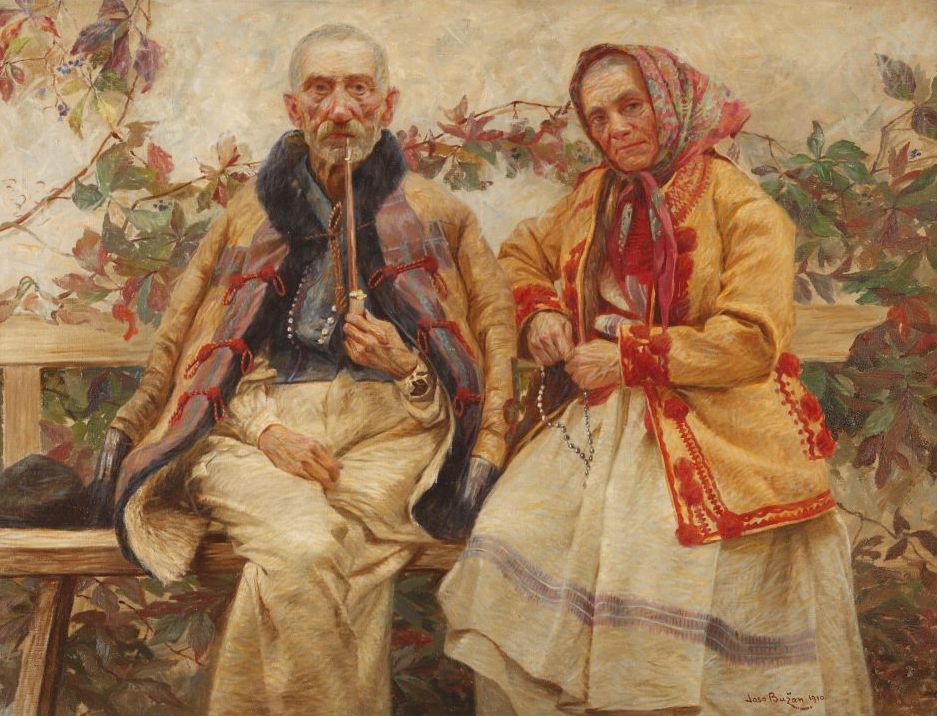
In Old Peasant Couple, Joso Bužan portrays an elderly man and woman sitting side by side on a bench, dressed in traditional folk attire. Their calm presence, solemn yet gentle expressions, and the symbolic rosary in their hands evoke themes of old age, piety, and life experience. The detailed rendering of textures, from the wrinkles on their faces to the intricate embroidery on their clothing, reflects the artist’s attentive observation of everyday life and his skill in capturing ethnographic details. The composition exudes stillness, humility, and dignity, while the leafy backdrop creates a sense of natural intimacy.

This painting is a fine example of Bužan’s focus on realistic depictions of rural life, often infused with subtle idealization and a decorative rhythm. His preference for folkloric subjects, a bright palette with an emphasis on the white and red of national costumes, and his narrative and humorous approach, make him a recognizable figure within early 20th-century Croatian genre painting.

Joso Bužan studied in Zagreb, Vienna, and Munich, and was also active as a photographer. His artistic work greatly contributed to documenting the life and customs of rural Croatia, particularly in Slavonia, Posavina, and the Zagreb region. He participated in numerous exhibitions at home and abroad, and his works were especially popular among the general public due to their accessible subject matter and expressive vitality. Paintings such as this one highlight his ability to convey emotional depth and cultural significance through portraiture and genre motifs.

Text: Lorena Šimić, Curator / Museum Educator, National Museum of Modern Art
© National Museum of Modern Art, Zagreb
Vlaho Bukovac, Head of a Black Man, 1877–1878

Vlaho Bukovac

Head of a Black Man

1877–1878

oil on canvas

36.5 × 29.5 cm

MG-3886

Vlaho Bukovac (1855–1922), the initiator of Croatian modern art, was a curious and adventurous spirit who had already travelled to America as a child. Thanks to the Pan-Slavic-oriented writer Medo Pucić and Bishop Josip Juraj Strossmayer, Bukovac enrolled at the Parisian École des Beaux-Arts, where he studied under Alexandre Cabanel. Over the years, he became familiar with Impressionist painting and developed his own artistic style, drawing on Realism, Impressionism, and occasionally Symbolism. He was one of the initiators behind the construction of the Art Pavilion in Zagreb, and in 1897 he founded the Society of Croatian Artists, which opposed Izidor Kršnjavi’s Croatian Society of Art by advocating for plein-air painting—thus giving momentum to Croatian modernism. Under his influence, painters began working with a lighter palette and developed a variant of Croatian realist painting with bright coloration known as the Zagreb Colourful School. Due to disagreements with Kršnjavi, Bukovac left for Cavtat in 1898, and in 1903 moved to Prague, where he became a professor at the Academy of Fine Arts.

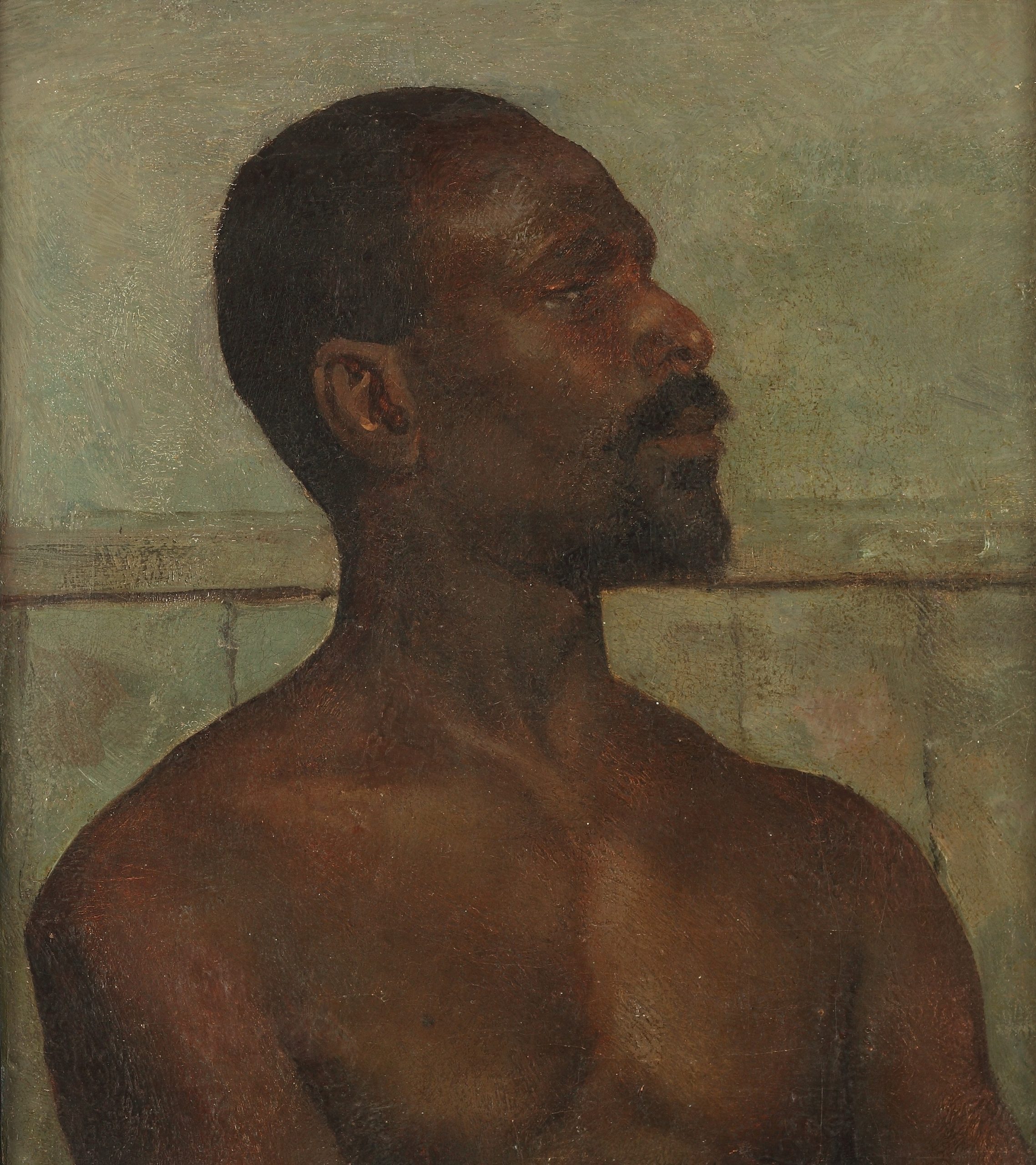
The painting Head of a Black Man depicts a profile portrait of a young African American man with regular facial features and a bare, muscular torso, set against a neutral background. His short black hair sharply defines the contour of the skull, as do the precisely rendered moustache and short beard. It is known that Bukovac painted portraits quickly, in just a few sittings, and always strove to establish communication with the sitter. Fascinated by the Oriental and the exotic, Bukovac explores the facial characteristics of the young man, imbuing the image with depth and dignity. Although the portrait is rendered with an individualistic approach, the historical context of its creation carries latent currents of objectification and colonial bias. Exoticism, as a defining ethos of the European imagination in the 18th and 19th centuries, is reflected in the depiction of Black figures, which became lasting and influential symbols of the period’s fascination with the exotic.


Text: Marta Radman, curator of the National Museum of Modern Art © National Museum of Modern Art, Zagreb
Translated by: Marta Radman / Photo: Goran Vranić © National Museum of Modern Art, Zagreb