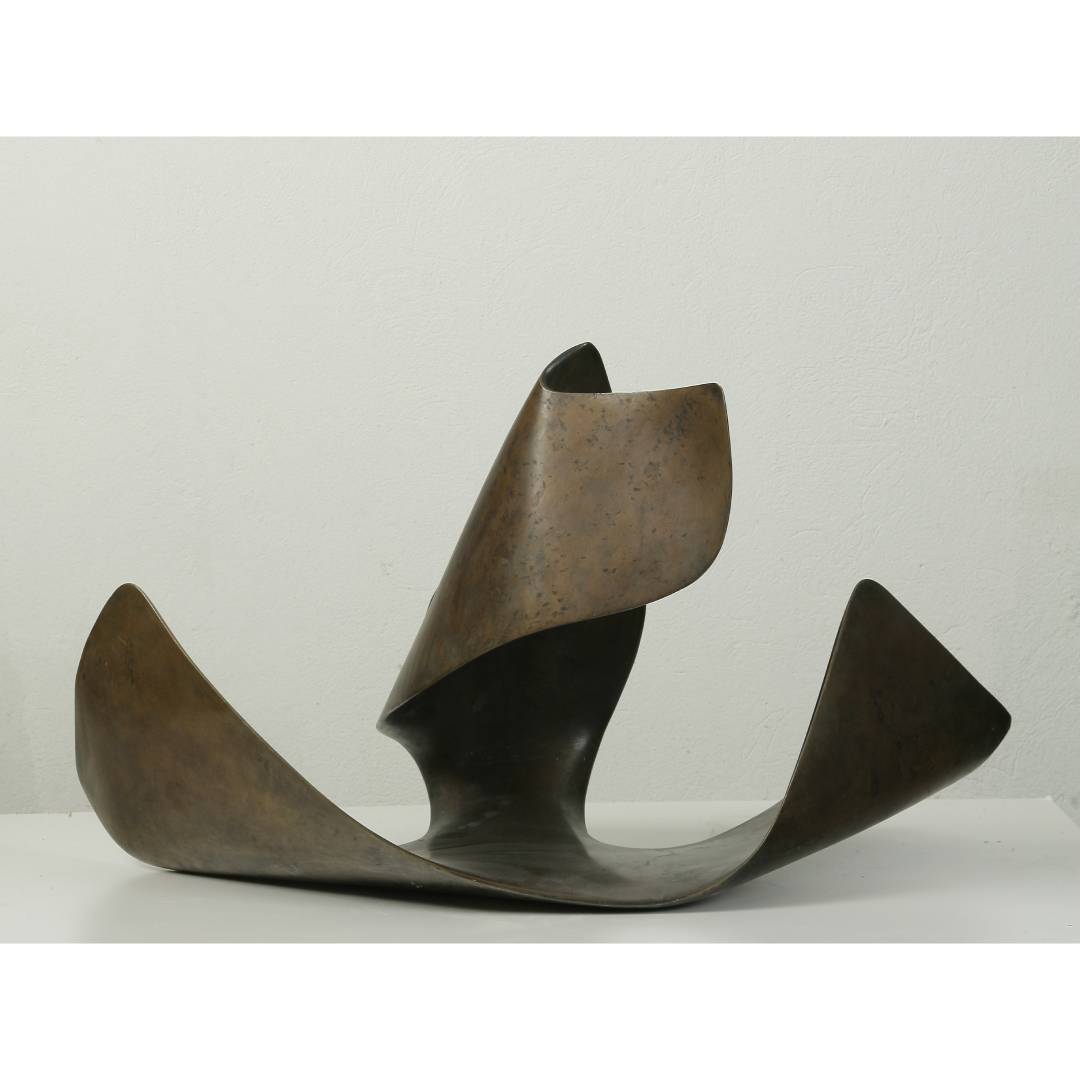
Vojin Bakić, Foliated Form IV, 1958

Vojin Bakić
Foliated Form IV, 1958
bronze
48 x 84 x 42 cm
MG-2448

Vojin Bakić (1915-1922, Bjelovar) was a famous Croatian sculptor considered to be one of the forerunners of Croatian and European high modernity in sculpture. He graduated in 1939 at the State Academy of Arts in Zagreb, and he finished his specialisation under Frane Kršinić from 1940 to 1941 with whom he had a very close professional and personal relationship.
The sculpture „Foliated Form IV“ belongs to a series of works with the same name created from 1958 to 1964. They were made from negative spaces that were left over after the sculptures had been cast. In an interview for Vjesnik from 1980 he explains the process of how they were made and he notes his appreciation of moulds and negative forms and how both full and hollow shapes and spaces have the same value to him. The name ‘foliated’ (from foliage) suggests forms that grow and develop just like leaves and flowers.
„Foliated Forms“ represent a transitional phase where Bakić created sculptures with thin surfaces like eggshells. During that period he was solving new sculptural problems and putting emphasis on the volume. He distanced and freed himself from tradition while further exploring his sculpture. Developing his sculptural form through reduction, cutting, bending, folding and piercing the material allowed him to open the sculpture to space.
Bakić expands his exploration incited with his intellectual and creative curiosity but mostly with his wish not to create the same and to reevaluate his past accomplishments and principles of creation.

Text: Stella Baki, curator / museum educator at the National Museum of Modern Art Zagreb
Photo: Goran Vranić © National Museum of Modern Art, Zagreb
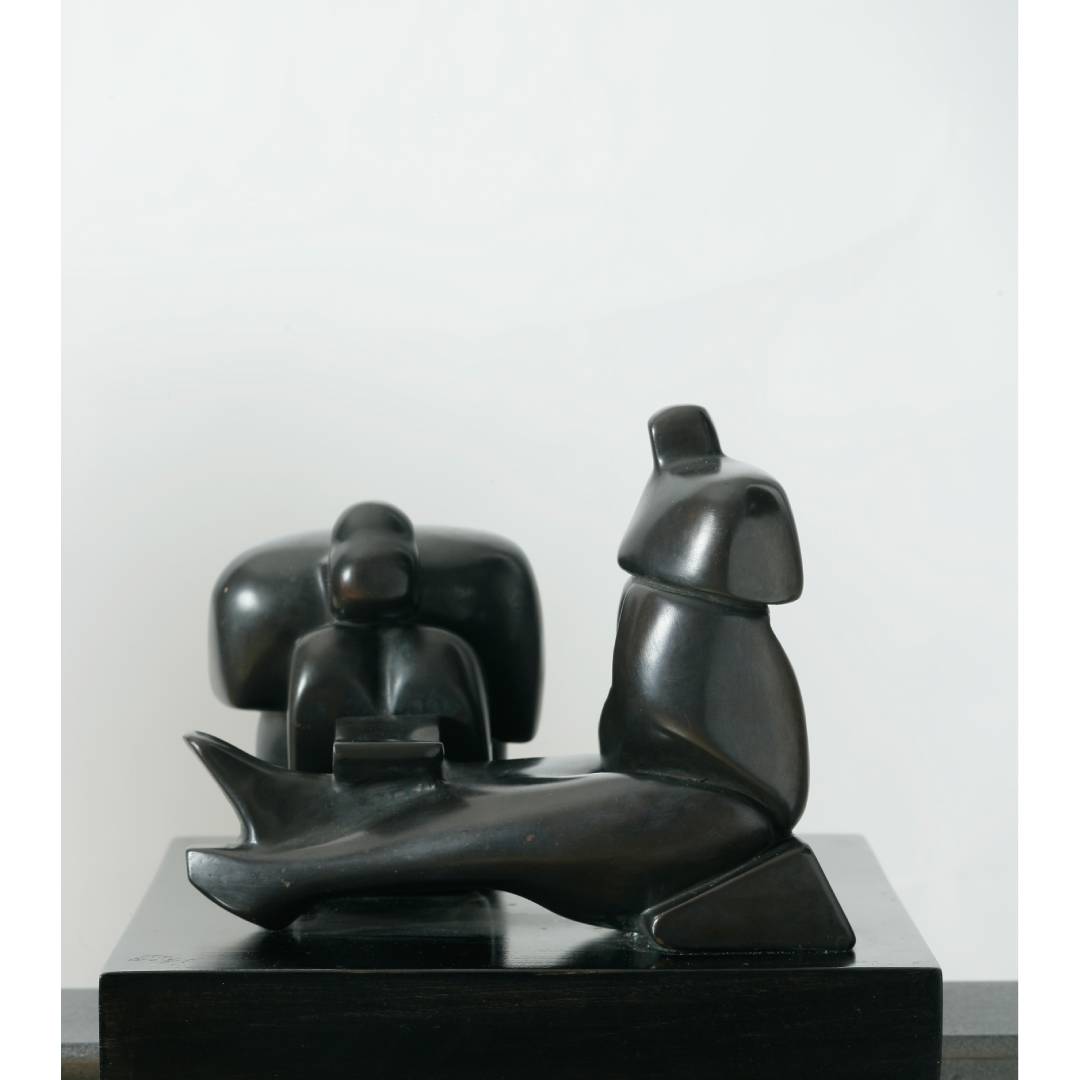
Tomislav Ostoja, Composition Summer (Two Figures), 2000

Tomislav Ostoja
Composition Summer (Two Figures), 2000
bronze
20 x 24 x 20 cm,
MG-7151
Tomislav Ostoja (1931, Split) is a Croatian sculptor and painter who studied at the Academy of Art in Zagreb under professor Frane Kršinić and Antun Augustinčić. He is most known for his monumental sculptures like The Monument to Silvije Strahimir Kranjčević from 1962, Monument to the Fallen Soldiers from Ciglenica from 1972 and Memorial to the Victims of the Homeland War in Vukovar from 2000.
He created abstract sculptures first, followed by stylised figures which he simplified into massive forms as can be seen in „Composition Summer (Two Figures)“ made in 2000. Thematically, this work is similar to a series of works called „Summer“ which were first exhibited in 1984. „Composition Summer (Two Figures)“ consists of two figures with curved shapes and soft edges, one which is sitting and the other slouching.
The sculpture is characterized by massive block shapes, static composition and rhythm. Thematically, the work indicates careless maritime scenes and the mundane, but the simple static shapes depict a certain alienation. His sea swimmers and their voluminous figures are completely void of character and personality, two massive shapes sitting uninterested. In the context of the series of works, we can imagine them as two bathers sitting down at the beach after a long day in the sun.

Text: Stella Baki, curator / museum educator at the National Museum of Modern Art Zagreb
Photo: Goran Vranić © National Museum of Modern Art, Zagreb
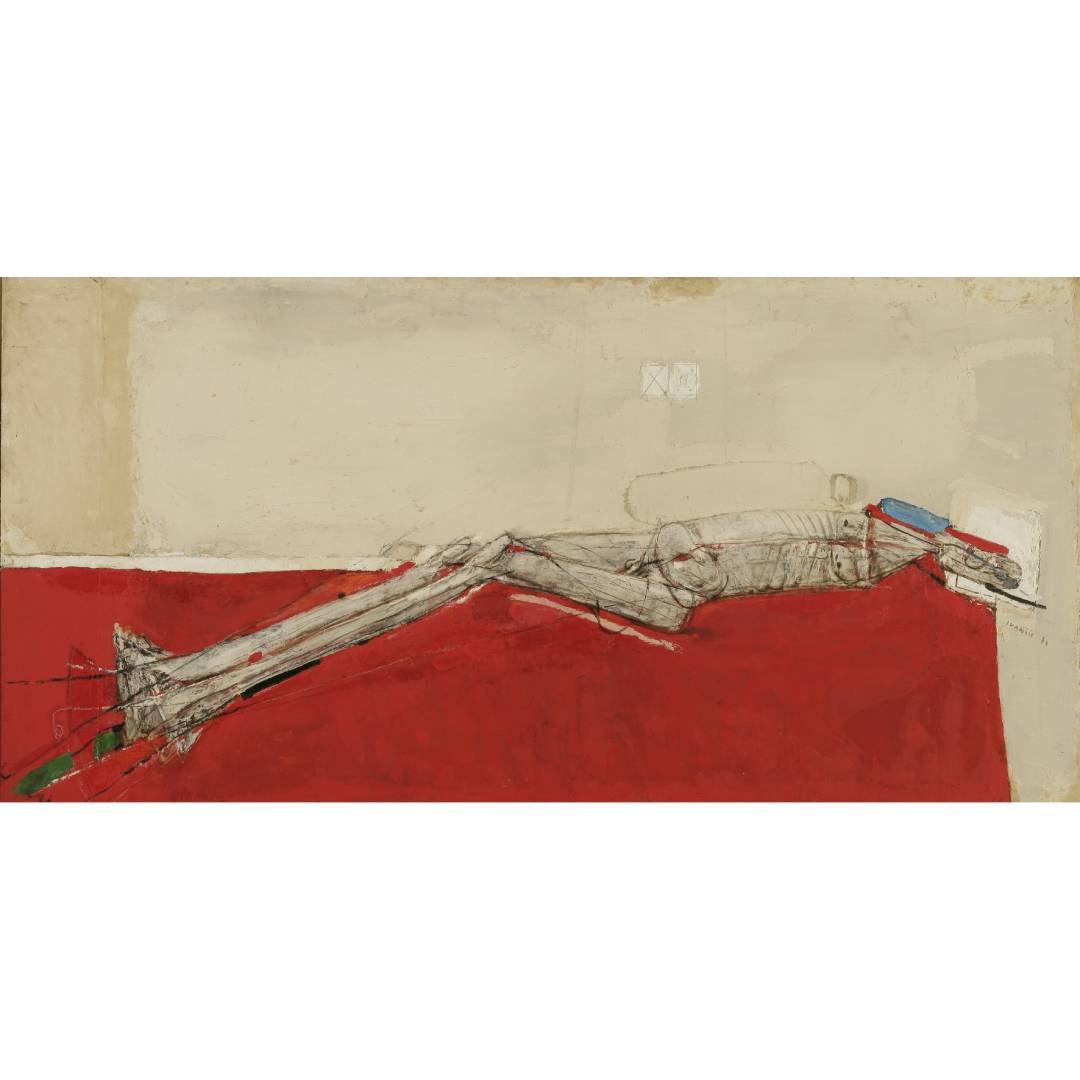
Ljubo Ivančić, Figure, 1970.

Ljubo Ivančić
Figure, 1970.
oil on canvas
100 x 180 cm
MG-3318

Ljubo Ivančić (1925–2003) is regarded as a leading figure of Croatian expressive, materially oriented figuration and abstraction, working at the intersection of existential painting and Art Informel. The enduring themes of his oeuvre are (self-)portraits and nudes.
Ivančić's painting is permeated by the tragedy, absurdity, and grotesqueness of human existence. His formative influences stem from the materiality and atmosphere of Croatian Mediterranean modernism, represented by artists such as Emanuel Vidović, Marino Tartaglia, Juraj Plančić, and Ignjat Job, while his exploration of the human condition draws upon both tradition and modernity, finding inspiration in Rembrandt, Francisco Goya, Georges Rouault, and Francis Bacon.
His achromatic and chromatic palette is filtered through dense, earthy, matter-laden tones that gradually became lighter and more colouristically vibrant during the 1970s, reaching their fullest intensity by the mid-1990s. Equally characteristic is Ivančić's method of depicting elongated and deliberately disproportionate figures, expressive deformations, suggestive forms, and scenes imbued with a powerful sense of atmosphere.
After joining the Yugoslav Partisan resistance during the Second World War in 1942, Ivančić graduated from the Academy of Fine Arts in Zagreb in 1949, completing his postgraduate studies under Đuro Tiljak. He later taught at the Academy from 1961 to 1979 and directed its Master Workshop from 1975 to 1984. In 1991, he was elected a full member of the Croatian Academy of Sciences and Arts.
Figure I (1970) exemplifies the distinctive treatment and composition of Ivančić's nude figures. The painting reveals a tension between the translucent volume of the female body—defined primarily through contour and conveying a naturalistic sense of human existence—and the dense, achromatic yet subtly chromatic material surface, animated by the intense glowing energy of parts of the background. Ivančić's nudes are not beautiful in the conventional sense. They are truthful. They embody existential nakedness in its purest form.

Text: Željko Marciuš, Museum Advisor at the National Museum of Modern Art, Zagreb
Photo: Goran Vranić © National Museum of Modern Art, Zagreb

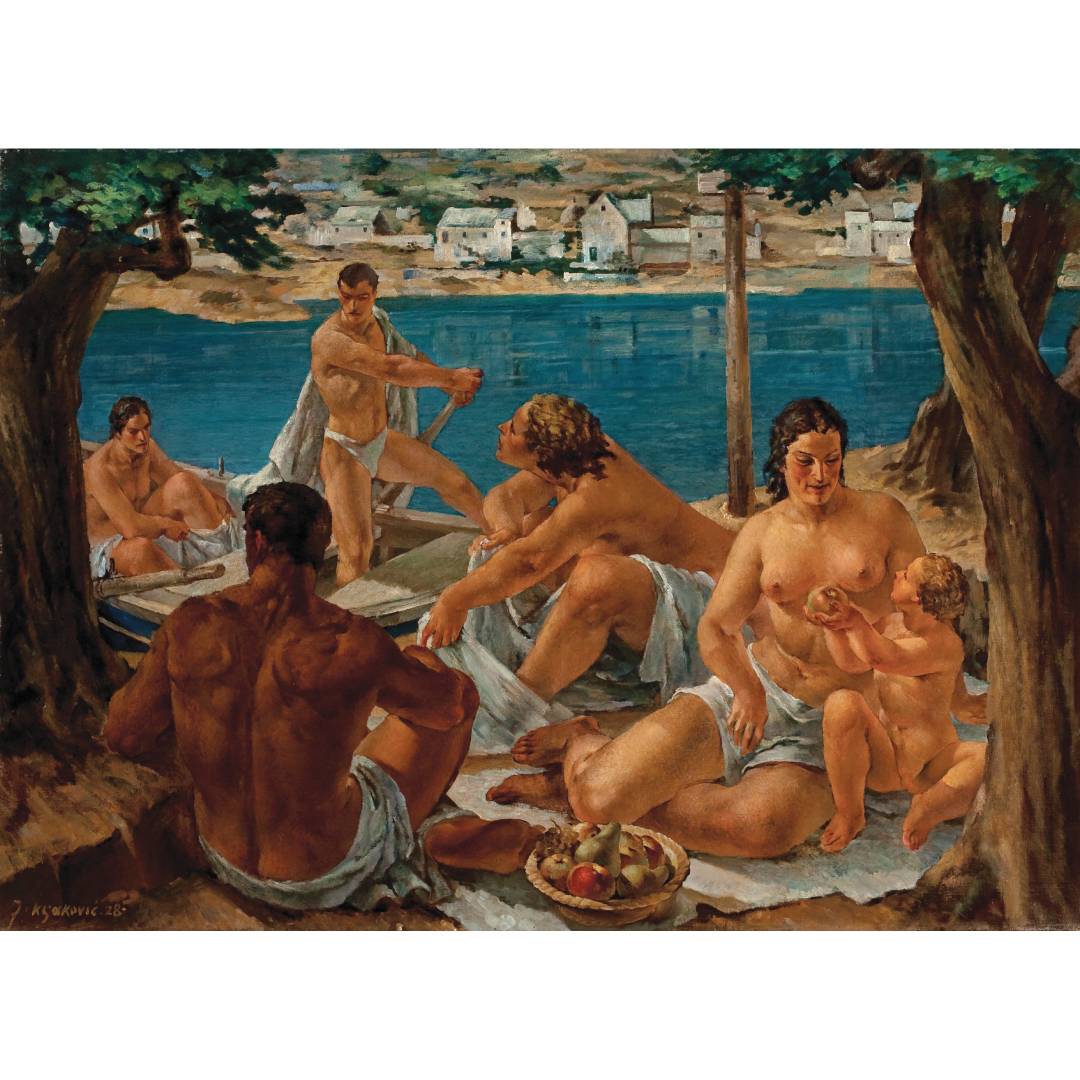
Jozo Kljaković, Resting (On the Beach), 1928

Jozo Kljaković
Resting (On the Beach), 1928
oil on canvas
103.7 × 144.1 cm
MG-847

Jozo Kljaković (Solin, 1889–Zagreb, 1969) was one of the most distinguished Croatian painters of the 20th century. After completing his education in Split, he studied architecture in Prague and Vienna, while furthering his artistic training under Vlaho Bukovac, Ferdinand Hodler, and at the Académie Ranson in Paris. From 1921 to 1943, he taught mural and decorative painting at the Academy of Fine Arts in Zagreb. His artistic oeuvre is characterised by religious and regional themes, as well as monumental wall paintings, particularly the frescoes in St Mark's Church and other sacred and public buildings. Following the Second World War, he lived in exile in Rome and Buenos Aires before returning to Zagreb in 1968. Alongside his work as a painter, he was active as an illustrator, caricaturist, and writer, leaving a significant contribution to 20th-century Croatian art.
Painted in 1928, “Resting (On the Beach)” belongs to Jozo Kljaković's mature period, during which he frequently depicted regional themes and the human figure. The composition presents a group of nude figures gathered on the seashore, with the calm sea and a distant coastline stretching across the background. The figures are modelled with solid volumes and pronounced plasticity, characteristic of Kljaković's monumental style. Warm earthy tones are harmoniously balanced with the blues of the sea and sky, creating a cohesive colour palette. The balanced composition and tranquil atmosphere emphasise the relationship between humanity and nature, reflecting the artist's interest in an idealised vision of the Mediterranean landscape and everyday life.

Text: Luciana Fuks, Museum Documentation Curator at the National Museum of Modern Art Zagreb
Photo: Goran Vranić © National Museum of Modern Art, Zagreb
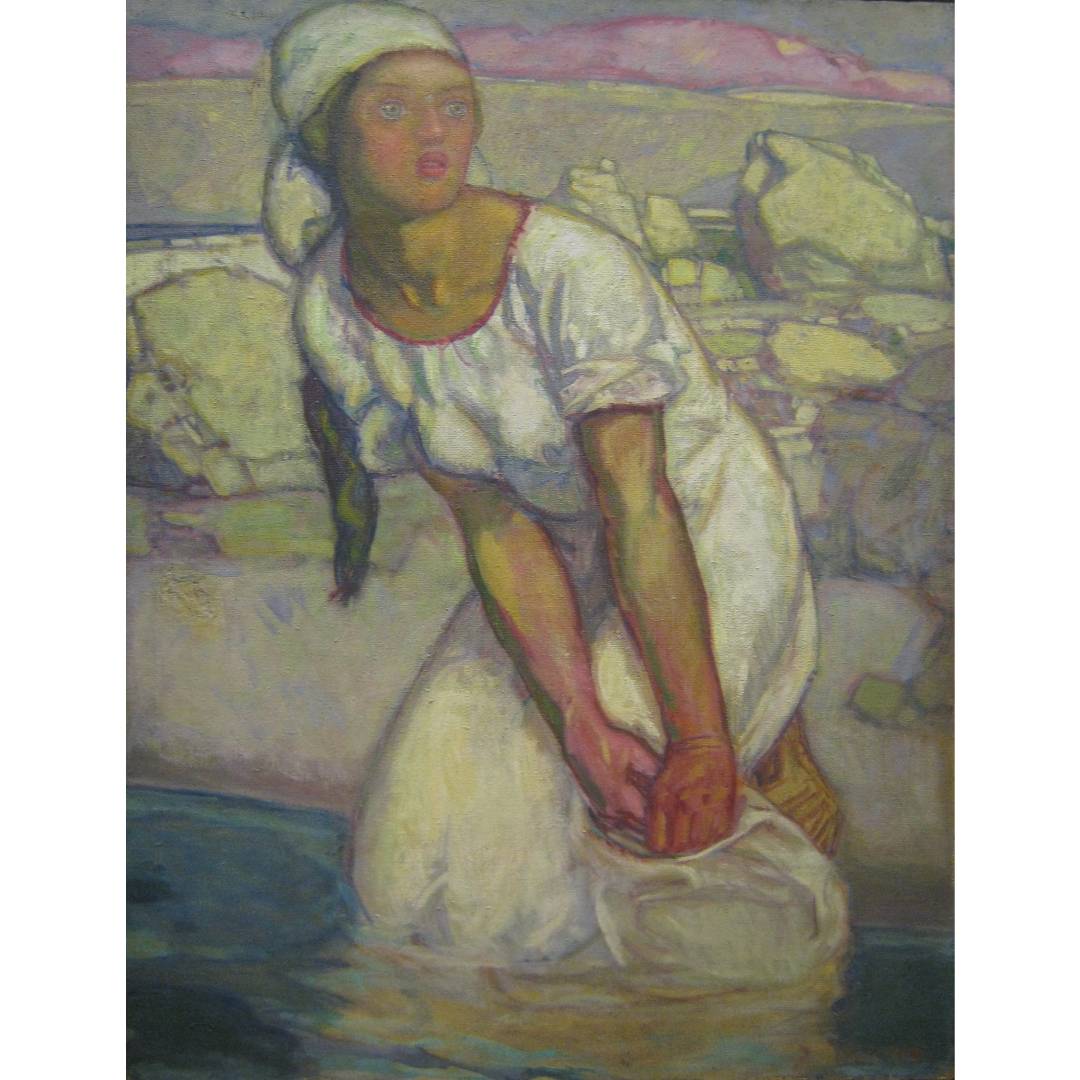
Mirko Rački, The Sea Nymph, 1918

Mirko Rački
The Sea Nymph, 1918
oil on canvas
129.9 × 99.8 cm
MG-834

Mirko Rački (Novi Marof, 1879 – Split, 1982) was one of the leading Croatian painters, illustrators, and graphic artists of the first half of the 20th century. After graduating from the Teacher Training School in Zagreb, he continued his artistic education at Heinrich Strehblow's private art school in Vienna, followed by studies at the Academy of Fine Arts in Prague under Vlaho Bukovac and later at the Academy in Vienna. Between 1907 and 1914, he lived and worked in Munich, after which he spent short periods in Rome and Geneva before settling in Zagreb in 1920. As a prominent member of the nationalist-romantic Medulić Society, he participated in its exhibitions and developed a monumental artistic expression shaped by its ideological programme. He is particularly renowned for his extensive cycle of works inspired by Dante's Divine Comedy, a theme to which he returned throughout almost his entire artistic career.
“The Sea Nymph”, painted in 1918, reflects the Symbolist qualities characteristic of Mirko Rački's artistic practice. At the centre of the composition is the figure of a young woman dressed in white, kneeling in the shallow sea against a rocky coastal landscape. The figure is rendered in soft pastel tones and simplified, flattened forms with pronounced contours. Rather than striving for naturalistic representation, the artist creates an atmosphere of tranquillity and timelessness, while the balanced composition and subtle relationships of colour contribute to the painting's lyrical character. Depicted almost as a mythical being, the female figure reflects the artist's interest in symbolic themes and idealised beauty.

Text: Luciana Fuks, Museum Documentation Curator at the National Museum of Modern Art Zagreb
Photo: from the National Museum of Modern Art's archives © National Museum of Modern Art, Zagreb

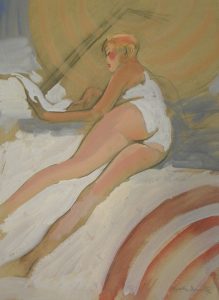
Milivoj Uzelac, Woman on the Beach, 1930 (detail)

Milivoj Uzelac
Woman on the Beach, 1930 (detail)
Tempera on paper
495 × 375 mm
MG-980

Milivoj Uzelac (Mostar, 1897 – Cotignac, France, 1977) was one of the key figures of Croatian Modernism. He studied in Banja Luka, Zagreb, and Prague, where he refined his artistic skills. While in Prague, he was closely associated with several prominent contemporaries, including Vilko Gecan, Marijan Trepše, and Vladimir Varlaj. Together, they became known as the Prague Four, representatives of the new Expressionist movement in Croatian art. After returning from Prague in 1919, Uzelac worked in Zagreb for only a few years before leaving for France in 1923. There, he drew inspiration from major European artistic movements such as Fauvism, Expressionism, and Cubism. Although he lived and worked in France for the rest of his life, he continued to exhibit regularly in Croatia and had a significant influence on a new generation of Croatian painters of the interwar period.
Milivoj Uzelac's work during his years in France is characterised by a freer approach to form, colour, and composition. Painted in 1930, “Woman on the Beach” reflects the artist's interest in depicting the human figure within a relaxed Mediterranean setting. At the centre of the composition is a seated female figure with elongated proportions and simplified forms, dressed in a light-coloured bathing suit. She is placed on the beach, while the sea and coastal landscape are only subtly suggested through reduced planes and a restrained palette. Warm flesh tones harmonise with the beige, grey, and blue hues of the surrounding landscape, while curved reddish bands in the lower right corner introduce rhythm and movement to the composition. Executed in tempera on paper, the work conveys a sense of immediacy and ease, as Uzelac combines fluid draftsmanship with pronounced contours to create a balanced composition in which decorative qualities and an intimate atmosphere come together—features characteristic of his French period.

Text: Luciana Fuks, Museum Documentation Curator at the National Museum of Modern Art Zagreb
Photo:  © From the National Museum of Modern Art's archives

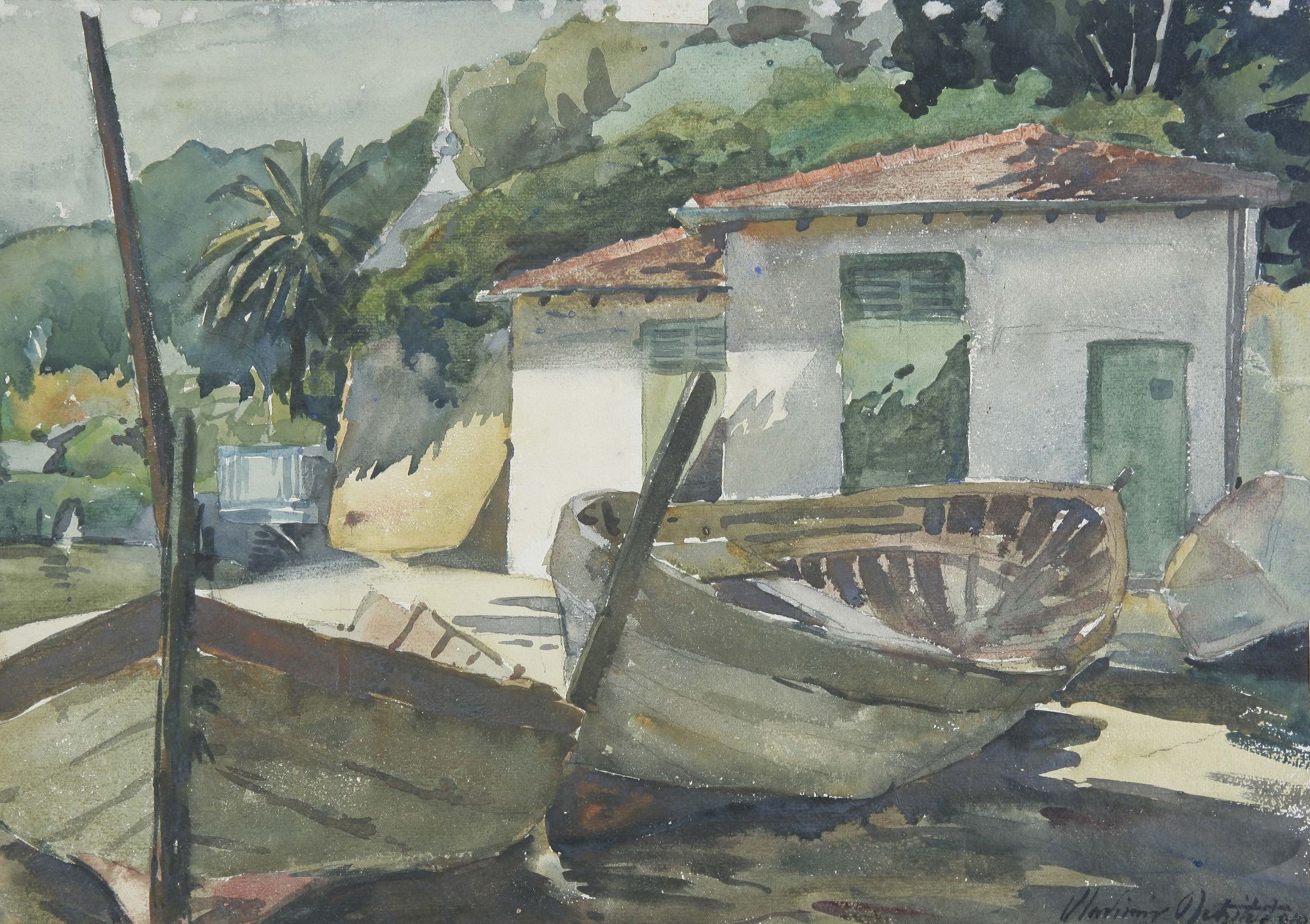
Vladimir Becić, Beach in Nice, 1912.

Vladimir Becić
Beach in Nice, 1912.
Watercolour on paper
331 × 484 mm
MG-7103

Vladimir Becić (Slavonski Brod, 1886–Zagreb, 1954) was one of the leading representatives of Croatian Modernism and a member of the renowned Munich Circle, alongside Miroslav Kraljević, Josip Račić, and Oskar Herman. He began his artistic education in Zagreb under Menci Clement Crnčić and Bela Čikoš Sesija before continuing his studies in Munich and at the Académie de la Grande Chaumière in Paris. During the First World War, he worked as a war artist and correspondent for the Parisian magazine L'Illustration. From 1924 onwards, he taught at the Academy of Fine Arts in Zagreb, where he influenced generations of younger artists and helped shape the course of Croatian Modernism. His oeuvre is characterised by landscapes, scenes of everyday life, and portraits, painted in the spirit of Colourist Realism and the modern artistic language.
“Beach in Nice” depicts a Mediterranean coastal landscape in which the composition is dominated by fishing boats drawn up on the shore, while simple buildings and lush vegetation in the background create a tranquil and harmonious seaside setting. Executed in watercolour, the composition is distinguished by transparent washes of colour and fluid brushstrokes through which the artist faithfully conveys the atmosphere of a sunlit coastal landscape. Restrained shades of green, grey, and ochre dominate the palette, while light and shadow model the volumes of the boats and the surrounding architecture. The balanced composition and spontaneous handling of the medium reflect Becić's interest in the direct observation of nature and everyday life, one of the defining characteristics of his artistic oeuvre.

Text: Luciana Fuks, Museum Documentation Curator at the National Museum of Modern Art Zagreb
Photo: Goran Vranić © National Museum of Modern Art, Zagreb Sažmi
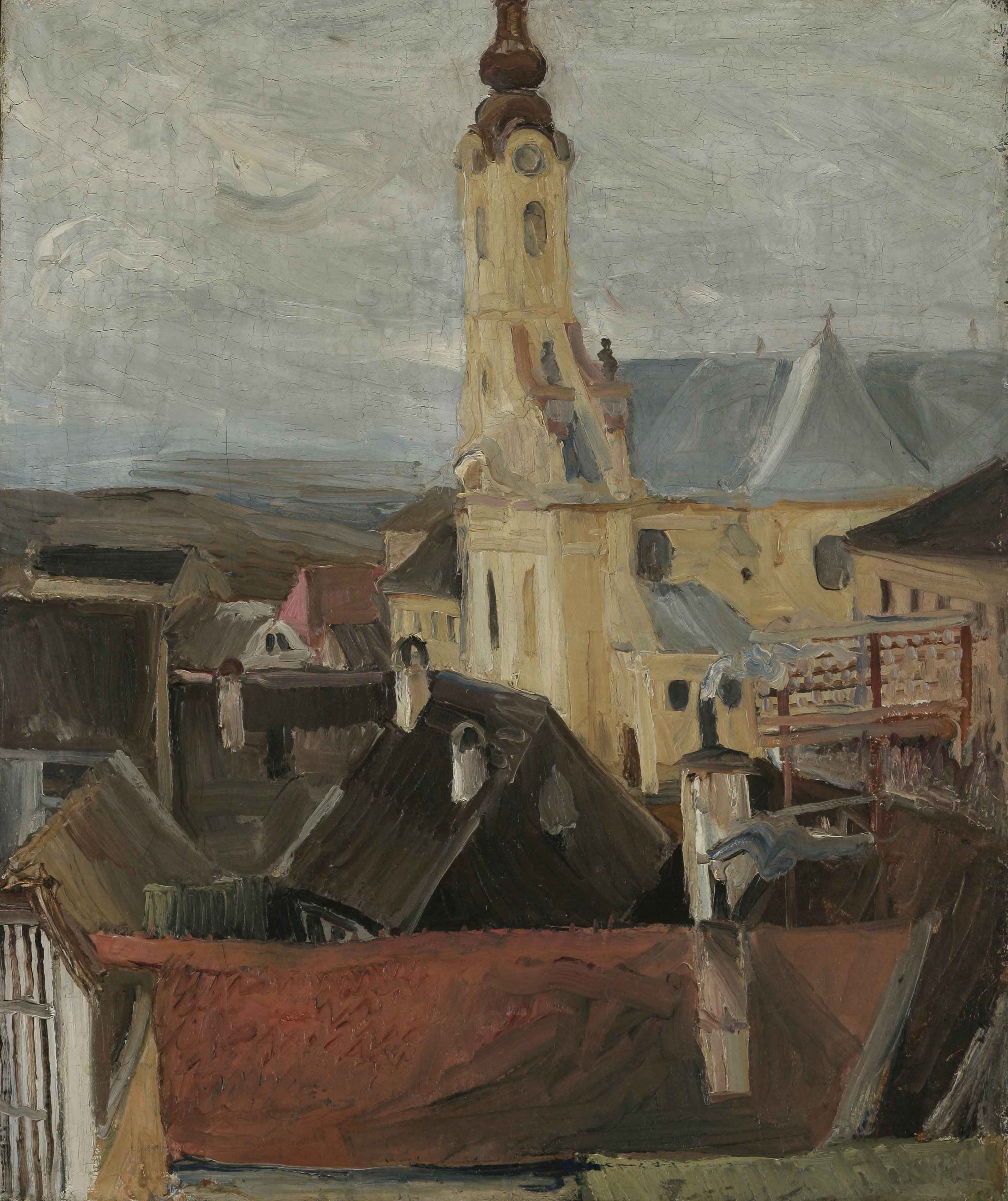
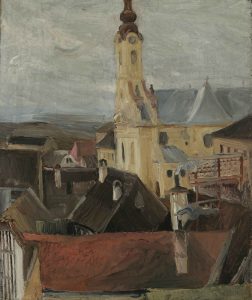
Miroslav Kraljević, Požega, 1910.

Miroslav Kraljević
Požega, 1910
oil on canvas
53.2 × 43.7 cm
MG-2392

After attending school in Zagreb and Gospić, Miroslav Kraljević (1885–1913) enrolled to study law in Vienna, but soon abandoned his legal studies to pursue painting. In 1906–07, he attended the private school of the printmaker Moritz Heymann in Munich. In May 1907, he was admitted to the Academy of Fine Arts in Munich, where he studied under Hugo von Habermann and associated with Josip Račić and Vladimir Becić, forming part of the so-called Munich Circle. After graduating, Kraljević returned to Požega in 1910, where he painted intensively until September 1911, when he moved to Paris. There, he enrolled at the Académie de la Grande Chaumière, although he left shortly afterwards. In 1912, he held his first—and during his lifetime, only—solo exhibition at the Ulrich Salon in Zagreb. He died of tuberculosis in 1913.
This vertically oriented painting presents a realistic en plein air view of Požega, rendered in a predominantly silvery, northern quality of light. The lower two-thirds of the composition are occupied by the town’s architecture, with particular emphasis on its rooftops. The upper third depicts a silvery sky, through whose centre rises the ochre-coloured church tower, extending to the upper edge of the canvas. Seen from a bird’s-eye perspective, the painting is executed with bold, impasto brushstrokes that anticipate an Expressionist approach.

Text: Ivana Rončević Elezović, PhD, Museum Adviser at the National Museum of Modern Art © National Museum of Modern Art, Zagreb
Photo: Goran Vranić © National Museum of Modern Art, Zagreb
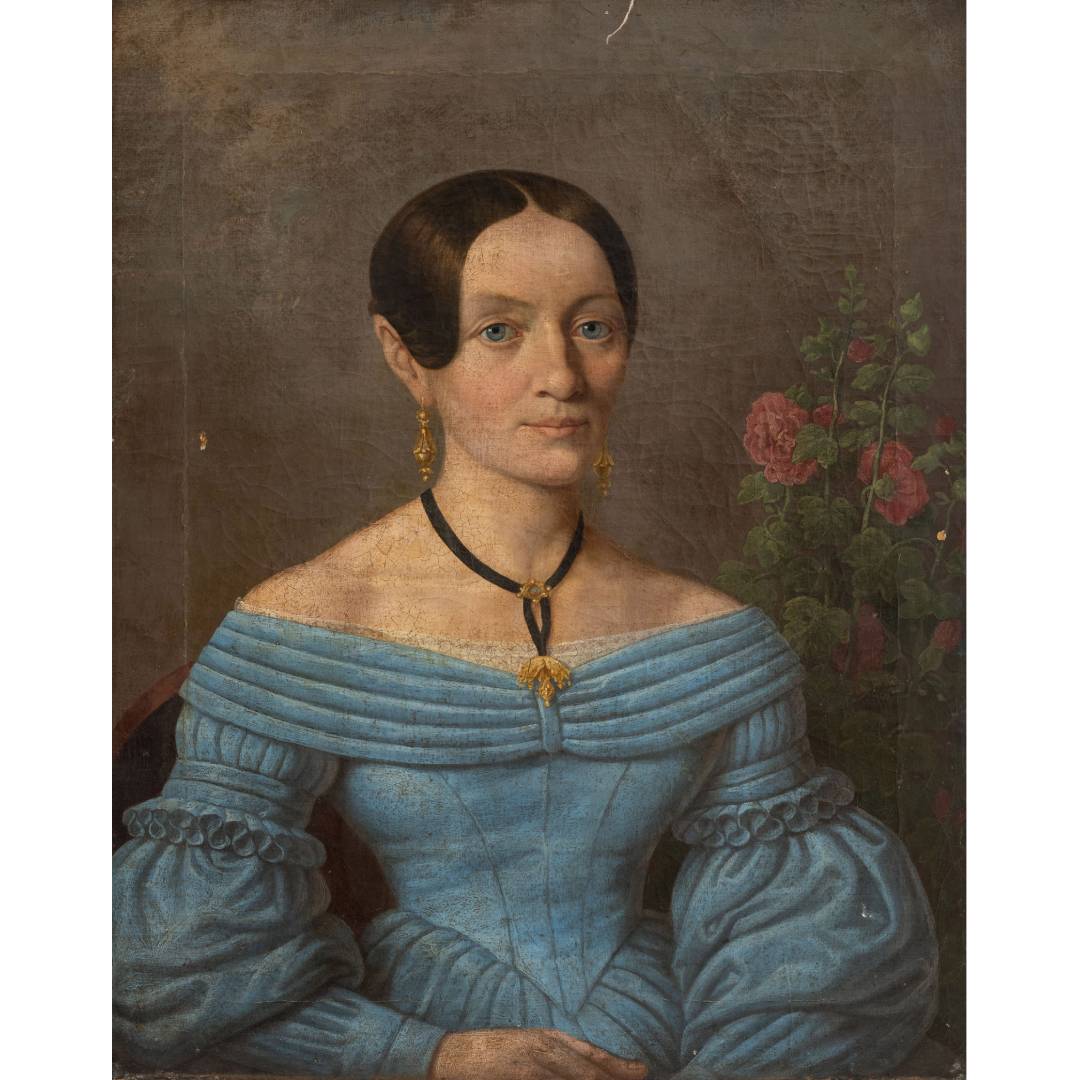
Karl Schorn (?), Woman in a Blue Dress, first half of the 19th century

Karl Schorn (?)
Woman in a Blue Dress, first half of the 19th century
oil on canvas
66 × 53 cm
MG-2003

Among the Biedermeier portrait collection of the National Museum of Modern Art, Woman in a Blue Dress (MG-2003) stands out as an especially remarkable work. The sitter is portrayed seated on a simple Biedermeier chair with a semi-circular backrest, her hands folded in her lap. Her hair is smoothly parted in the middle and gathered into a bun, reflecting the restrained elegance of the period. The artist demonstrates exceptional skill in rendering the rich blue drapery of the dress, whose vibrant tones echo the light blue of the sitter's expressive eyes. Equally noteworthy is the refined depiction of her jewellery and the delicately painted leafy branches with rosy-pink blossoms rising along the right edge of the composition.
According to the National Museum of Modern Art's inventory records, the painting was acquired from a private owner for 12,500 dinars following a decision of the Gallery Committee on 22 February 1951.
As part of a collaboration with the Academy of Fine Arts, University of Zagreb, coordinated by Petra Kursar, M.A., Head of the Museum's Conservation and Restoration Department, the painting underwent extensive conservation and restoration by conservator-restorer Iva Galijan. The treatment, carried out over the course of a year as the practical component of her graduate thesis under the supervision of Tamara Ukrainčik, M.A., included the removal of surface grime and aged varnish. During this process, the signature Schorn was uncovered.
Based on this discovery, Galijan proposed that the painting may be attributed to the German Neoclassical and Biedermeier painter Karl Schorn (1803–1850). This attribution appears plausible when the stylistic characteristics of Woman in a Blue Dress are compared with Schorn's authenticated works, particularly in the delicate treatment of the female figure and the refined sensitivity of its execution.

Text: Ivana Rončević Elezović, PhD, Museum Adviser at the National Museum of Modern Art
Photo Goran Vranić © National Museum of Modern Art, Zagreb
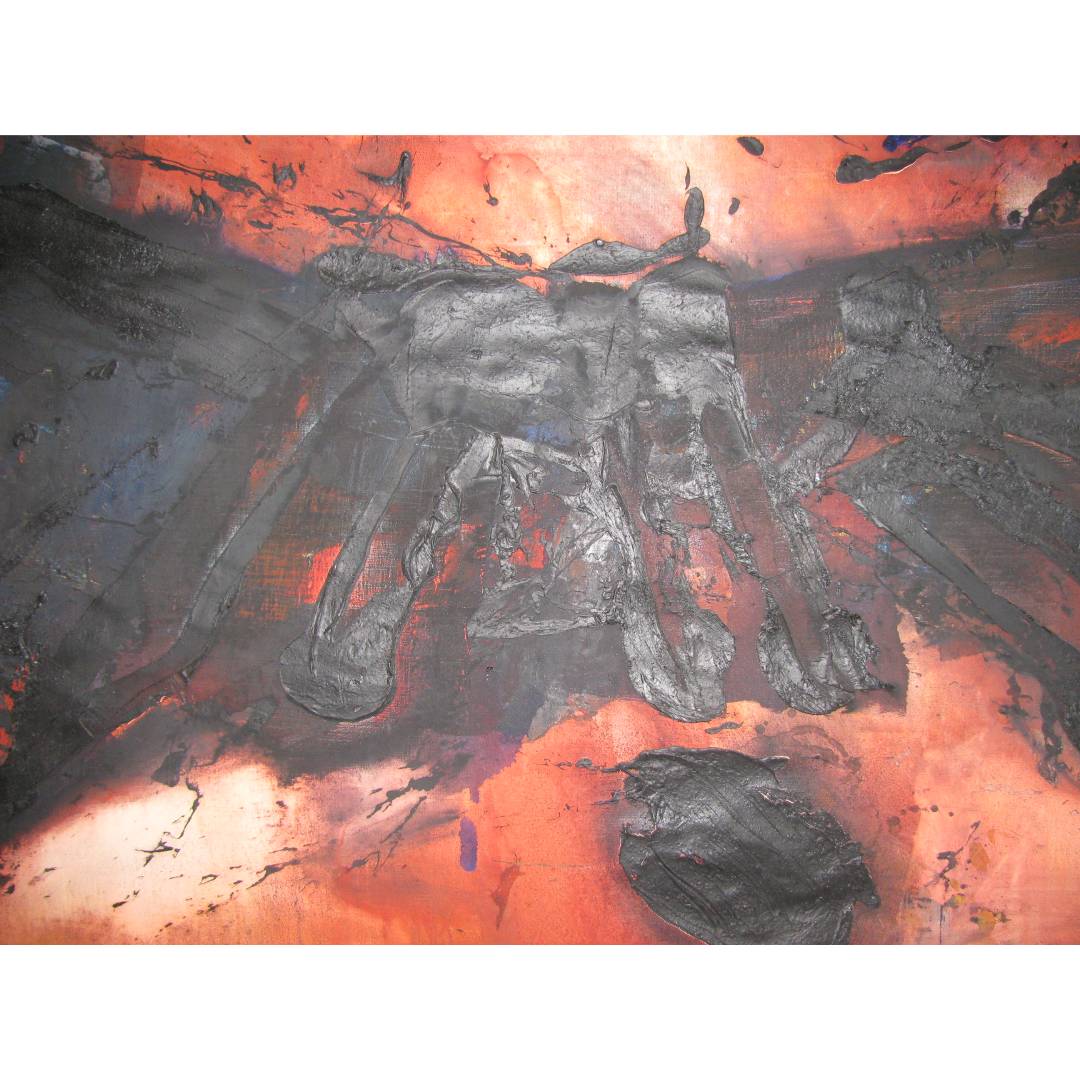
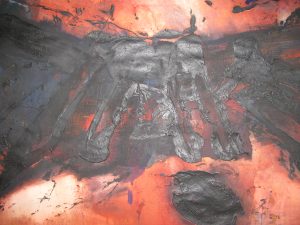
Ferdinand Kulmer, On Red, 1965

Ferdinand Kulmer
On Red, 1965
oil on canvas
107 × 146 cm
MG-2657

Ferdinand Kulmer (1925–1998) was a modernist and postmodernist painter whose Mercury-like agility enabled him to move effortlessly from one style to another. He descended from the noble Kulmer family, Styrian barons who settled in Croatia in the 18th century. Among his ancestors, the most influential was the lawyer and politician Franjo Kulmer. Art historian Tonko Maroević aptly captured the essence of the artist’s life with the observation that while Pablo Picasso first painted and then bought castles, for Ferdinand Kulmer the order was reversed.
During and immediately after the Second World War, Kulmer studied painting in Budapest from 1942 and continued his studies in Zagreb until 1948 under the guidance of Ljubo Babić and Omer Mujadžić. He also worked as an associate in the Master Workshop of Krsto Hegedušić until 1957.
The range of stylistic transformations across three decades of creative work is remarkable, forming a distinctive hybrid of artistic languages. His oeuvre spans from (post-)Fauvist figuration and influences of Picasso, through an abstract period beginning in 1957 that embraced Art Informel, Tachisme, monochrome painting, and elements of action painting and calligraphy, to the postmodern New Figuration of the 1980s. In the 1960s, he was closely aligned with gestural Informel painting, drawing inspiration from Hans Hartung and Pierre Soulages, while in the 1970s he turned toward Japanese calligraphy.
Kulmer’s painting On Red (1965) reveals an artist who, in the words of Igor Zidić, “rose above earthly space on the wings attached to his shoes, disregarding reality and causality.” Through accumulations of Informel structures and a controlled automatism, Kulmer creates a work of complex visual and material qualities. The painting is, at the same time, a bare material fact; yet its red and brown tonalities contribute to the atmosphere and the powerful aesthetic intensity of the composition.

Text: Željko Marciuš, Senior Museum Advisor at the National Museum of Modern Art, Zagreb
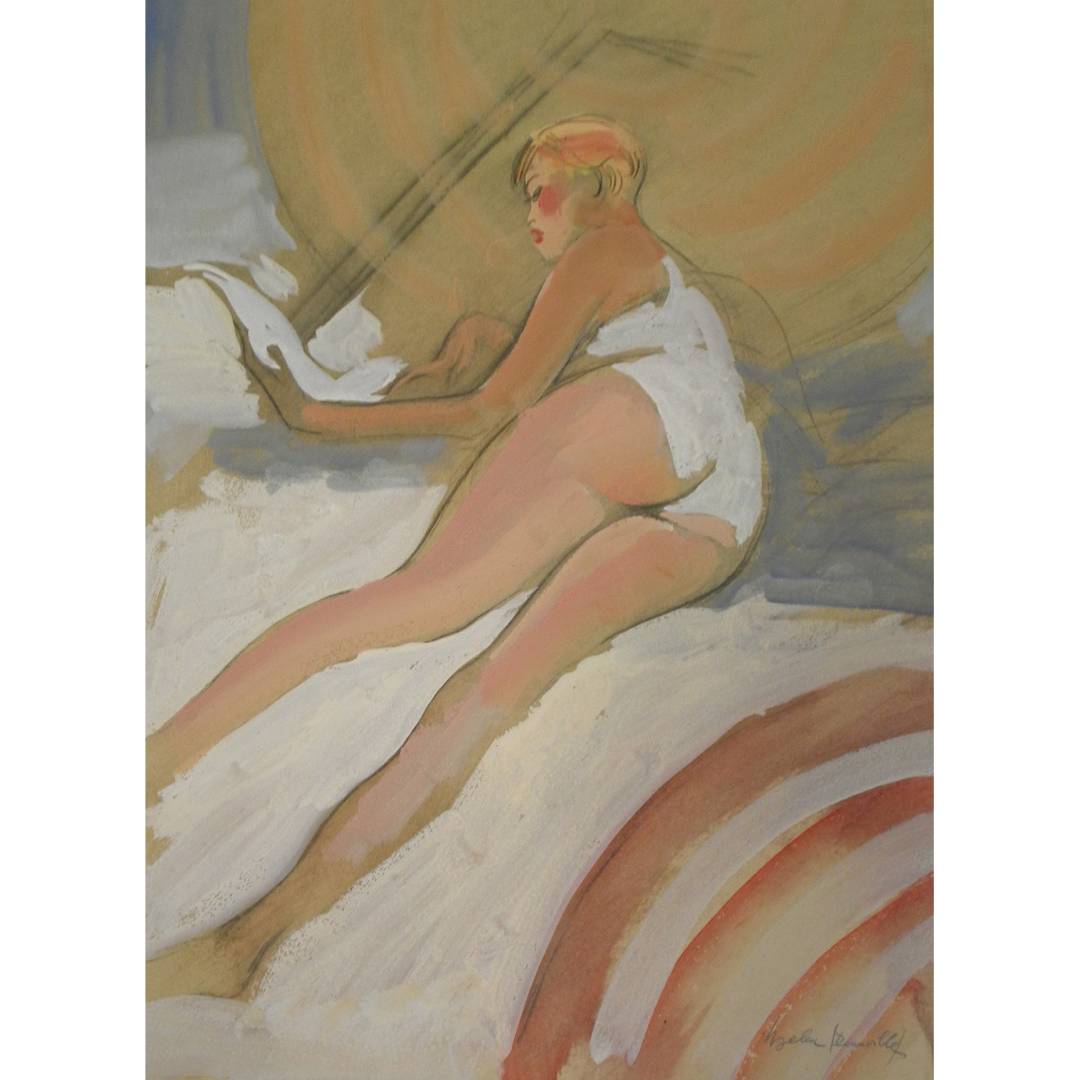
Photo: From the archive of the National Museum of Modern Art © National Museum of Modern Art, Zagreb