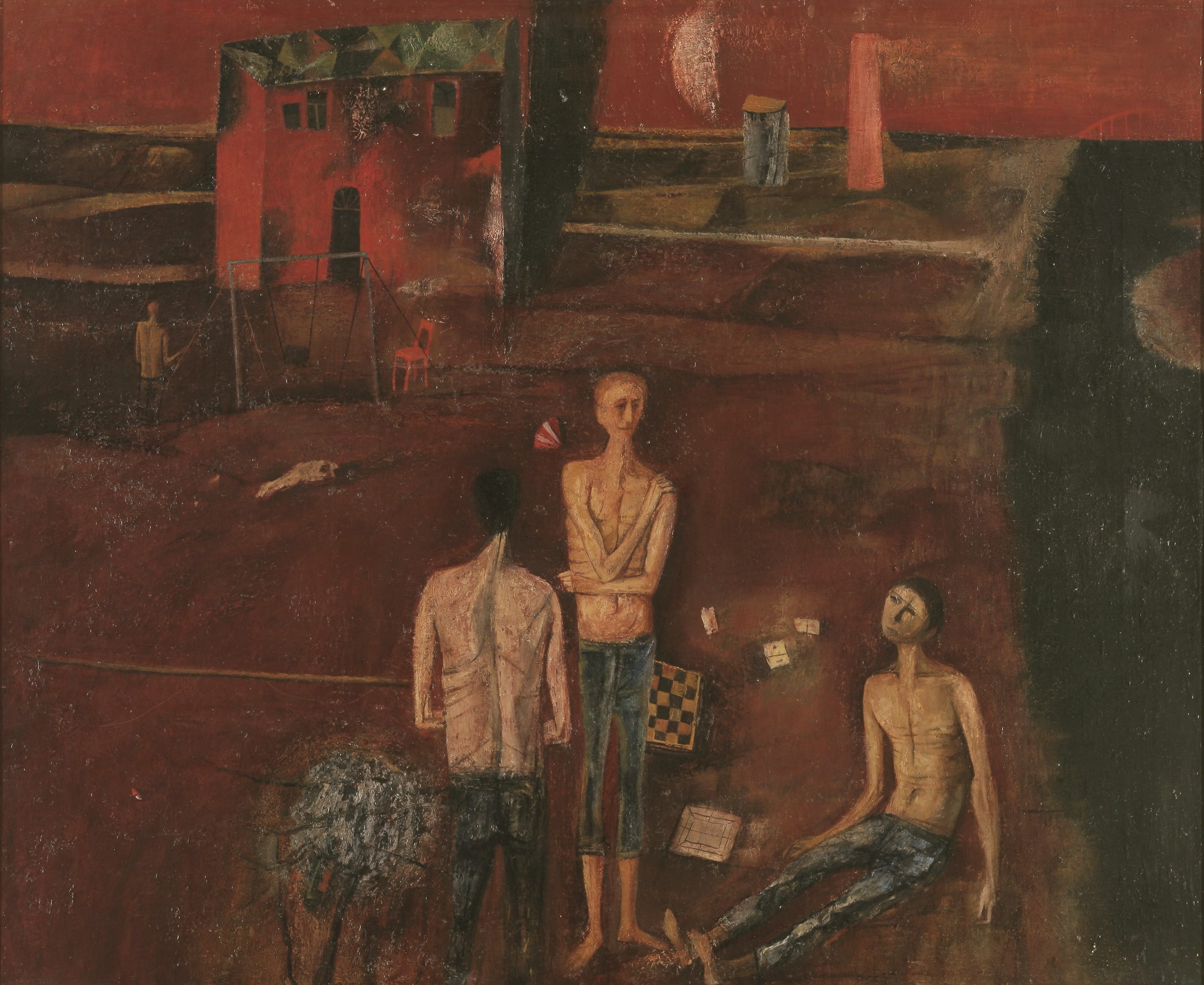
Josip Biffel, Indian Summer, 1966

Josip Biffel
Indian Summer, 1966
oil on canvas
65 x 60 cm
MG-2663

Josip Biffel (1933-2018, Zagreb) was a Croatian painter who worked as a professor in the University of Arts in Zagreb from 1979 and is known for painting the Franciscan monastery and the church in Šćit, the national monument of Bosnia in Hercegovina.
He mostly painted figurative compositions and objects in landscapes with elements of the unusual and fantastical, depicting poetic and melancholic scenes which connect him to Symbolism, Surrealism and Metaphysical painting.
Tonal chromatism with thick and lively brushstroke can be seen in the work „Indian Summer“ from 1966. The work depicts three semi-naked male figures in the foreground with another man standing in the background next to a building resembling a theatre backdrop. The figures are set in a space colored in deep red tones and the name of the work „Indian Summer“ suggests a very specific atmosphere - a deep, scorching heat that is hard to avoid.

Text: Stella Baki, curator / museum educator at the National Museum of Modern Art Zagreb
Photo: Goran Vranić © National Museum of Modern Art, Zagreb
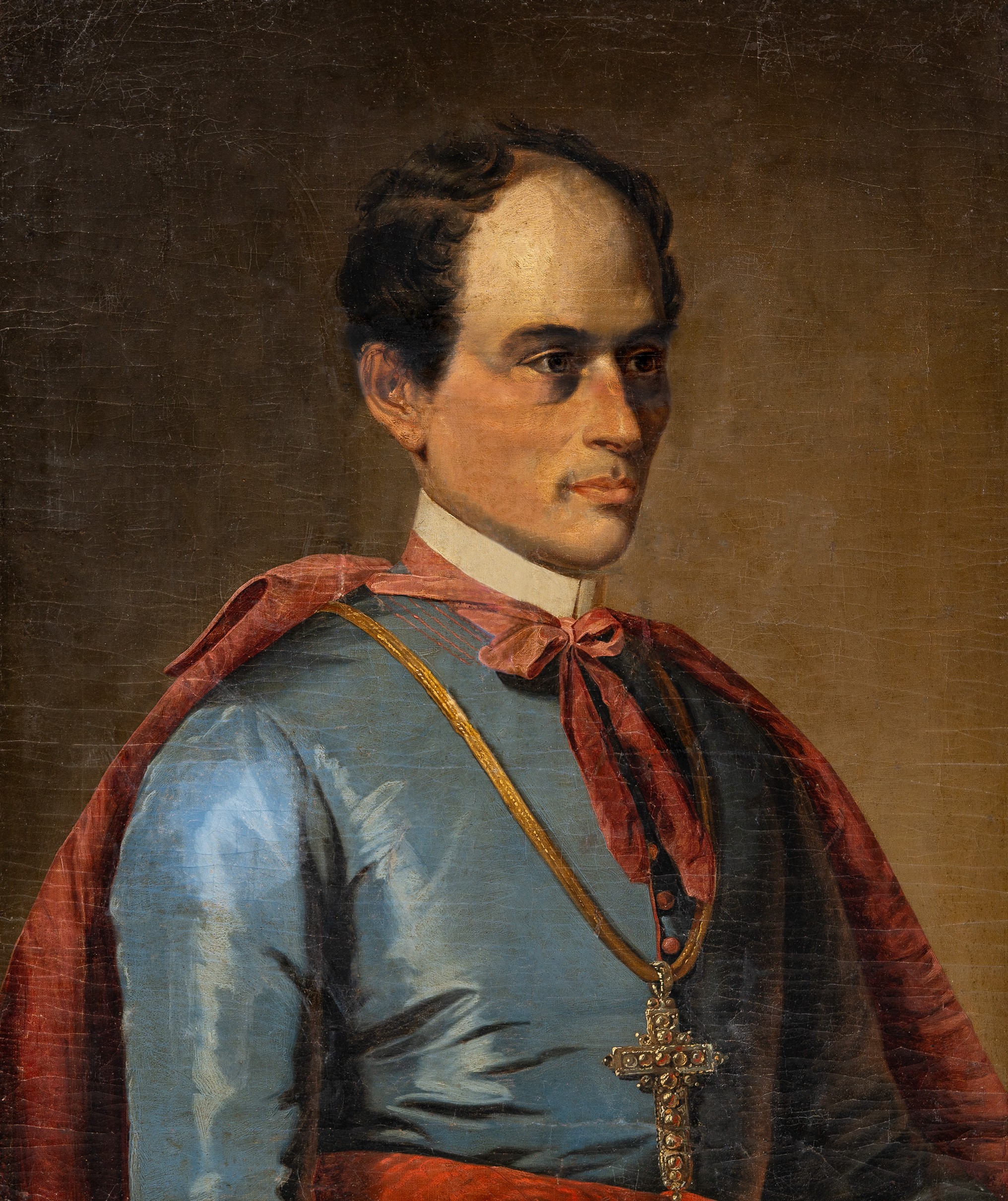
Ivan Zasche (?), Portrait of Josip Juraj Strossmayer, mid-19th century

Ivan Zasche (?)
Portrait of Josip Juraj Strossmayer, mid-19th century
Oil on canvas
43 × 35 cm
MG-54

Among the 19th-century portraits in the collection of the National Museum of Modern Art in Zagreb, the Portrait of Josip Juraj Strossmayer (MG-54) stands out for its artistic quality. The painting entered the museum’s collection in 1947, having been acquired from a private owner, and was subsequently restored between 24 July 1949 and 23 December 1952. It has been dated to around the mid-19th century, with a possible attribution to Ivan Zasche (1825–1863), a Croatian painter of Czech origin who studied at the Academy in Vienna from 1846 to 1850. At the invitation of Bishop Juraj Haulik (1788–1869), Zasche settled permanently in Zagreb, where he produced a series of Biedermeier representative and intimate portraits and miniatures, airy landscapes, urban views, altarpieces, and a series of meticulously rendered drawings of traditional costumes from the Lika region.
This attribution is further supported by a label on the reverse of the painting bearing the inscription: “author: Zasche Ivan (?)”. In terms of its painterly manner and style, the Portrait of Josip Juraj Strossmayer can be compared with Zasche’s well-known Portrait of Ban Josip Jelačić in the Croatian History Museum in Zagreb, painted before 1863, as well as with the Portrait of an Old Man of 1857 (MG-64). The latter is also comparable in its penetrating psychological characterization of the sitter and suggestive gaze. The treatment of the folds in the drapery of the bishop’s cloak and uniform can likewise be compared with the rendering of the dress in Zasche’s Portrait of Julijana Koritić pl. Mrazovečka from the mid-19th century (MG-66), both works being held in the collection of the National Museum of Modern Art.
The quality of the Portrait of Strossmayer becomes particularly apparent when compared with the Portrait of a Dignitary by an unknown artist, also held in the museum’s collection and dated approximately to the last quarter of the 19th century (MG-3051). The latter is of a lower artistic standard, with the treatment of the uniform, hands, and facial features revealing a flatter and less accomplished approach to representation.

Text: Ivana Rončević Elezović, PhD, Museum Advisor, National Museum of Modern Art © National Museum of Modern Art, Zagreb
Photo Jovan Kliska © National Museum of Modern Art's archives

N. N. Portrait of a Lady, first half of the 19th century

N. N.
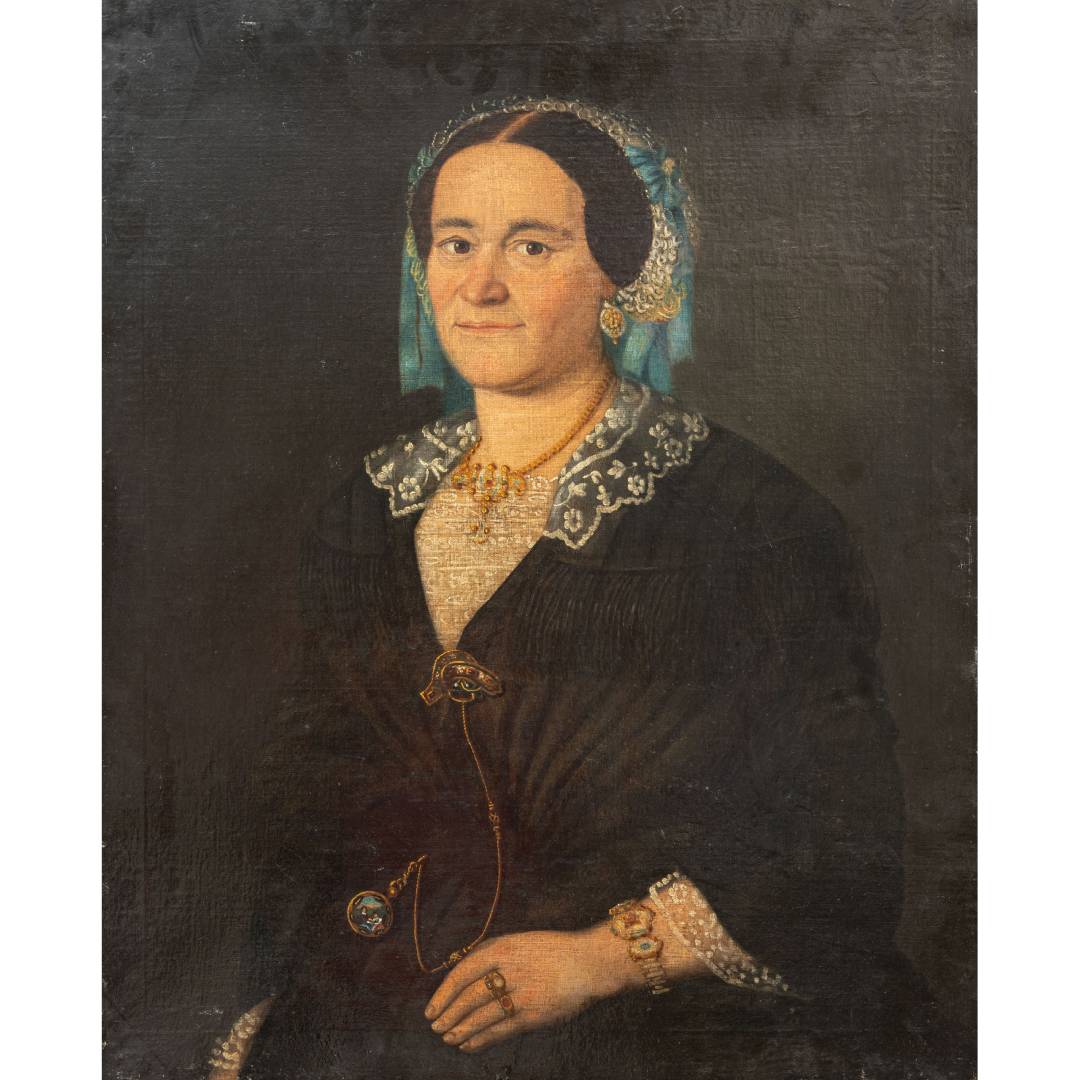
Portrait of a Lady, first half of the 19th century
Oil on canvas
77.7 × 63 cm
MG-58

The Biedermeier style found particularly distinctive expression in the applied arts. The term itself reached Croatia via Vienna and became established during the second half of the 19th century, referring primarily to the Old Viennese (Alt-Wien) style of furnishing bourgeois interiors. Within this cultural context, the demand for bourgeois portraiture grew increasingly strong, as portraits came to symbolize a new social status—a subject previously reserved primarily for the nobility and high-ranking members of the clergy.
The Biedermeier bourgeois portrait thus became a distinctive feature of the period, characterized by psychological characterization, an emphasis on linearity and smooth, polished surfaces, simplified forms, and an intimate atmosphere, often featuring motifs drawn from bourgeois interiors and gardens.
Among the works in the collection of the National Museum of Modern Art, a considerable number of which have been preserved in their original, highly decorative frames—frames that should be regarded as an integral part of the paintings—the Portrait of a Lady (MG-58), by an unknown artist, is particularly notable for its quality. The painting has been dated to the first half of the 19th century and features especially intriguing details in its depiction of jewellery, which, when viewed in isolation, can be regarded as miniature works of art in their own right.
In terms of the sitter’s pose, composition, style, subject matter and motifs—particularly the jewellery—the painting bears a striking resemblance to Portrait of Josipa Dadić, 1852–1856, by Vjekoslav Karas (1821–1858), which is also part of the collection of the National Museum of Modern Art.
According to the observations of Petra Kursar, MA, Senior Conservator-Restorer at the National Museum of Modern Art, the painting was restored using an old wax-based restoration technique. The museum’s Inventory Book also records the precise period during which the restoration was carried out: from 21 June to 10 August 1949.

Text: Ivana Rončević Elezović, PhD, Museum Adviser at the National Museum of Modern Art © National Museum of Modern Art, Zagreb
Photo: Jovan Kliska © National Museum of Modern Art, Zagreb

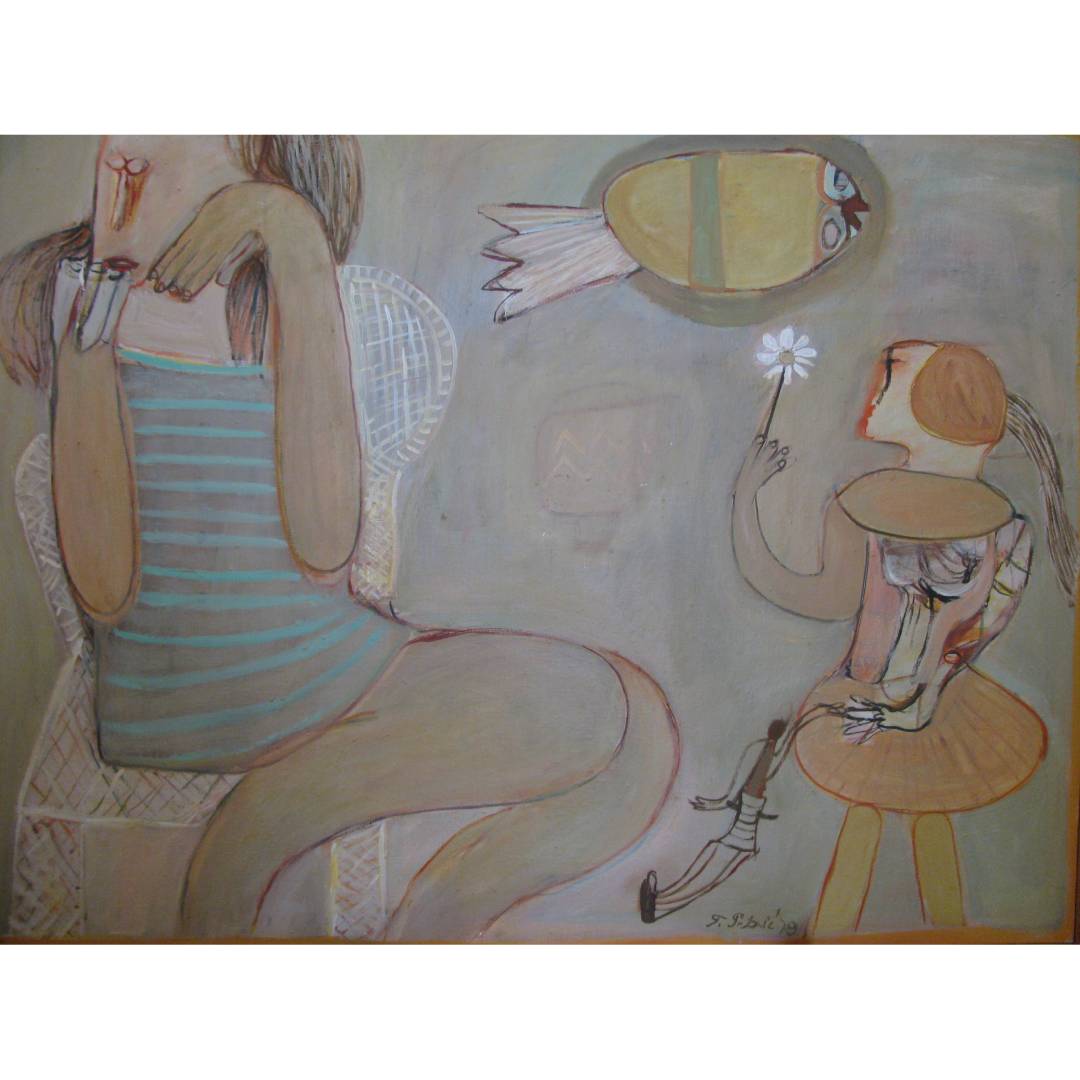
Tonka Petrić, Cvijet, riba i lutak, 1979.

Tonka Petrić
Cvijet, riba i lutak, 1979.
ulje na platnu
100 x 130 cm
MG-6475

Tonka Petrić (Split, 1929. – Zagreb, 1996.) bila je hrvatska slikarica poznata po svojim ekspresivnim crtežima i bogatom, osebujnom koloritu. Diplomirala je na Akademiji likovnih umjetnosti u Beogradu 1957. godine. U svojim radovima često se bavila figuralnim kompozicijama koje su bliske dječjoj mašti, dok su njezini crteži i grafike prožeti grotesknim i ironičnim pristupom. Poznata je po tome što je djela temeljila na introspektivnim promišljanjima i sjećanjima, stvarajući svijet pun znakovitosti i simbolike.
Slika „Cvijet, riba i lutak” nastala je 1979. godine i odražava osebujan izraz ove slikarice, u kojem se isprepliću stvarnost i mašta. Kompozicija okuplja nekoliko simboličkih motiva – žensku figuru u prugastom kostimu, djevojčicu s cvijetom, ribu koja lebdi prostorom i lutku – tvoreći poetski i pomalo nadrealan prizor. Figure su oblikovane pojednostavljenim oblicima, naglašenim konturama i prigušenom paletom pastelnih tonova, dok neutralna pozadina dodatno ističe njihove međusobne odnose. Slobodnim crtežom i suzdržanim koloritom umjetnica stvara intiman, asocijativan prostor u kojem svakodnevni predmeti i likovi poprimaju simboličko značenje, karakteristično za njezin kasniji opus.

Tekst: Luciana Fuks, kustosica za poslove muzejske dokumentacije Nacionalnog muzeja moderne umjetnosti © Nacionalni muzej moderne umjetnosti, Zagreb
Foto: Goran Vranić © Nacionalni muzej moderne umjetnosti, Zagreb

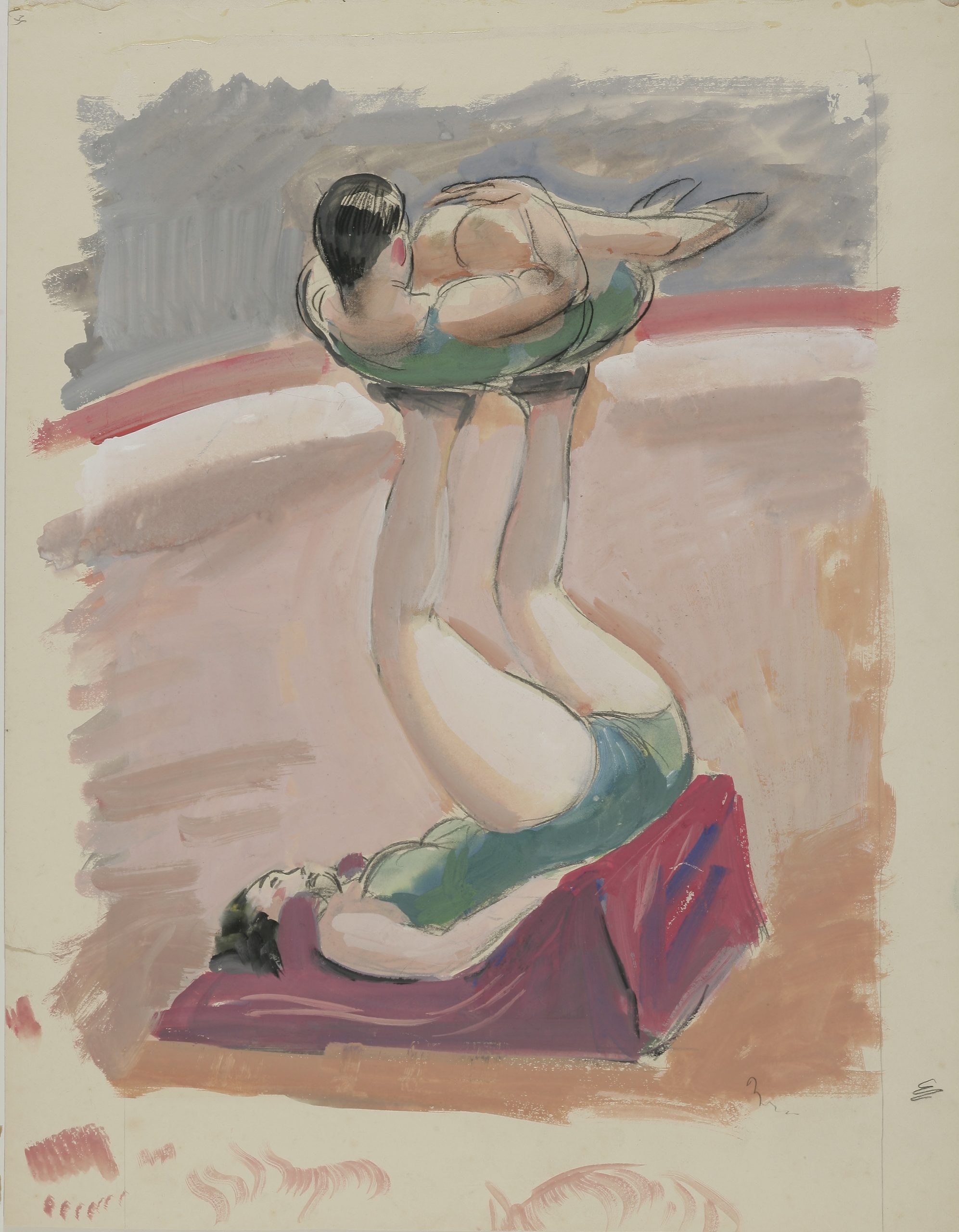
Milivoj Uzelac, Acrobats, c. 1933

Milivoj Uzelac
Acrobats, c. 1933
Gouache on paper
456 × 316 mm
MG-982

Milivoj Uzelac (Mostar, 1897 – Cotignac, France, 1977) was one of the key figures of Croatian Modernism. He studied in Banja Luka, Zagreb, and Prague, where he refined his artistic skills. While in Prague, he was closely associated with several prominent contemporaries, including Vilko Gecan, Marijan Trepše, and Vladimir Varlaj. Together, they became known as the Prague Four, representatives of the new Expressionist movement in Croatian art. After returning from Prague in 1919, Uzelac worked in Zagreb for only a few years before leaving for France in 1923. There, he drew inspiration from major European artistic movements such as Fauvism, Expressionism, and Cubism. Although he lived and worked in France, he continued to exhibit regularly in Croatia and had a significant influence on a new generation of Croatian painters of the interwar period.
“Acrobats” depicts two female figures interacting with one another, with one supporting the other in a pose that suggests playfulness, balance, or an acrobatic movement. The composition is constructed from elongated, simplified forms and confident, pronounced contours that define the human body. A restrained palette of pink, grey, green, and blue tones creates a harmonious colour scheme, while broad gouache brushstrokes convey a sense of immediacy and spontaneity. The background is reduced to simple fields of colour, directing the viewer's attention to the figures and their dynamic gesture. In this work, Uzelac combines decorative qualities with a refined treatment of the human figure, creating a balanced composition that reflects the mature modernist character of his artistic expression.

Text: Luciana Fuks, Museum Documentation Curator at the National Museum of Modern Art Zagreb
Photo: Goran Vranić © National Museum of Modern Art, Zagreb Sažmi
Podijeljena objava

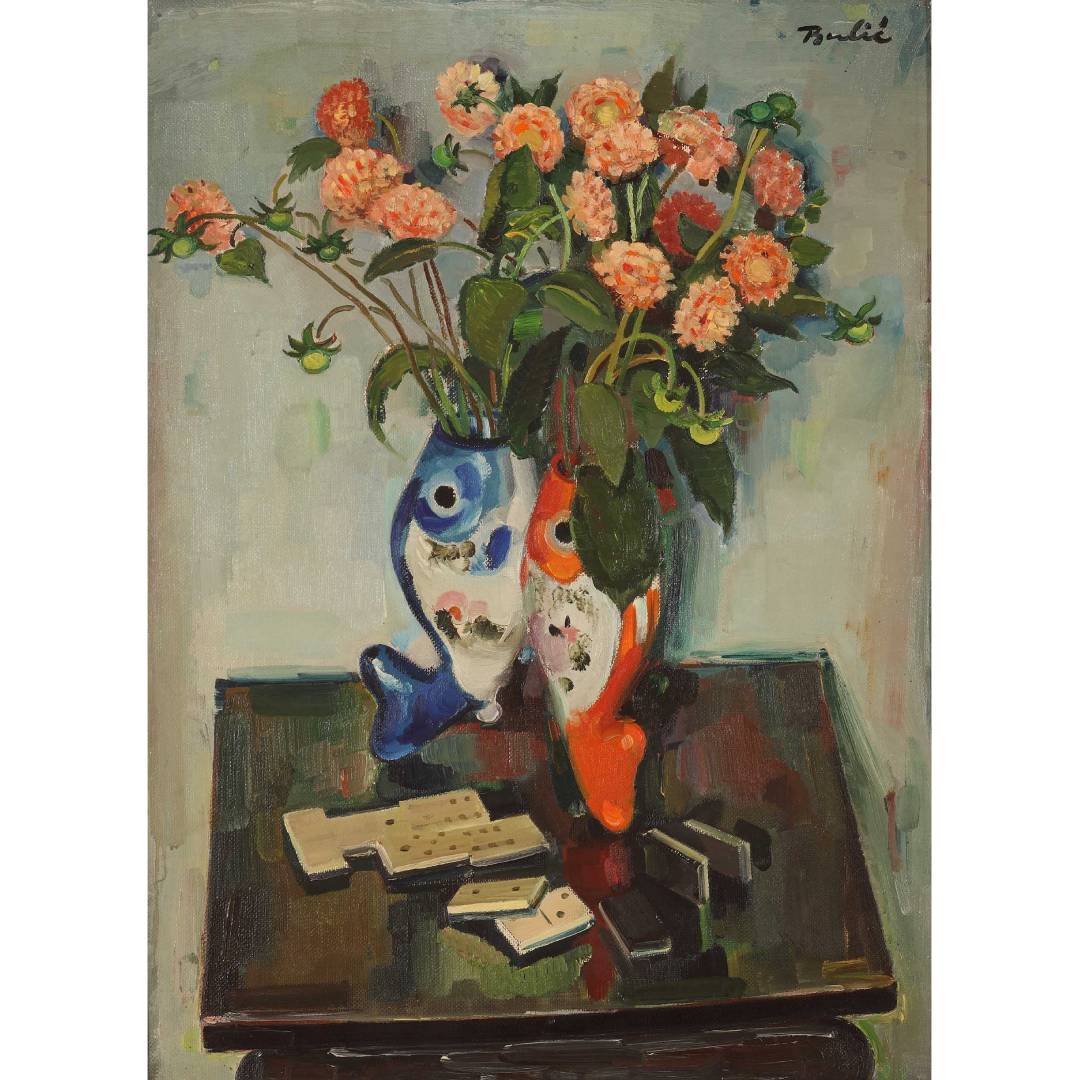
Bruno Bulić, Vase with Flowers, 1939

Bruno Bulić
Vase with Flowers, 1939
oil on canvas
73,5 x 54 cm
MG-1503

Bruno Bulić (1903-1990) was a Croatian painter most known for his paintings of Franciscan churches from his later period but also his still lifes and portraits from the earlier period. Even though he had a very fertile artistic production, he only had two individual exhibitions in his lifetime with many group ones.
His first lessons in drawing came from the famous sculptor Ivan Rendić, awakening in him an appreciation for art and drawing which grew with his many visits to the Revoltella Museum. He continued his studies at the Scuola Industriale (1920-1924) in his hometown Trieste and Accademia di Belle Arti in Venice (1924-1927).
He left Venice after losing his hearing in street demonstrations and he continued his studies in the Academy of Arts in Zagreb under professor V. Becić (1927-1931). He worked as a curator of the Old Masters’ fresco paintings collection at the Glyptotek of the Yugoslavian Academy of Science and Arts (JAZU) from 1947 after which he worked in the restoration department of the JAZU from 1954 to 1968.
His still lifes like ‘Vase with Flowers’ have a note of originality in them in the arrangement of the flowers and other elements in the painting. They are filled with a specific intimacy and haven’t been painted from a model. In ‘Vase with Flowers’ the vases are in the shape of a fish, placed between dominoes on a stool. The unusual contrast of the colorful vases and the more monochrome elements make a charming image of an everyday scene - freshly picked flowers set in a home.
Bulić’s characteristics in paintings are fixed three dimensional shapes, simple compositions, modulation and tonal shift of colors.

Text: Stella Baki, curator / museum educator at the National Museum of Modern Art Zagreb
Photo: Goran Vranić © National Museum of Modern Art, Zagreb
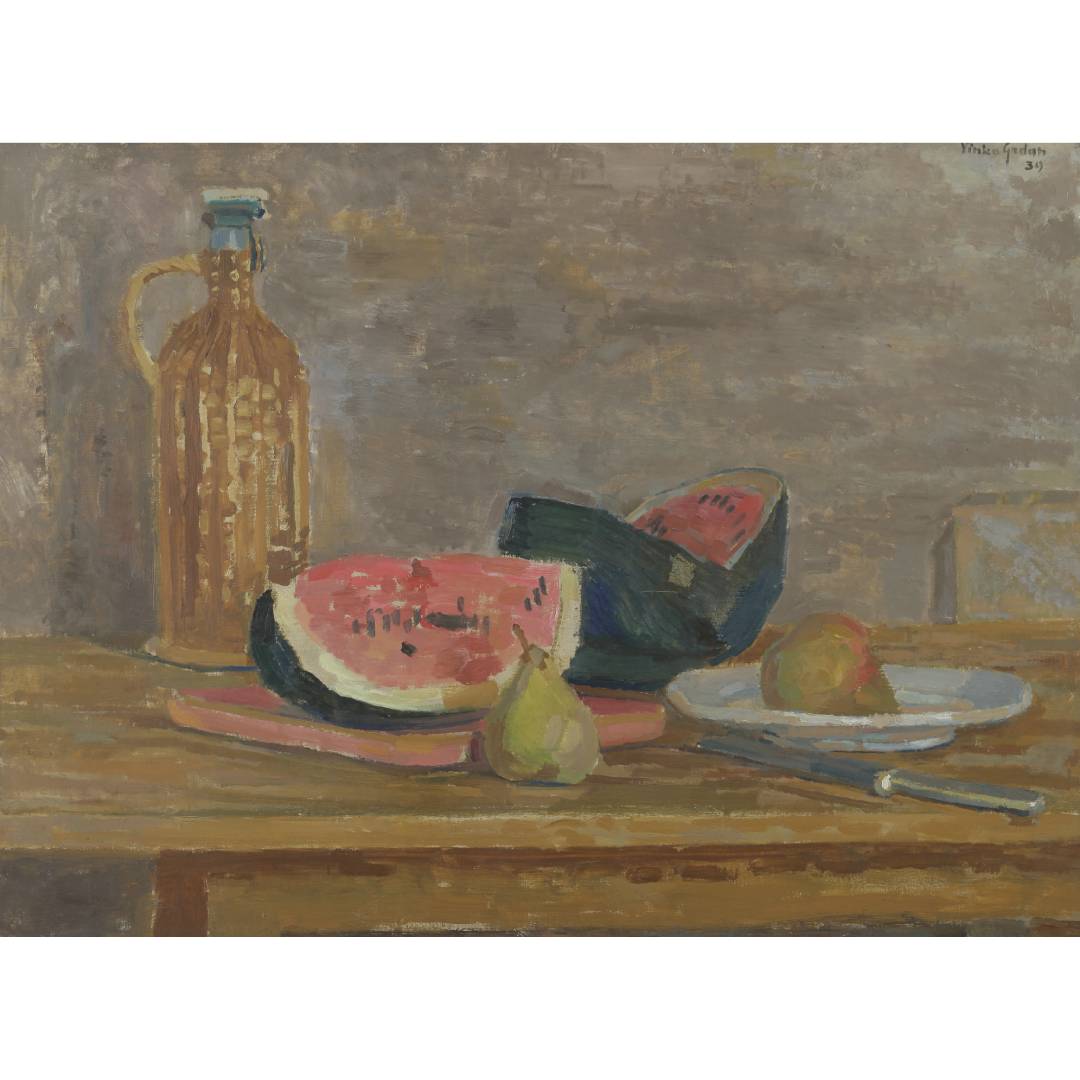
Vinko Grdan, Still Life, 1939

Vinko Grdan
Still Life, 1939
oil on canvas
54 x 72,8 cm
MG-1606

Vinko Grdan (1900-1980) was a Croatian painter who studied under professor Ljubo Babić at the Academy of Arts in Zagreb and with his fellow colleagues O. Postružnik, Đ. Tijak, L. Junak and I. Tabaković and others founded the Earth Group (grupa Zemlja). He went to Paris (1924–1926), exhibited his works at the Salon d’Automne and the Salon des Indépendants (1925) as well as at the Earth Group exhibits in Zagreb (1929, 1931) and Paris (1931).
When he returned from Paris he started to work as an illustration instructor in Užice in 1928 but he moved to Belgrade in 1934 where he started working as a professor at the Academy of Applied Arts. He remained at that position from 1948 to 1959 when he became the rector until 1965.
His work ‘Still Life’ from 1939 represents a development towards a more intimate and coloristic painting which was different from the art of Earth Group which used social themes and a specific, nationalist approach and love for folklore and heritage. During the 1930s he started making art in a newer realistic style, using wide brush strokes, geometrization, reduction of the form and a contrasting palette.
What can be seen in his work ‘Still Life’ is a softening of the composition using gentle and soft strokes, reducing the shapes and using a muted palette of grey and brown colors. The composition depicts a bottle, a cut watermelon and two pears set on a table.

Text: Stella Baki, curator / museum educator at the National Museum of Modern Art Zagreb
Photo: Goran Vranić © National Museum of Modern Art, Zagreb
Slavko Šohaj, On the Beach, 1997

Slavko Šohaj
On the Beach, 1997
Oil on canvas
130 × 116.4 cm
MG-6933

Slavko Šohaj (Zagreb, 1908–2003) was one of the foremost representatives of Croatian lyrical intimism. He graduated from the Academy of Fine Arts in Zagreb, where he studied under the distinguished painters Ljubo Babić and Vladimir Becić. He continued his artistic training in Paris during two stays, from 1931 to 1932 and again in 1939, where he experienced the dynamic atmosphere of the European avant-garde firsthand. He made his public debut in Zagreb in 1934, exhibiting as a guest of the "Group of Three", and was soon recognised by critics as an authentic representative of figurative poetic realism. His time in Paris further enriched his artistic development, and his oeuvre became largely devoted to intimate subjects, portraits, nudes, and still lifes. He worked under the influence of major French artists, including Henri Matisse, Paul Cézanne, and Claude Monet. From the 1960s onwards, his painting gradually evolved towards a more decorative and flattened style, characterised by increasing stylisation and a stronger emphasis on subjective expression within an abstract visual language.
Painted in 1997, “On the Beach” belongs to the late phase of Slavko Šohaj's career, when his artistic expression was marked by an increasing stylisation of form and a pronounced decorative quality. The composition is dominated by two female nudes shown frontally against a boldly striped background in black, orange, blue, and green. The figures are rendered with simplified contours and elongated proportions, while the contrast between the pale bodies and the dark background further emphasises their presence. In the lower right corner, a stylised hat serves as a visual reference to the beach setting suggested by the title. Through freely applied paint and reduced forms, Šohaj achieves a balance between figurative representation and decorative expression, allowing colour and compositional rhythm to become the painting's primary means of artistic expression.

Text: Luciana Fuks, Museum Documentation Curator at the National Museum of Modern Art Zagreb
Photo: Goran Vranić © National Museum of Modern Art, Zagreb
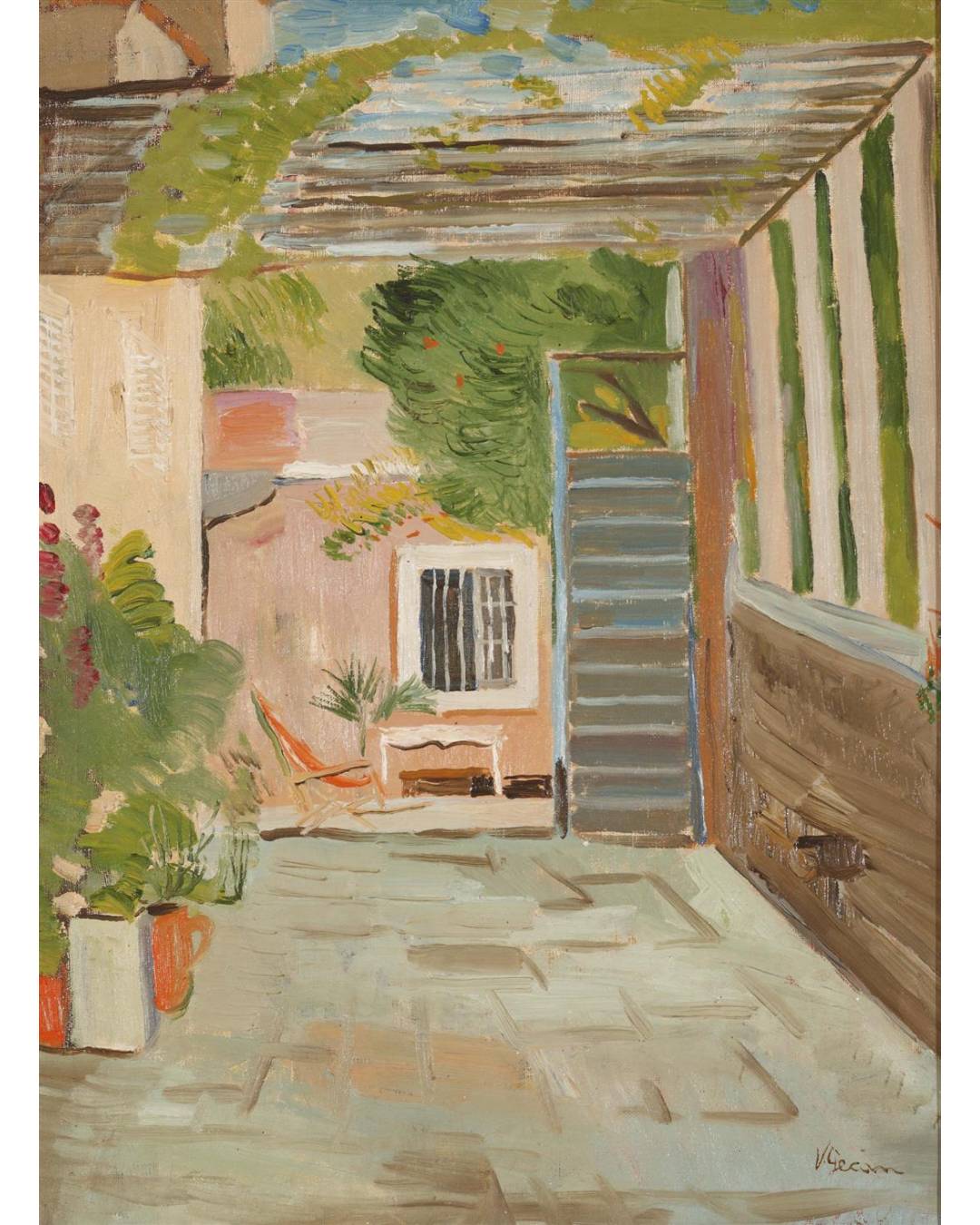
Vilko Gecan, Orebić, 1935

Vilko Gecan
Orebić, 1935
oil, canvas
57 x 43 cm
MG-1064

Vinko Gecan (1894-1973) was a Croatian painter, graphic artist, illustrator and caricaturist whose work was very influential in Zagreb’s modern art scene of 1920s and 1930s. He is most well-known for his expressionist paintings (Cynic, 1921) and his contribution to the avant-garde magazine ‘Zenit’.

In 1912 he attended the private art school of Tomislav Krizman with Milivoj Uzelac and in 1913 he started attending the Academy of Arts in Munich and the private art school of Moritz Heymann but his art education was stopped because of mobilisation and being a war captive for three years in Sicily. He lived in Zagreb, Prague and Berlin (1919-1924) and then in New York and Chicago (1924-1932).

In the Zagreb Spring Salon of the 1920s he participated with Milivoj Uzelac, Marijan Trepše and Vladimir Varlaj, known as the ‘Group of Four’ or ‘The Prague Four’. Trained in Prague, works of these young painters brought new expressionist ideas that went to dominate the 1920s Croatian art scene. From 1932 he lived in Zagreb where he finished his studies at the Academy of Arts in 1936.

In 1931 he started to experience the first symptoms of Parkinson’s disease, a tremor in his right hand which became stronger with time and made it harder for him to paint, especially proportions and anatomy. This made him turn to still lifes and landscape fragments with strong colorism, like in his work ‘Orebić’ from 1935 - a fragment of a terrace in front of a small seaside house which might have been an everyday scene for Gecan, painted with short, impressionist strokes.

Text: Stella Baki, curator / museum educator at the National Museum of Modern Art Zagreb
Photo: Goran Vranić © National Museum of Modern Art, Zagreb
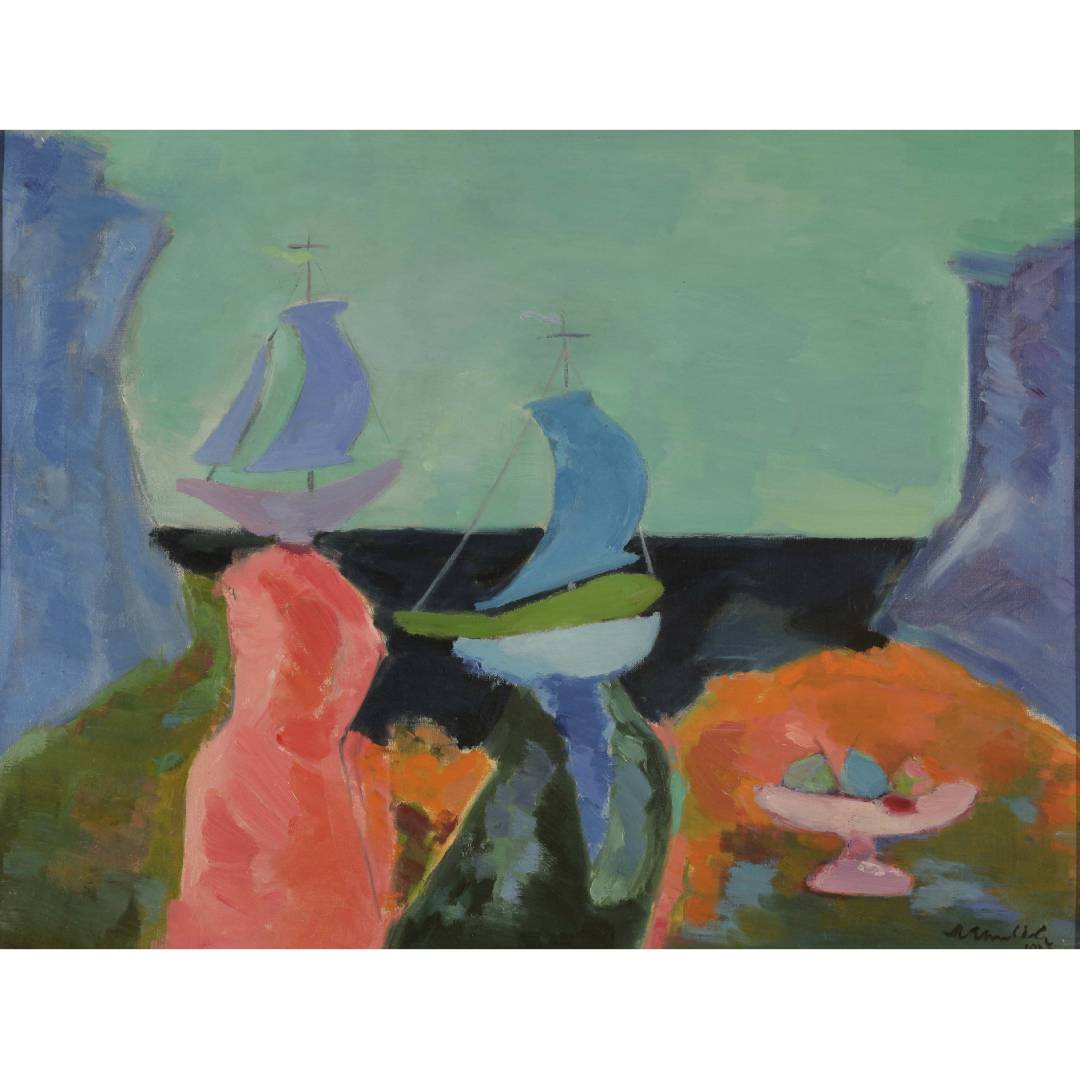
Marta Ehrlich, Maestral, 1970

Marta Ehrlich
Maestral, 1970
oil on canvas
60.4 × 77.4 cm
MG-4785

Marta Ehrlich (Zagreb, 1910–1980) was one of the leading Croatian painters of the 20th century. She graduated in painting from the Academy of Fine Arts in Zagreb in 1934 as a private student of Vladimir Becić, and spent the following year on a study visit to Paris. In the early phase of her career, her work reflected Becić's influence, while in later years she developed a more Surrealist approach. She most frequently painted cityscapes, landscapes, interiors, and still lifes, cultivating an intimate and imaginative artistic expression. During the 1960s, she increasingly devoted herself to ceramics, producing small-scale sculptures, painted tiles, and decorative plates, while in painting she embraced a more abstract language influenced by Art Informel.
Painted in 1970, “Maestral” belongs to the artist's late creative period, when she moved towards a simplified and almost abstract visual language. The composition is constructed from stylised forms that merely suggest a landscape, while sailboats, the open sea, and steep coastal cliffs remain recognisable through reduced shapes and strong colour relationships. Blue and green tones dominate the composition, contrasted by warm red and orange areas in the foreground. Through free brushstrokes and broad applications of paint, Ehrlich creates a dynamic yet harmonious composition in which colour becomes the primary means of expression. The title refers to the maestral, a characteristic Mediterranean wind whose freshness and movement are evoked through the rhythm of forms and the painting's airy atmosphere.

Text: Luciana Fuks, Museum Documentation Curator, National Museum of Modern Art © National Museum of Modern Art, Zagreb
Photo: Goran Vranić © National Museum of Modern Art, Zagreb