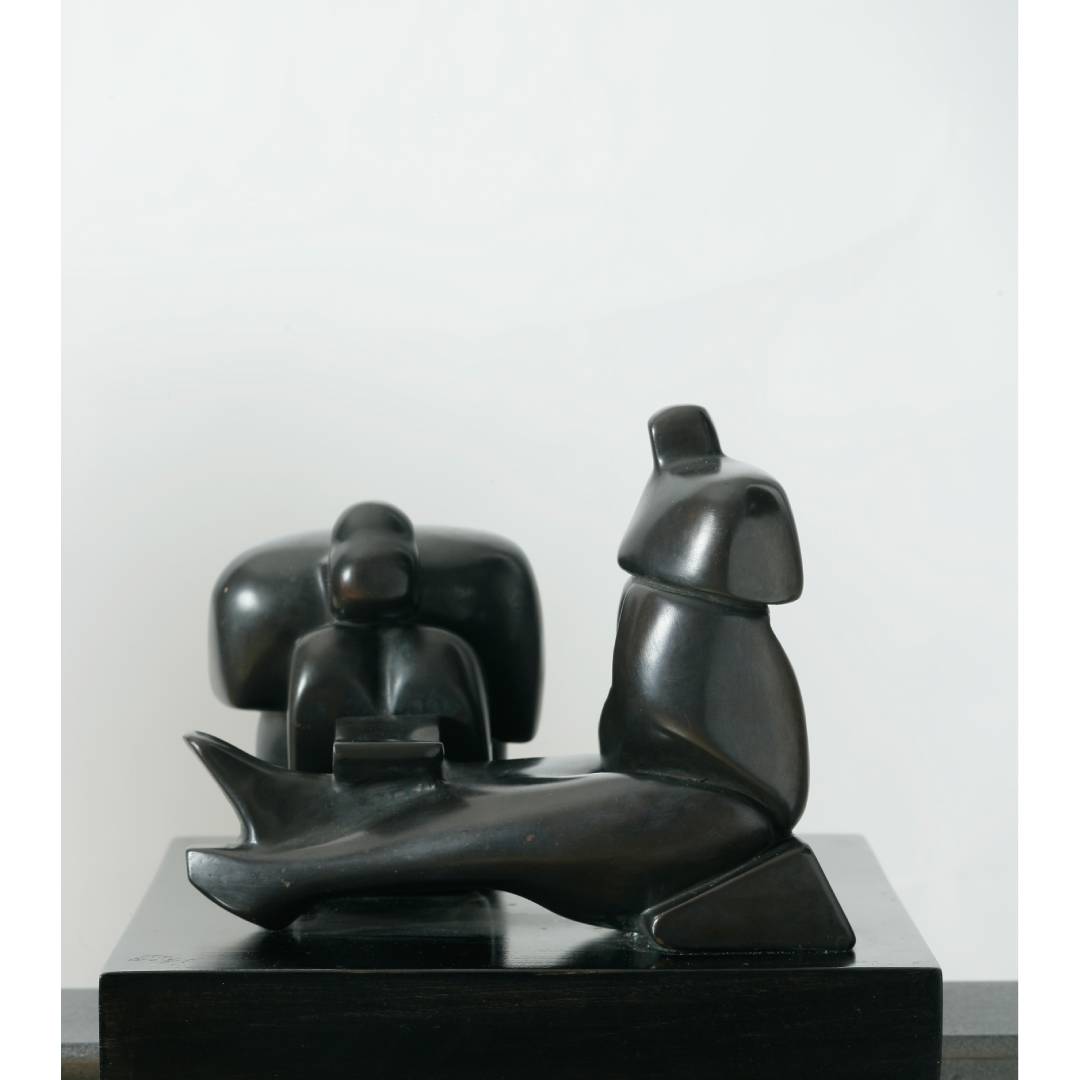
Tomislav Ostoja, Composition Summer (Two Figures), 2000

Tomislav Ostoja
Composition Summer (Two Figures), 2000
bronze
20 x 24 x 20 cm,
MG-7151
Tomislav Ostoja (1931, Split) is a Croatian sculptor and painter who studied at the Academy of Art in Zagreb under professor Frane Kršinić and Antun Augustinčić. He is most known for his monumental sculptures like The Monument to Silvije Strahimir Kranjčević from 1962, Monument to the Fallen Soldiers from Ciglenica from 1972 and Memorial to the Victims of the Homeland War in Vukovar from 2000.
He created abstract sculptures first, followed by stylised figures which he simplified into massive forms as can be seen in „Composition Summer (Two Figures)“ made in 2000. Thematically, this work is similar to a series of works called „Summer“ which were first exhibited in 1984. „Composition Summer (Two Figures)“ consists of two figures with curved shapes and soft edges, one which is sitting and the other slouching.
The sculpture is characterized by massive block shapes, static composition and rhythm. Thematically, the work indicates careless maritime scenes and the mundane, but the simple static shapes depict a certain alienation. His sea swimmers and their voluminous figures are completely void of character and personality, two massive shapes sitting uninterested. In the context of the series of works, we can imagine them as two bathers sitting down at the beach after a long day in the sun.

Text: Stella Baki, curator / museum educator at the National Museum of Modern Art Zagreb
Photo: Goran Vranić © National Museum of Modern Art, Zagreb

Ana Opalić Edita, Petrova Street, Zagreb, 2000

Ana Opalić
Edita, Petrova Street, Zagreb, 2000.
black and white photo, paper
whole with frame: 68 x 64 cm
photo: 39 x 39 cm
MG-7011

Ana Opalić (1972) graduated in TV and film recording from the Academy of Dramatic Arts in Zagreb in 1997. In 2003, she represented Croatia at the 50th Biennale in Venice with photographer Boris Cvjetanović.
She portrays family members, friends, and even animals in numerous photographic series in their natural habitats. The photo shows a close friend and fellow artist, Edita Schubert (1947 – 2001), whose thirty-year artistic activity is characterized by a constant need to explore different artistic media. At the same time, Opalić records a moment frozen in time and a story of resilience and defiance of social restrictions.
By positioning the subject in the manner of classic portrait photography, she reveals a shared awareness of the photographic process. At the same time, her work goes beyond mere documentation as it explores the complexity of identity and stereotypes through intimate portraits. Through the lens, she confronts the dichotomy of acceptance and discrimination, emphasizing the diversity of identities and the importance of self-expression amidst the background of entrenched stereotypes, especially towards the LGBTIQ+ community. With her work, Opalić invites viewers to face prejudices and accept the richness of human experience, going beyond the boundaries of stereotypes.

Text: Marta Radman curator of the National Museum of Modern Art © Nacionalni muzej moderne umjetnosti, Zagreb