Which photographs and how many will you exhibit at the exhibition in Oktogon?
Rino Gropuzzo: I will exhibit 22 photographs from three cycles. One is nudes of a transgender person, the second cycle is made in the Palazzo di zuccherificio before the renovation on the theme of the Baroque (the largest Baroque palace on this side of the Adriatic), and the third cycle is a selection by the curators of recent photographs taken at various locations in Istria and the surroundings of Rijeka.
Boris Štajduhar: I will exhibit twenty-six photographs from different periods, all photographs are 100 x 70 in size, mostly black and white, but there are also four color photographs. The photographs are combinations of female and male nudes, some of them feature famous people, but also of less known people whom I was happy to photograph and work with.
Almin Zrno: The number of photos is never primary, but this time there are 27. What is truly important is that the story and setting create a dialogue with the space of the Octagon. The exhibited works are not mere representations of figures, but a visual study of inner states and emotions. Each photograph functions as part of a unique sculptural and aesthetic series.
What does a woman's body represent to you?
Rino Gropuzzo: Inspiration.
Boris Štajduhar: Throughout history, the female body has been an inspiration to some of the greatest artists of all time, and I am no exception. However, I believe that the basis of everything is good photography, regardless of whether it shows a body or just a portrait or a life situation.
Almin Zrno: For me, the human body is a pure medium of emotion, a letter of the soul and a timeless sculptural form. The body is not just an object of observation or an idealized pattern, it is a living landscape through which light, shadow, vulnerability and the strength of the human being are refracted.
How did you choose your models?
Rino Gropuzzo: By appearance and likeability and, of course, enthusiasm for participating in my projects.
Boris Štajduhar: I have chosen them in various ways, when it comes to celebrities, I mostly photograph those who call me to take pictures of them or the editors have commissioned people to photograph for magazines. It's the same with some commercial shoots, for fashion campaigns often the whole team arranges the models I shoot. Certainly, if I think it will contribute, I suggest the person who suits me best at some point as part of a wider story.
Almin Zrno: I don't choose models according to classic aesthetic norms or patterns, but according to inner energy, expression and readiness to enter the creative process together. Honesty and the story we carry within us are the only criteria that create a true artistic vision.
Where did you photograph them?
Rino Gropuzzo: In various places. It is difficult to list the locations of almost 50 years of filming, some in the studio, mostly in nature and on some abandoned and dilapidated buildings, most often industrial archaeology.
Boris Štajduhar: At different locations, from studio ones, in controlled conditions to numerous exteriors, mines to the seashore and zoo, I really don't know a location where I haven't filmed.
Almin Zrno: The shooting space is always a thoughtful and controlled environment in which complete discretion, peace and a sense of security for the model are ensured in the first place. The location is just a scenography, while the real space of creation is actually the field of trust that is built between me and the person in front of the lens. There is no superficial sexuality here.
Is it harder to film older or young women?
Rino Gropuzzo: It depends on the character of the person. It is logical that it is easier to film a young tense body, but often the character and self-awareness of a mature woman that can be seen in the picture overcomes the flaws of the body that can be covered up during filming.
Boris Štajduhar: It is difficult to film only women who do not want to be filmed. Age is really just a number.
Almin Zrno: Age is not a category in my photography at all. Each age of life carries its own specific emotion and story. The focus is always on how to bring out authenticity, maturity and depth of the inner state through light and form, regardless of age.
Which celebrities have found themselves naked in front of your lens?
Rino Gropuzzo: I didn't shoot a lot of celebrities without clothes, sometimes with more clothes. (What are celebrities? They were all familiar to me.)
Boris Štajduhar: Almost every one. At one point, the media, for which I worked at the time, wanted only naked celebrities because that was what the audience of the magazines of the time liked to consume. They hired me for almost all of these shoots because they knew they would get what they ordered. My conditions were simple: I don't want vulgar photos and I have to have complete freedom. I think all the models understood that, so it was not a problem to photograph them without clothes.
Almin Zrno: The status or public function of the person in front of the lens completely disappears the moment we enter the process. In front of the camera is not a "famous person", but a simple human being in their naked pure emotion. The protection and privacy of each model is for me an inviolable professional and ethical code.
Who are the women you filmed in general? Did you film someone very close to you in this way? And what is the line between art and pornography when it comes to such delicate poses?
Rino Gropuzzo: Various women, from professional models to various friends, neighbors, some actresses... Very often women are very close to me (first they became close to me, and then I photograph them). The boundary between pornography and art is debatable and has changed over time.
Boris Štajduhar: I've never filmed the nudes of someone close to me. I'm separating business and private. Regarding the line between art and pornography, it sometimes seems very thin, but in fact it is huge. It all depends solely on the photographer and the way he wants to show or hide something.
Almin Zrno: These are, above all, brave and authentic people who believe in the artistic process. The very thought of including or comparing an artistic act with pornography is an insult to art. The limit is not in the poses, but in the intention, aesthetics and respect... While pornography exploits the human body, the artistic act celebrates the form, structure, emotion, strength, and dignity of the human body.
How did you manage to persuade them and what were they most afraid of?
Rino Gropuzzo: I didn't need to persuade much, either they wanted to or not. They were not afraid.
Boris Štajduhar: Well, I've never really persuaded them. If someone doesn't want to be photographed, I respect that. I only photographed people who wanted to be photographed, and there are really a lot of them. I think all people have the same fear: how they will look in the photos. Everything is based on trust, they trusted me, so there were no problems.
Almin Zrno: There is no persuasion or persuasion in my work. The process is based on mutual trust and understanding of the vision. Fears (if any) disappear when the model realizes that it is fully protected, that every movement is built with respect and that the goal is to create a timeless work of art, not sensationalisms.
Did some of them want to be photographed just for their archive?
Rino Gropuzzo: Some, but mostly they followed my ideas.
Boris Štajduhar: Yes, they are. But let it stay between me and them.
Almin Zrno: As an artist, I respect every decision and limit of models, because the protection of their integrity comes first. The work that is created is the result of joint cooperation and agreement, and only those photographs that fully correspond to the mutual artistic vision and consent are publicly exhibited.
Have you ever been photographically attracted to the naked body of a man and how does this attractiveness and artistic expression differ from women?
Rino Gropuzzo: I have never been overly attracted to the male body, although there are very beautiful male bodies, especially athletes. I filmed some friends, and I also made a calendar of naked football players of the Orient club. At first I was scared of their number and I didn't want to do it in the studio. With a good atmosphere, we did everything in a few hours in the club's dressing room. It was a great success.
Boris Štajduhar: Mostly, I would say about 90 percent, I photograph women, so I have more experience with them. But in front of the lens, I see both men and women equally. I'd rather say that I divide the people I photograph into those who like to be photographed and those who don't really like it. There is no difference in artistic expression, in the end it all comes down to the same thing: good photography.
Almin Zrno: The focus of my work is on exploring form, volume, contrast of light and shadow, and emotions imprinted on the human body. If you've seen my work, you've seen both male and female models. If you haven't, this exhibition is an ideal opportunity. From a sculptural and aesthetic point of view, the human figure is a universal language through which I explore visual elements, without the need for superficial divisions.
Apart from the ideal proportions in women, what can attract you photographically?
Rino Gropuzzo: Expressiveness, character.... That's why I love filming actresses, ballerinas, women with various other careers...
Boris Štajduhar: I don't believe in ideal proportions, if you mean 90-60-90. Each person has different ideal proportions that fit their person, and the job of a good photographer is to show all this in the photo.
Almin Zrno: Ideal proportions mean nothing if there is no inner charge, character and story. I am attracted to the gesture, the attitude, the emotion, the texture of the skin and the way the body reacts to light. These are simply the elements that make photography alive and artistically valuable.
Did you have role models among photographers?
Rino Gropuzzo: Some, depending on the photographic themes...
Boris Štajduhar: Yes, Peter Lindberg and Mario Testin. Unfortunately, Lindbergh left us too early, but I regularly went to his exhibitions and followed everything he published in magazines. We thought similarly about photography, so it was interesting for me to compare what we do in which time. I still follow Testin, we shoot similar things and I really appreciate everything he shoots.
Almin Zrno: I don't find inspiration in copying others, I find it in classical art, sculpture and authors who have understood light and human anatomy throughout history. Building one's own visual handwriting requires rethinking one's own expression, not copying someone else's work.
Prepared and interviewed by Lana Šetka
Translated by Stella Baki
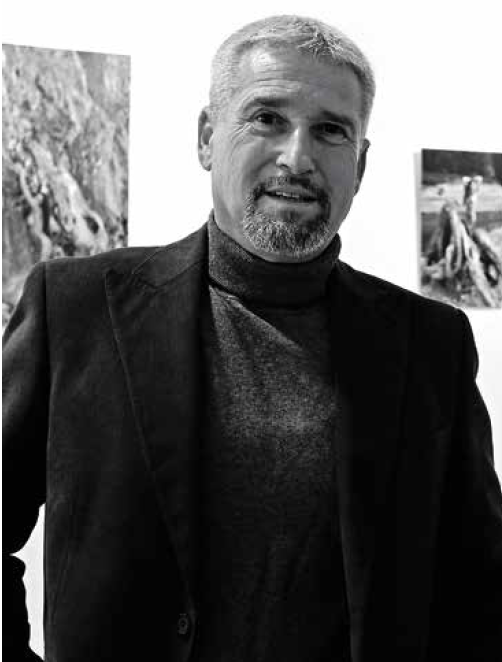
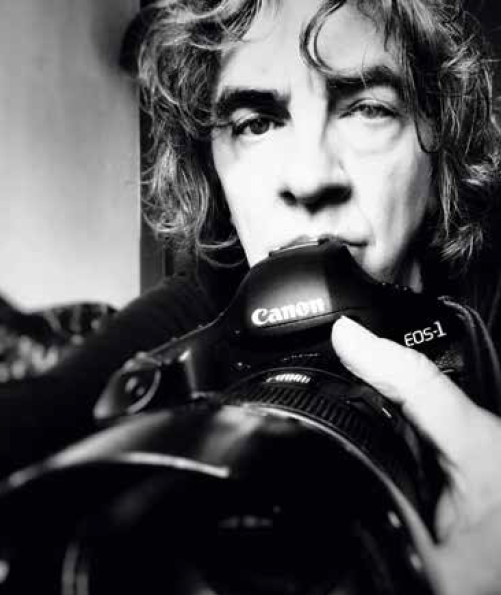
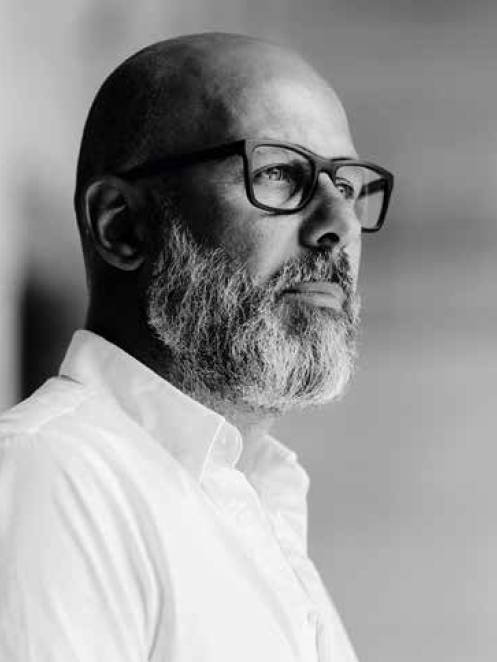
Reproductions: self-portrait by Rino Gropuzzo in Kortil Gallery 2013, self-portrait by Boris Štajduhar, portrait of Almin Zrno © Dženat Dreković