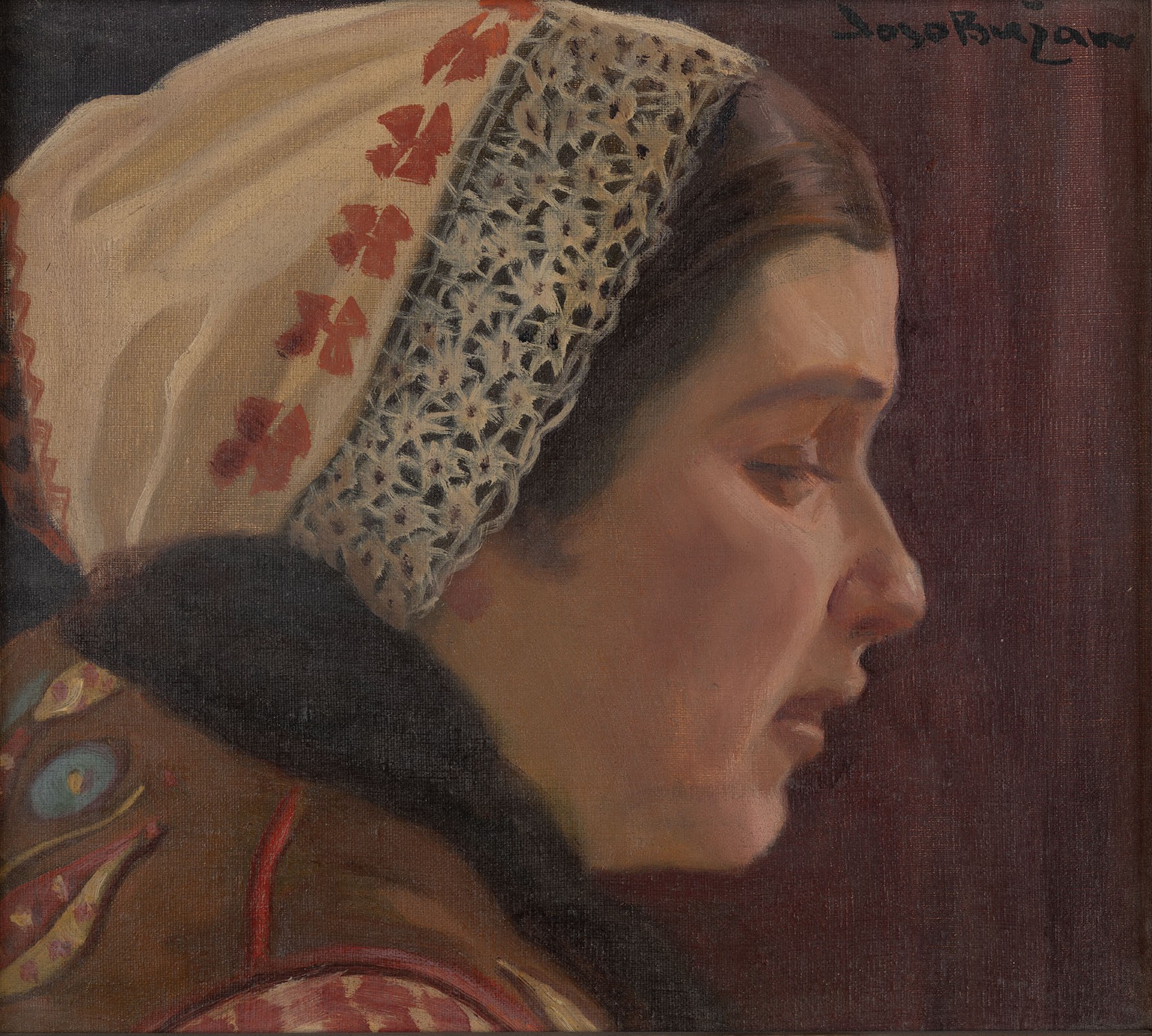
Joso Bužan, Woman from Turopolje A., 1935

Joso Bužan
Woman from Turopolje A., 1935
Oil on cardboard, 33 × 36 cm
MG-402

Joso Bužan (1873–1936) received his artistic training in Zagreb, Vienna, Germany and Italy. He primarily painted genre scenes depicting rural life, particularly in the areas surrounding Zagreb, as well as portraits. Stylistically, his work falls within the traditions of plein-air and pseudo-plein-air realism and colourism, with varying degrees of artistic accomplishment. An active figure on the Croatian art scene at the turn of the twentieth century, Bužan is an artist whose name warrants mention in any account of this period.
Bužan’s Woman from Turopolje A., painted in 1935, is a typical portrait rooted in the realist tradition. The composition focuses closely on the profile of a young woman, with particular attention paid to the intricate details of her traditional attire. The portrayal of a young woman from the rural population, in keeping with the academic realism of the long nineteenth century, belongs to a segment of Bužan’s oeuvre devoted to scenes of rural idyll in continental Croatia, particularly the regions surrounding Zagreb and Slavonia.

Text: Ivana Rončević Elezović, PhD, Museum Advisor, National Museum of Modern Art, Zagreb © National Museum of Modern Art, Zagreb
Photo: Goran Vranić © National Museum of Modern Art, Zagreb
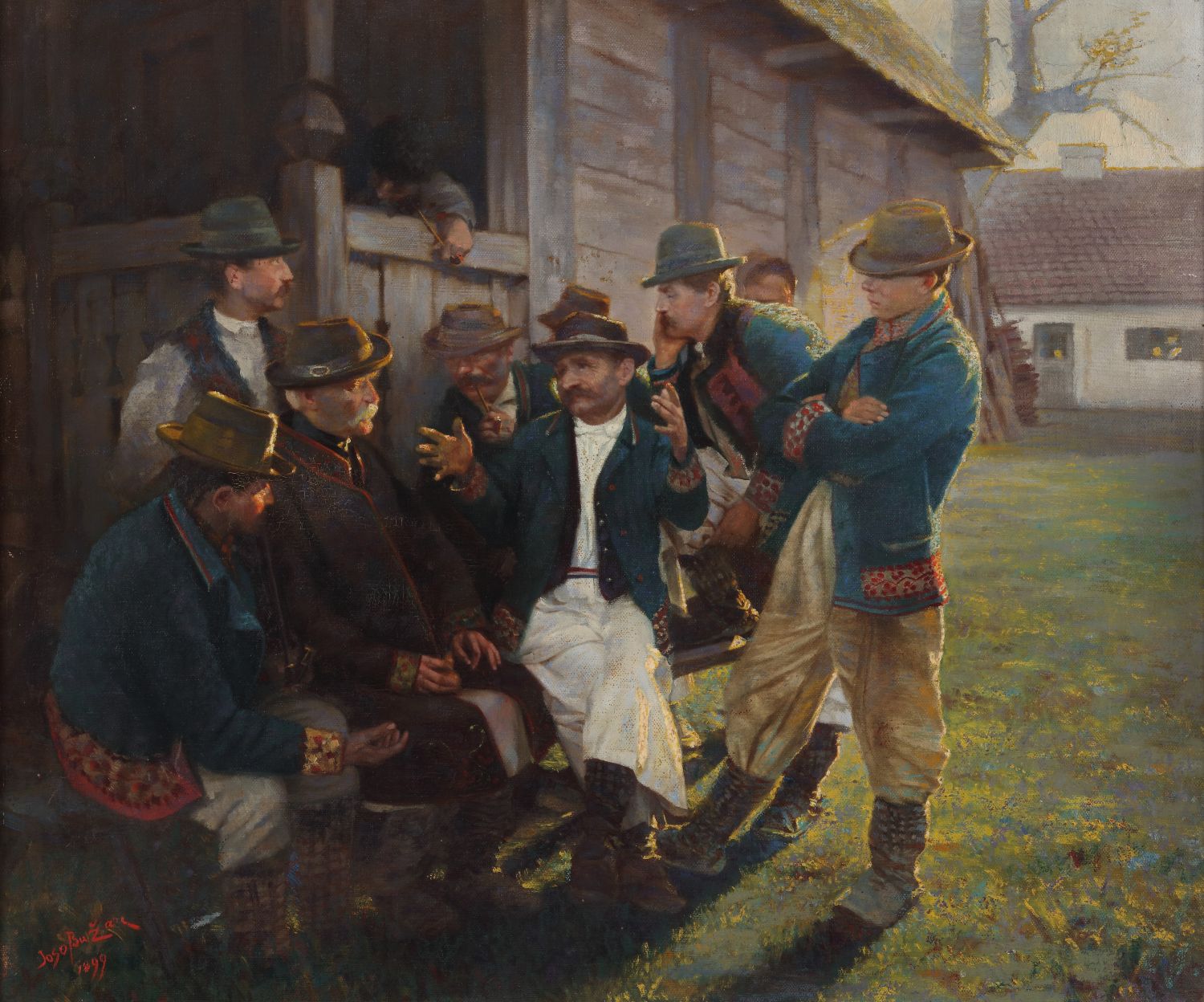
Joso Bužan, Sunday Gathering, 1899

Joso Bužan
Sunday Gathering, 1899
Oil on canvas
56 × 65.8 cm
MG-404
Joso Bužan (1873–1936) received his artistic training in Zagreb, Vienna, Germany and Italy. He most frequently painted genre scenes depicting rural life, particularly in the Zagreb area, as well as portraits. Stylistically, his artistic expression belongs to the realms of plein-air and pseudo-plein-air realism, and to colourism of varying quality. He was an active presence on the Croatian art scene at the turn of the twentieth century, making him an artist whose name is essential to mention.
Genre scenes of everyday life and portraits are well represented in the collection of the National Museum of Modern Art in Zagreb. The accomplished academic realism evident in paintings such as Joso Bužan’s Sunday Gathering (1899) captures, much like a photographic lens, the vitality, humour and unpretentious simplicity of a fleeting moment in everyday village social life or evening courtship rituals. Works such as these reveal Bužan’s practice of photography: their character is that of everyday scenes observed and immortalised through the eye of a photographer, with their frozen movements, facial expressions and gestures.
Text: Ivana Rončević Elezović PhD, Museum Advisor, National Museum of Modern Art © National Museum of Modern Art, Zagreb
Photo: Goran Vranić © National Museum of Modern Art, Zagreb
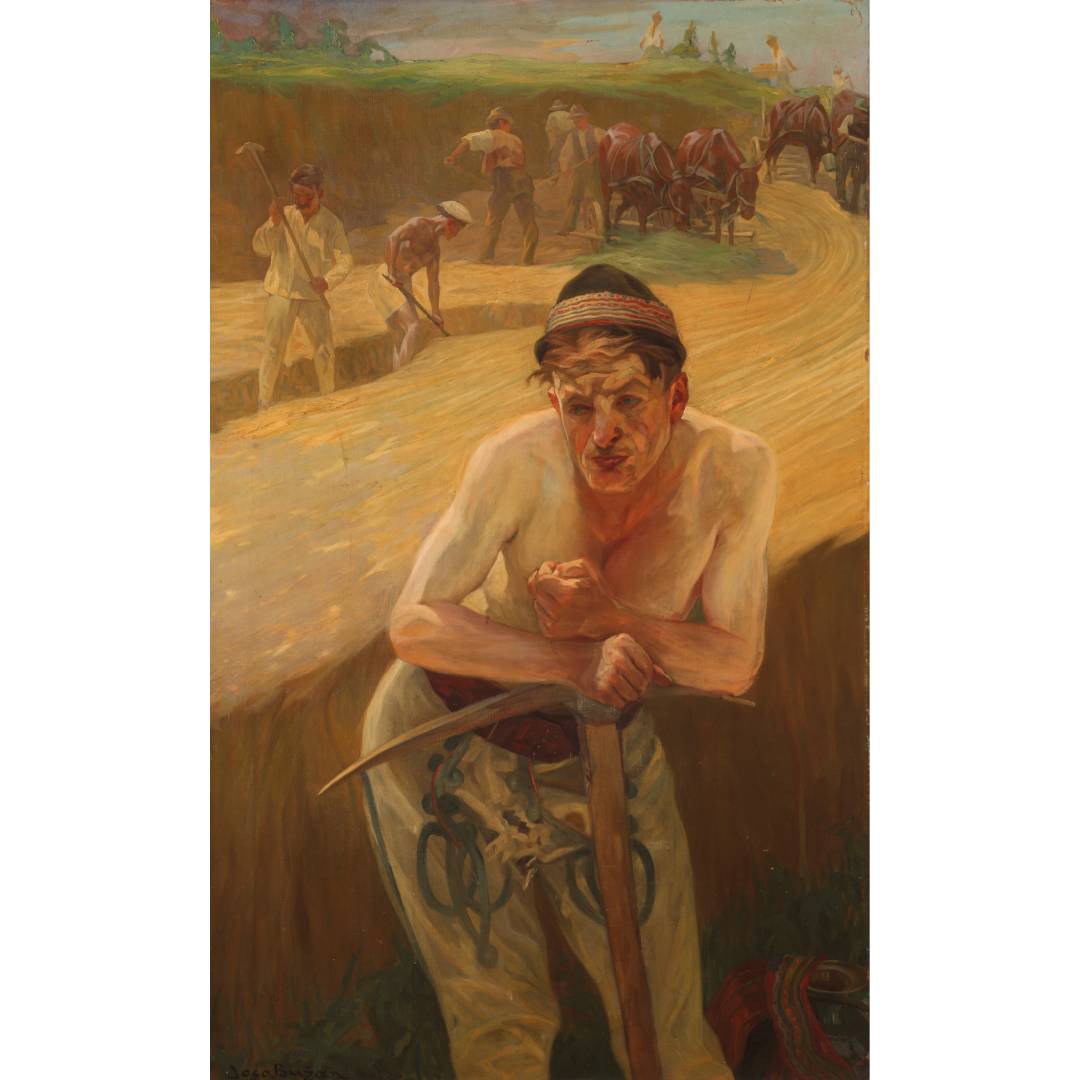
Joso Bužan, Fate, 1934

Joso Bužan
Fate, 1934
oil on canvas
124 x 89 cm
MG-7418

Joso Bužan (1873–1936) received his art training in Zagreb, Vienna, Germany, and Italy. He primarily painted rural genre scenes, especially from the Zagreb region, as well as portraits. His work is characterised by plein-air and pseudo-plein-air realism, with a strong emphasis on colour. Despite some variation in quality, Bužan was a significant and active figure in the Croatian art scene at the turn of the 19th to the 20th century.
Bužan’s 1934 painting Fate is a fine example of his oeuvre. In the foreground, a farmer is shown en face, momentarily pausing from his work, while the rest of the group continues labouring in the background. By drawing attention to the worker’s fatigue, the painting underscores the harsh realities faced by a section of society during the interwar period.

Text: Lovre Mrduljaš © National Museum of Modern Art, Zagreb
Photo: Goran Vranić © National Museum of Modern Art, Zagreb