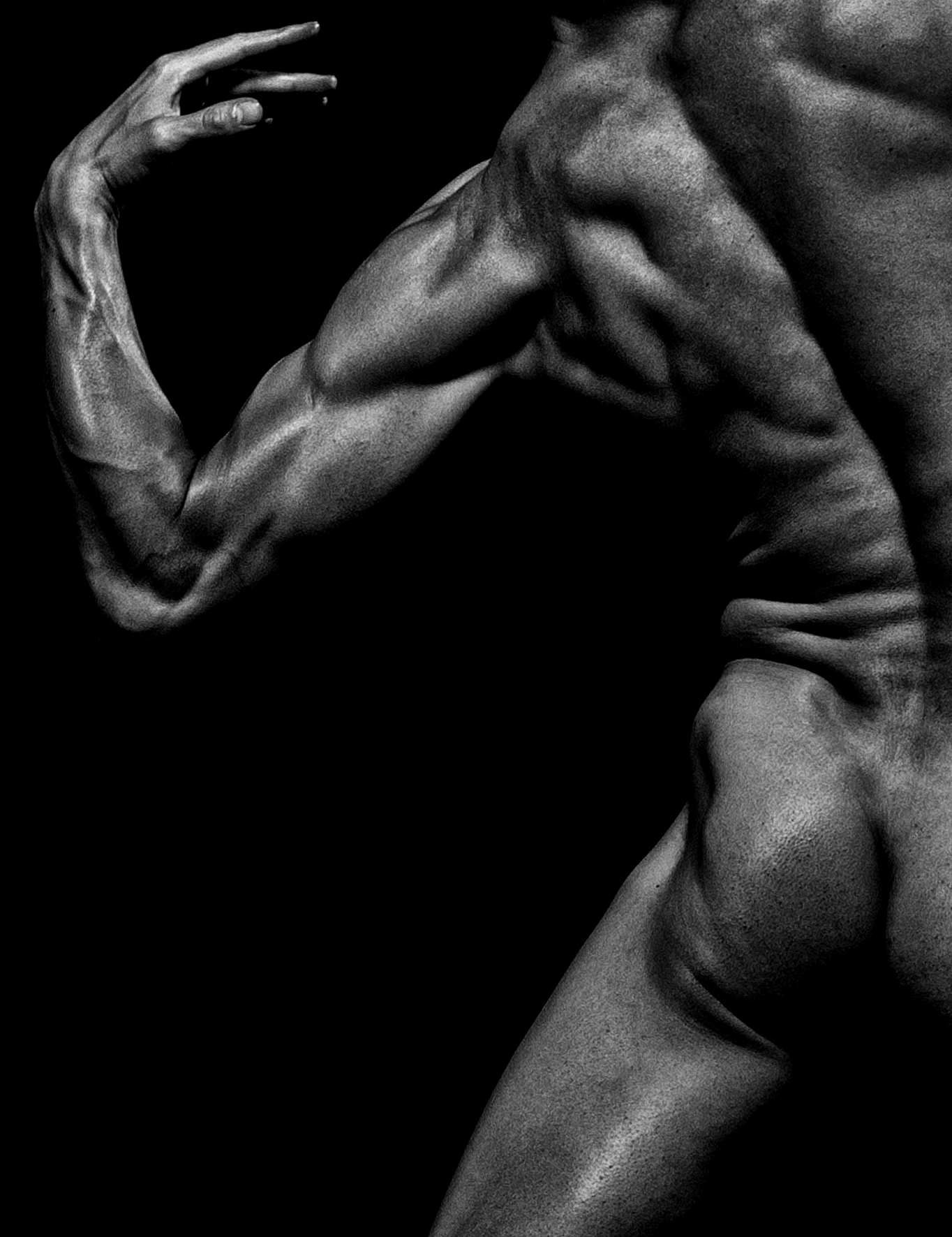
From October 23 to November 20, 2026, the National Museum of Modern Art presents theexhibition Naked Body in the Octogon NMMU. Conceived by Branko Franceschi, director of the National Museum of Modern Art, and Dubravka Tomeković Aralica, it presents photographs by prominent Croatian art photographers Rino Gropuzzo, Boris Štajduhar and Almin Zrno, one of the most respected Bosnian masters of photography. The exhibition is accompanied by a catalogue in Croatian and English with a text by art historian, curator and art critic Leila Topić. The catalogue is designed by Ana Zubić.
In “Memories,” Leonard Cohen makes no secret of what he wants: to see a naked woman. His request is direct, persistent and erotic, yet it is phrased as a plea: “Won’t you let me see?” Throughout the song, Cohen keeps asking permission to look at her naked body, even though she offers him other, perhaps more erotic forms of intimacy. The decision, however, clearly rests with the woman he is addressing. The repeated plea exposes the vulnerable supplication of the gaze: the person who wants to look depends entirely on the permission of the person before him. (...) - Leila Topić in the catalogue text
Artists' biographies
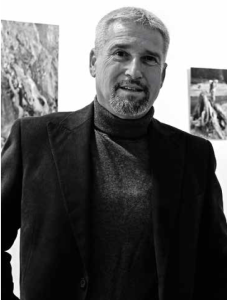
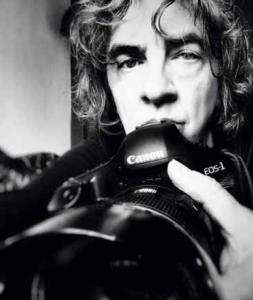
Rino Gropuzzo (Rijeka, 1955) has worked in photography since the early 1970s and was professionally trained in Paris and Milan. To this day, his photographs are published in prestigious national and international magazines (Start, Playboy, Klik, Globus, Panorama, Donna Moderna, Flash, Crazy Time, Luxuria, Pantheon, …). He has exhibited in group and solo shows in Zagreb, Opatija, Rijeka, Pula, Koper, Rovinj, Bari, Redipuglia, Solighetto, Trieste, Magdeburg, Monte Carlo, Laupheim, and Toronto. His photography has been awarded numerous times. He is a member of the Croatian Association of Visual Artists and the Croatian Association of Independent Artists.
Boris Štajduhar was born in Zagreb and has been working professionally in photography since 1980. He started at the youth magazines Polet and Studentski list, where he became a permanent member of the editorial team after his first published photo, and then began shooting for the then-most prestigious publications, including Start, Svijet, and other major Yugoslav newspapers. In the early 1980s, he was included in the famous Fourth Generation of Zagreb photographers. Later, he specialised in photographing Croatian beauties and entertainment stars, and he is publicly known as the photographer who shot the most nude celebrities. During the time when Europapress Holding was the most important media company in the region, he worked for all their publications, and not only as photographer but also editing sections, designing the visual identity of the print editions, and setting the highest photography standards. He worked for Globus, Gloria, Arena, Playboy, Forbes, Vogue, Vanity Fair, Cosmopolitan, Grazia, Vita, and Telegram. He conceived and photographed at least 500 covers for these publications. He is the only Croatian photographer whose photos have been published in American and British Vogue. A longtime member of ULUPUH and the Croatian Association of Independent Artists, he is the author of numerous successful campaigns for world-famous brands: Nike, Baldinini, Zaks, MAK, Pletix, Fiat, St. Moritz Art Masters, Nokia. His photos have been published in various monographs, such as Makers of Images, Gloria, Polet — a playground for adults. He has organised about ten solo exhibitions and participated in numerous group exhibitions, even though he is a photographer who has devoted most of his career to the media.
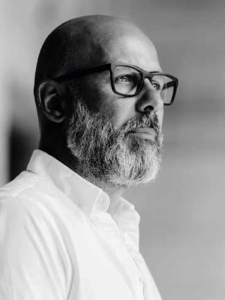
Almin Zrno is one of the leading photographers of Bosnia and Herzegovina. Born in Sarajevo in 1966, he took his first steps in photography at the age of 14. He began his career after the war years he spent defending Sarajevo. As a young photographer, he initially worked in the field of reportage and documentary photography, and then turned to art photography, focusing on portraits and nudes. He often collaborates with artists to document artistic processes and is a permanent member of the Ars Aevi Museum. Since 2000, he has been a member of ULUPUBiH, where he has served as president for two terms. In 2007, he received the status of a prominent independent artist in Sarajevo Canton. In addition to the mentioned collaborations, one of the significant ones is his ongoing work with the SARAJEVO FILM FESTIVAL, where he now creates iconic portraits of actors from the festival’s competition section. His photographs have been exhibited in BiH, Slovenia, Austria, Germany, Greece, USA, and more. He authored over 25 solo exhibitions, with recent solo shows including Apology of Eros (Vienna, Ljubljana, 2018), Jannis Kounellis, Sarajevo 2004 (KuK Gallery, Cologne, 2021), and month-long installations of his photo-installation Mothers of Srebrenica at Taksim Square (Istanbul, 2018), as well as PLEON-EXIA I, II, and III in Sarajevo and Tuzla. On the 30th anniversary of the Srebrenica genocide (2025), the Mother of Srebrenica Cycle in collaboration with the ARS AEVI Museum of Contemporary Art, was presented on five continents and on the facades of numerous museums and galleries, with a special focus on the UN headquarters. For his achievements, Zrno received two awards from the Association of Journalists of BiH and six annual awards from Collegium Artisticum. His work is compiled in two comprehensive monographs, Town Hall (2015) and Apology of Eros (2018). He currently lives and actively works in Sarajevo.
Reproductions (from left to right): RINO GROPUZZO, Ifka, 2014, print on canvas, 100 x 150 cm / BORIS ŠTAJDUHAR, Ena, 2014, print on paper, 70 x 100 cm / ALMIN ZRNO, Cycle - Body Sculpture (VIII.), print on canvas, 100 x 70 cm