NMMU: What will you showcase at the exhibition Vibrating in Chaos, opening on 7 October at the Josip Račić Gallery?
Martina Moon Zelenika: At the exhibition Vibrating in Chaos, I am showcasing my most recent works – specifically, hand-drawn compositions built from dense networks of lines that give rise to various curious attractors. The drawings are large in scale, with frames ranging from 78 × 108 cm to 100 × 160 cm. The two series, Order from Chaos 2 and Escape from the Matrix, were created this year, while the selected works from the Order from Chaos series were begun in late 2023, with the majority completed in 2025. The drawings are executed on paper using graphite on white backgrounds, white pencil on black paper, and a range of mixed drawing techniques, including pastels. These series represent a natural progression from my earlier cycles. The key precursor is the 2017 cycle Meta_Signal Sonar System, through which I pursued the notion of a perfect/singular language. Working with this meditative drawing method, abbreviated as MSSS, I produced a set of eight large-format canvas drawings depicting simple attractors, each measuring 90 × 200 cm. Three of these drawings were later shown in my solo exhibition Presence (2022), presented within the exhibition concept In Dialogue – The Benko Horvat Collection at the MSU Gallery, Museum of Contemporary Art in Zagreb. The attractors appear as fluid, elliptical forms in motion, rendered with layers of long, continuous lines. As I create the forms of various attractors, I feel a profound sense of freedom. A kind of primal handwriting of my own being. I dare say that attractors are my personal code, much as meanders were for the Croatian painter Julije Knifer. In these works I explore balance, or order emerging from chaos, as well as chaos theory itself, or the butterfly effect, which represents a key aspect of chaos theory whose nature is inherently non-linear. Within this deterministic chaos, the tension between order and disorder becomes the focal point of my research and artistic practice, revealing the fragile equilibrium that governs the evolution of dynamic systems. This unpredictability appears immediately, in the first lines drawn on the paper, each of which directly shapes the developing form of the attractor. Each drawing, or attractor, is created intuitively and without preliminary sketching. The drawing process is uncertain, and the final image is ultimately unpredictable. The same principle can be observed throughout life, in nature and the cosmos, and in the inherent unpredictability of the logos. As curator Željko Marciuš notes in his excellent catalogue foreword: “(…) Martina’s approach to drawing is intuitive, aligning more closely with Žižek’s skewed paradigm than with Jung’s symbolic vision of the world or the magical-holistic ritual of drawing. It seems necessary to consider both modes of interpretation, much like the dual nature of light, which behaves as both particle and wave. Interestingly, Žižek titles the cited and analysed chapter Nature Does Not Exist. In her quest to find order within chaos, Martina seeks, as she herself puts it, hope, love, and truth: ultimately yearning for God both within and through herself.”
NMMU: How would you describe the evolution of your artistic practice?
Martina Moon Zelenika: I would describe the evolution of my work as dynamic, complex, challenging, layered, and authentic. I stay true to my chosen themes and areas of interest, which themselves develop and transform over time. My inspiration comes from a wide spectrum of social and political upheavals, from various forms of destruction to experiences of depression, while my personal motivation is directly connected to the source and idealistic visions, through which I aim to transcend the world of simulation. I do not succumb to populist trends or ideologies. My practice is not part of post-war art, nor does it revisit the aesthetics of the former communist regime in this region. My works and projects span a rich variety of media and techniques, combining high production values with constant innovation, and occasionally including pioneering work. Throughout my career, I have continuously experimented with traditional techniques, with drawing remaining a central focus. I have mastered a considerable number of digital tools for: audio and video production, animation, introductory coding, and various graphic design applications. My interests are wide-ranging, and I have worked across many areas, continuing to do so today. A significant turning point in my career came in 2016, when I dedicated myself entirely to art. Since then, I have realised numerous innovative projects, including two pioneering works featuring augmented reality mobile applications, which I have exhibited internationally (in Belgium, Denmark, South Korea, Spain, Latvia, Germany, Austria, and Hungary), as well as in Croatia. These projects primarily involve new media works and performance, often combined with traditional artistic techniques. The fusion of traditional methods with cutting-edge digital technologies remains a central and defining aspect of my practice. I work in both interdisciplinary and transdisciplinary ways, transforming concepts into new forms by integrating art, science, technology, spirituality, and theology. Sound, music, and interactivity are central to several of my completed works. The process of sonification (converting various data into sound or audio records) has become a defining feature of my practice. Recently, I presented an exhibition titled Melody of the Invisible – The Sound of the Earth at the MKC Gallery in Split, where I premiered my latest project, ChORUS2, which translates satellite signals from the Earth’s magnetosphere into sound in real time. The system behind ChORUS2, developed in Max/MSP, functions in a manner similar to that of an artificial intelligence (AI) system.
NMMU: How important are faith and spirituality to you, both in life and as a source of inspiration?
Martina Moon Zelenika: Faith and spirituality are central to my life and work, providing the energy and strength to overcome challenges and bring even the most unusual ideas and visions to fruition. I create solely from the impulses of the heart and soul, and living authentically through love and faith is essential for maintaining the wellbeing of both. The body responds, capable of enduring extraordinary exertion, while spirituality and faith act as natural sources that fuel creativity. A profound turning point in my faith, however, came from the exhaustion of giving too much without reciprocity. An artist does not create purely for themselves, far from it. Art must be seen and experienced by other souls, otherwise its purpose remains incomplete. The creative impulse transcends any resistance of the person for whom a visual or musical work is intended. This is not a primitive physiological urge, but rather a life force, a driving energy – an eros channelled into creation. From nothing, you make something.
NMMU: How important is music in the context of your artistic practice? What kind of music do you listen to?
Martina Moon Zelenika: Music is an extraordinary medium and an essential part of my daily life. It stirs the emotions, the mind, and the body.
For my artworks, I employ deep, resonant tones, virtuosic effects, rhythmic patterns with oscillations, and short meditative sequences. I personally develop the sound concepts and musical design for my projects, using various digital tools for audio production and sonification, performing on the computer. Occasionally, I also play the steel drum for personal exploration, producing beautiful frequencies and delicate tones. I am particularly captivated by the sound of large church organs, and I recently had the pleasure of attending an exceptional graduate recital by a young organist. My jukebox contains a diverse mix of genres and artists, mostly international: Max Richter, Alva Noto, Ryuichi Sakamoto, Philip Glass, Hiroshi Yoshimura, Petrit Çeku, Aphex Twin, The Necks, Fennesz & Jim O’Rourke, Carbon Based Lifeforms, Rival Consoles, DJ Shadow, and many more … Depending on my mood, I listen to classical music, jazz, the catchy and danceable sounds of the 80s, and for spiritual music, I enjoy Gregorian chant and the Benedictine tradition. Occasionally, I include bands like Holy Name and Demon Hunter – Christian heavy metal or “white metal,” which I discovered a few years ago on HKR during the programme Oni rokaju za Gospodina (They Rock for the Lord), presented and produced by the charming and dedicated Father Anto Bobaš, a Croatian Dominican priest. During creative work, particularly when drawing attractors, I primarily listen to electronic music that carries me along: deep progressive dub, dub techno, and ambient electronica.
NMMU: How long do your projects usually take to prepare, given that they involve research and collaboration with scientific institutes and other institutions?
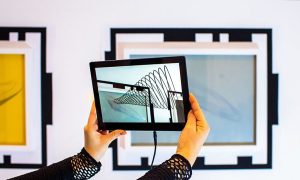
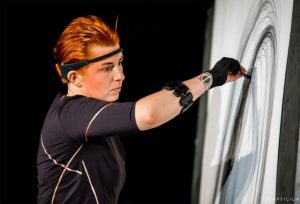
Martina Moon Zelenika: The preparation for each project is very individual. On average, it takes around 3 to 6 months, although some projects can require 8 to 16 months. The process begins with an idea, followed by questions about how to make the invisible, intangible, and inaudible perceptible. It is both challenging and exhilarating to translate content from one medium into a second, third, or even fourth, so that it can be experienced by our physical senses. I often incorporate personal experimentation and psychophysical training, alongside extensive study, reading, and research, but ultimately, I aim to arrive at my own conclusions. Engaging with other perspectives and theories is useful primarily as a point of comparison. In terms of collaborations, I have so far worked with a single scientific institution, the Ruđer Bošković Institute in Zagreb, on the project Nova Europa #3 – the sound of mineral stones, which was realised in 2017. I contacted the institute to request X-ray analyses of three mineral stones with metallic properties that I had supplied, which I then used for sonification, converting the data into sound. I have also collaborated with programmers to code 3D animations for my two pioneering projects, 6th SENSE, MSSS and Particles – Simulation of Matter (2018), as well as La Petite Mort, MoTHA (2019), where I combined traditional drawings with a mobile augmented reality application; the animations incorporated sound (from the sonified drawings) and interactive elements on the screen. A particularly rewarding collaboration was the development of my innovative new-media performance Receptilium, MSSS (2018) in Max/MSP, where the software transforms or generates in real time signals from brainwave sensors, as well as hand and muscle movement sensors that I wear while creating a large MSSS drawing, effectively turning the body itself into a musical instrument.
NMMU: One of your projects, TAB_Letter, involved translating alphabet letters into sound. The poem Ode to Humanity, which you wrote for this project, has been performed in multiple languages. How did the idea for this project come about, and what message are you hoping to convey through it? How should we imagine the sound (is it more like an instrument or a vocal performance)? Could TAB_Letter be used in everyday communication, and if so, in what way?
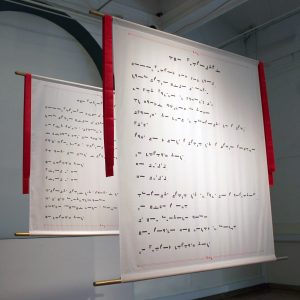
Martina Moon Zelenika: In 2011, reflecting on how poor communication and articulation contribute to many conflicts, and considering ways to reconcile warring parties worldwide, I realised that music could be a powerful medium for conveying messages and enabling mutual understanding. Such communication needs to embrace linguistic and cultural diversity to cultivate respect and appreciation. It is well known that music directly affects the vibration and frequency of its surroundings. After all, music is vibration and frequency itself. I designed the artistic project TAB_Letter to explore the uncharted limits of communication models, encompassing words, music/sound, and image/colour, as well as interaction. By collaborating with professional musicians to perform these works, the aim was to influence positive frequencies in the world. Yet, for such a message to be fully realised, it requires a text in the form of poetry or song. Shortly afterwards, in 2012, I wrote Ode to Humanity.
TAB_Letter includes all the letters of the alphabet, adapted for languages that use Latin characters, though it does not accommodate scripts such as Arabic, Chinese, Japanese, or Cyrillic. Depending on the language into which a text is translated, in this case, the lyrics of Ode to Humanity (Croatian, Icelandic, French, Dutch, German, English, Norwegian, Japanese, and others), the resulting music will be entirely different. The aim of the TAB_Letter project is to spread positive messages worldwide through musical performances across diverse languages and cultural contexts. The minimally designed elements of the TAB_Letter alphabet consist of five key geometric elements arranged on a musical staff, which serves both to read the notes during performance, whether acoustic or digital, and to enable sound interpolation, enhancing interpretive freedom and the authenticity of the musical expression. To date, I have realised the project in only three languages: Croatian, Slovenian, and French. In the French performance, the musicians approached the TAB graphic score with their own unique, free-style interpretation, including recitals of Ode to Humanity in both French and Croatian. For the Slovenian performance, the musicians treated the graphic score as though it were written in medieval “neume” notation, where pitches are not fixed according to a mathematical standard but are represented relative to one another in terms of height (higher or lower notes) and duration (shorter or longer notes). The Croatian performance, in 2012, was the very first presentation of Ode to Humanity, in collaboration with three students from the Academy of Music in Zagreb. Their approach followed classical music reading: they translated the TAB symbols into conventional musical notation and adapted them to their string instruments. TAB symbols can be learned like any written script and can also be sung.
If you happen to visit Korčula, make sure to stop by St. Mark’s Square, where you can connect via Wi-Fi to the Art Gallery Siva Zona / grey) (area, and, through a web link, listen to all versions of Ode to Humanity. The Wi-Fi exhibition will be accessible until 16 November 2025, while the physical installation of TAB flags can be seen on the ground floor of the Korčula Town Museum until 30 September. The exhibition might be extended slightly, as the flags have integrated wonderfully with the surrounding space.
NMMU: How do you vibrate with the current frequency of the world?
Martina Moon Zelenika: I vibrate strongly and at a high level. It isn’t easy to maintain that vibration in a contaminated environment.
NMMU: Do you follow your intuition in life? Has it ever let you down?
Martina Moon Zelenika: My intuition has always been a blessing, it has never led me astray. Yet, in my youth, I didn’t always heed it carefully, and it was in those moments that my relationships with others proved most trying.
NMMU: What is your view on artificial intelligence?
Martina Moon Zelenika: There is much debate around AI, and increasingly, it frustrates me. Where has humanity gone? Today, we all use artificial intelligence in various ways, often without realising it, and its impact on our everyday interactions with digital devices is becoming ever more evident. A similar system is integrated into my latest artistic project, ChORUS2, which I mentioned earlier. History has shown that sometimes a psychopath receives a “blueprint” from beings in another dimension and turns it into an advanced destructive device. With AI, a comparable scenario is emerging. The potential for harm and negative consequences far outweighs its positive applications. We have little understanding of what happens behind the scenes in the military-industrial complex, their laboratories and incubators, or in the heavily funded companies developing destructive technologies. This group does not act for the benefit of humanity, and I hope this is clear to most people today. Intelligence agencies such as the ISI, CIA, MSS, and others are at the source of information and are direct participants, users, and commissioners. All HIT or IN technology available commercially, as well as that employed in new media art, is well known to be outdated compared with what is used in military and covert operations. A new “Tower of Babel” is being constructed in preparation for a so-called reset, which reportedly occurs roughly every 100 years, and those who survive will tell the story to future generations. Regardless of what experts and scientists claim, to me AI is simply artificial information, a body of data that is manipulated, falsified, imitated, and generated. Predictions and forecasts are used to instil fear and make the masses easier to manipulate. The era of supposedly harmless screen-watching is over. I am not an expert in this field, nor particularly drawn to it, but I always strive to stay informed and to develop my own critical perspective.
NMMU: How do you imagine an encounter with beings from other galaxies?
Martina Moon Zelenika: Why assume such encounters haven’t already taken place in the past? For my part, I offered them decaffeinated coffee, and they won’t be returning. Thank you for asking.
You might ask the same of the teams at the Pentagon, CERN, and similar organisations, who maintain contact with them by serving ultra-strong caffeinated coffee.
Interview by: Lana Šetka, National Museum of Modern Art, Zagreb
Translated by Robertina Tomić
Photos: (from left to right) (1) TAB_Letter_Ode to Humanity_Martina Moon Zelenika_Photo (2) 6th SENSE_Martina Moon Zelenika_Photo Nevio Smajić 2018 (3) Receptilium_Martina Moon Zelenika_Photo Nevio Smajić 2018 / Courtesy of the artist